
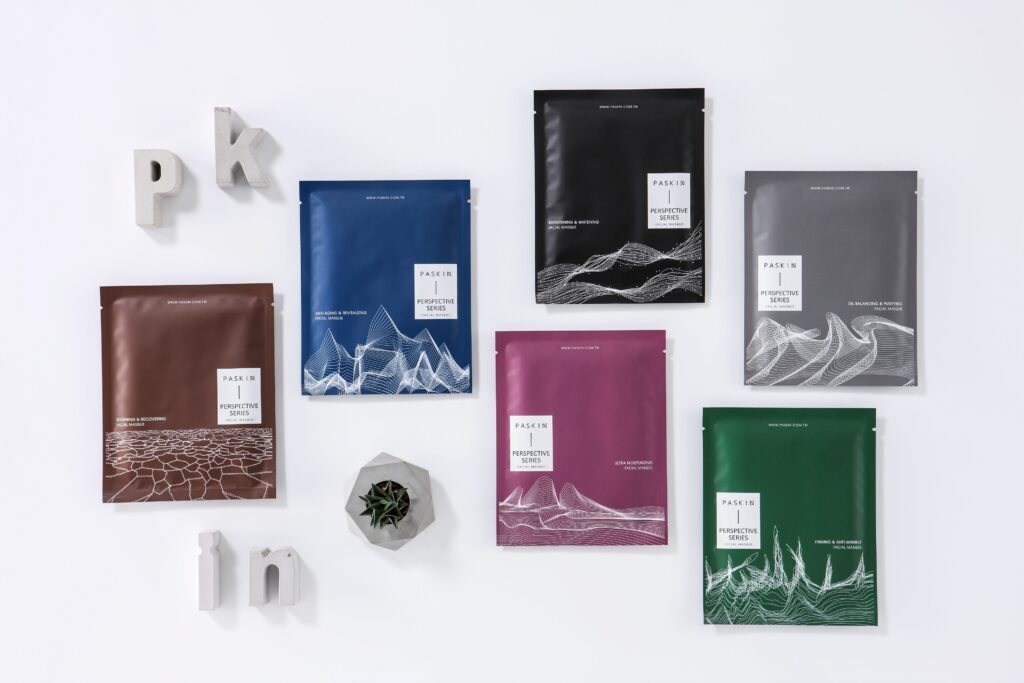
Sheet mask OEM means a factory produces finished masks — cloth, essence, folding, and pouch — under your brand: you own the positioning, the manufacturer owns the engineering. It is the most accessible entry point in skincare manufacturing, and also the category where product quality is decided by something most brands never see: whether the substrate and the essence were designed together or bought from separate vendors. This guide covers the substrate options and how to choose, the essence formulation routes, the process from brief to shelf, and how MOQ works — from a Taiwan factory that makes both the cloth and what goes on it.
Why Does "Integrated" Matter in Sheet Mask Manufacturing?
A sheet mask is two products pretending to be one: a nonwoven substrate and an essence system. In many supply chains they come from different companies and meet only at assembly. The failure modes buyers run into — sheets that slide off, essence that separates in the pouch, cloth that feels slimy or dry within minutes — are often interface problems between a fabric and a formula that were not developed together.
An integrated factory engineers the pair: substrate absorbency is matched to essence viscosity, the folding pattern to the cloth’s drape, the essence dose to the fabric’s carrying capacity. Graminton runs dedicated sheet mask production on top of its own nonwoven material R&D — the cloth and the formula are one engineering conversation, which is the practical meaning of “materials-and-formula integration.”
Which Substrate Should Your Mask Use?
Substrate is the part of the product consumers feel first and remember longest. The working range, with real products behind each:
| Substrate | Character | Positioning fit |
|---|---|---|
| 100% cotton / organic cotton | Natural-fiber story, reliable feel | Clean-beauty and sensitive-skin lines |
| Lyocell (wood-based) | Biodegradable, lightweight, translucent fit — e.g., the 28 gsm lyocell fibers mask | Eco-positioning and “invisible mask” premium |
| Bamboo charcoal | Visual differentiation, purifying story | Oil-control and men’s lines |
| Nanofiber (2 μm fibers) | Ultra-fine nanofiber cloth with high skin adhesion | Top-tier “second skin” positioning |
| Cotton padded / multiply | Thick, high essence load (up to 60–70 gsm) | Rich-treatment and firming formats |
Two selection rules. First, match the substrate to the price tier and claim — a value line rarely justifies nanofiber, and a luxury claim rarely survives commodity cloth. Second, weight is a design variable: the 28–70 gsm span changes fit, essence capacity, and perceived quality — the same basis-weight logic explained in our GSM guide, applied to your product brief.
How Does the Essence Side Work?
The formula follows the standard two-route logic — adapt a validated mature formula for speed, or commission custom development for differentiation (the full trade-off is in our OEM vs ODM comparison). Three sheet-mask-specific notes:
1. Essence rheology is a substrate decision. A watery essence suits thin, tight-fitting cloths; a viscous serum needs a substrate that can hold it. Choosing formula and fabric together avoids the classic mismatch failures.
2. Trend actives slot in cleanly. The mask format is the fastest carrier for ingredient trends — a single-dose format lets a brand put a trending active on shelf quickly, with formulation handled by the biotechnology development center.
3. The finished-product proof exists. Graminton’s own Gbuuty retail masks run on the same lines offered to OEM buyers — substrate, essence, and packaging solved at consumer scale.
What Does the Process Look Like — and the MOQ?
From brief to shelf, the sequence is: substrate + formula selection → sampling rounds (fit, feel, essence behavior) → artwork and pouch confirmation → pilot run → mass production with batch QC under Graminton’s ISO 22716-certified cosmetics manufacturing. The sheet-mask-specific step is fit sampling: a mask that slides during a 15-minute wear kills repurchase, so physical wear-testing belongs in every sampling round.
On quantities: sheet mask MOQs typically start around 5,000 pieces per SKU — higher than creams — because fabric runs and cutting set the batch economics; custom-printed pouches add their own packaging minimums. The component-by-component logic (and where small-batch flexibility exists) is broken down in our cosmetic OEM costs & MOQ guide.

FAQ
What’s the difference between sheet mask OEM and private label?
Private label puts your brand on an existing finished mask — fastest, least differentiated. OEM produces to your selections: substrate, essence, folding, pouch. Most brands enter via private label or mature-formula OEM, then customize as volume grows.
Can the substrate itself be customized?
Fiber choice, weight, emboss pattern, and die-cut shape are all substrate variables an integrated factory can work with; what is feasible depends on the product, so raise it during project scoping. Shape options (eye zones, targeted panels) follow the same tooling logic.
Why is the MOQ higher than for creams?
Because the batch is set by fabric conversion — a cutting run produces masks by the roll, not by the jar. Packaging follows the same pattern: printed pouches are ordered in print-run quantities. Per-component minimums, not factory reluctance, set the floor.
Is a “facial mask manufacturer” the same as a sheet mask OEM?
In beauty, usually yes — but the phrase also collides with medical face masks in search results. If you arrived here looking for protective medical masks, see our medical face mask OEM guide instead; this page is about skincare sheet masks.
Building a mask line? Tell us your positioning, target market, and volumes — we’ll propose substrate options with wear samples, formula routes, and carton pricing.