
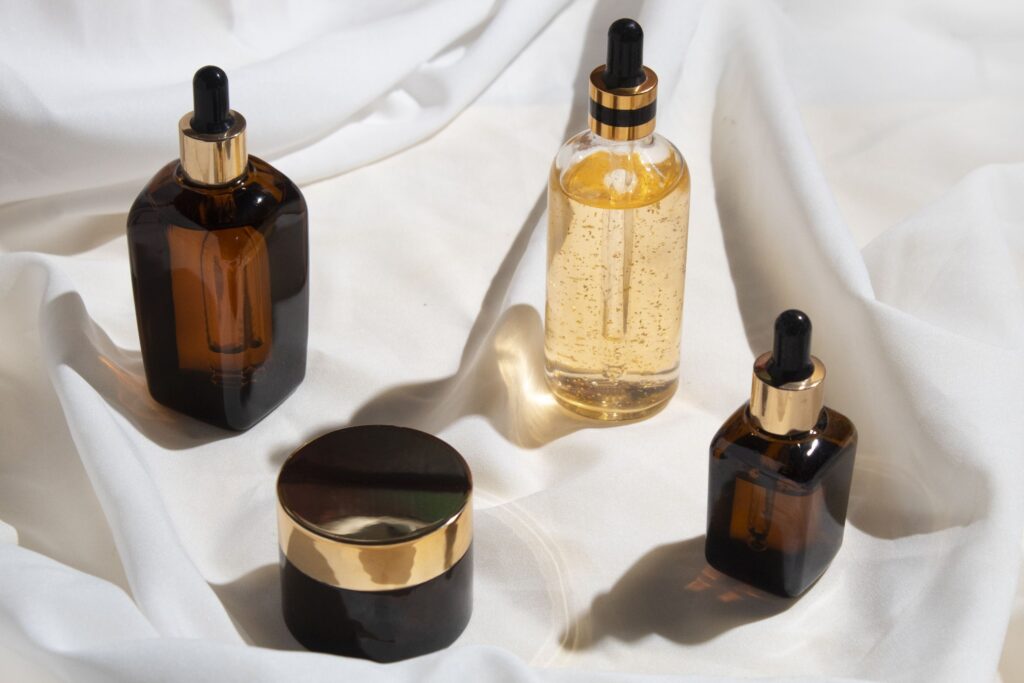
PDRN — the salmon-DNA ingredient driving K-beauty’s regeneration wave — is at the stage every trend ingredient passes through once: search demand is rising, consumer vocabulary is formed, and in most markets outside Korea the category is still young. For a brand, that combination is the build window. This guide covers the practical side of entering: how to structure a PDRN line, the formulation decisions that matter, claim boundaries by market, and how the OEM path runs from brief to shelf. (New to the ingredient itself? Start with the companion piece — our brand developer’s guide to what PDRN is.)
Why Build Now — and Not After the Trend Proves Itself?
The honest trade-off: waiting reduces ingredient risk but forfeits the shelf-timing advantage, and with PDRN much of the groundwork is already in place — the ingredient arrives with years of use history in Korean cosmetics, an established INCI name (Sodium DNA), and a consumer narrative that no longer needs explaining — though each raw-material grade and finished formula still needs its own safety assessment. What has not happened yet in most markets is shelf saturation. In trend categories, the first credible product a channel ranges tends to own the ingredient story in that channel; the third and fourth compete on price. That is the argument for moving during, not after, the rise in demand.
How Should a PDRN Line Be Structured?
The proven ladder runs trial → premium → retention:
| Step | Format | Role |
|---|---|---|
| 1. Trial | PDRN sheet mask | Lowest-commitment entry: single-dose, giftable, puts “PDRN” on shelf at an accessible price and captures trend searchers |
| 2. Premium | Ampoule or serum | The margin carrier — matches the ingredient’s clinical origin story and anchors the line’s credibility |
| 3. Retention | Cream or moisturizer | Converts trend buyers into repeat customers once the story lands |
Not every brand needs all three at launch. The common pattern is launching steps 1 and 2 together — the mask recruits, the serum monetizes — and adding the cream on reorder data. For factories that engineer substrate and essence together, the mask step also becomes a differentiation point: cloth feel and essence system are designed as one product, not assembled from two vendors.
What Are the Formulation Decisions?
Four choices define the brief:
1. Mature formula or custom development. Trend timing usually argues for adapting a validated base — the fastest route — and reserving custom development for a hero SKU later; the trade-offs are the standard OEM vs ODM decision.
2. Concentration and pairing. PDRN products are typically positioned alongside supporting actives — hyaluronic acid for hydration stories, peptides or ceramides for barrier-repair stories. The pairing shapes both the claim set and the price tier.
3. Format chemistry. PDRN suits water-based systems; each format (mask essence, ampoule, cream emulsion) has its own stability work. This is standard actives formulation — the reason to involve the lab early, as with any actives-led project at our biotechnology development center.
4. Animal-origin policy. Salmon-derived PDRN is not vegan; plant-derived polynucleotide alternatives exist. Brands with vegan certification or strict EU retailer requirements should decide this up front — it changes the raw material and the story, and can change the INCI line.
What Can You Claim — and Where?
The single biggest execution risk in this category is borrowing injectable-world language for a topical product. The working rule set:
- Safe territory (cosmetic): moisturization, skin conditioning, barrier support, "recovery ritual" positioning, post-routine skin feel.
- Risk territory: regeneration/repair stated as physiological fact, clinical outcomes, "needle-free alternative to injections" equivalence claims.
- Market variance: claim tolerance differs across the US, EU, UK, and Southeast Asia — and for EU/UK entries the claim set feeds directly into the PIF and safety assessment paperwork; the compliance division of labor is mapped in our Taiwan sourcing guide for international brands.
A manufacturer who pushes back on your claim wording is doing you a favor — that pushback is cheaper than a delisting.
How Does the OEM Path Run for a PDRN Project?
Same skeleton as any actives-led project, with two PDRN-specific checkpoints:
1. Brief — target market, format(s), benchmark products, volumes, animal-origin policy.
2. Raw material verification — supplier documentation for the PDRN/Sodium DNA grade: source, purification, standardization. This is checkpoint one; the ingredient’s credibility is the product’s credibility.
3. Formula route and sampling — mature-base adaptation or custom development, then sampling rounds for texture and stability.
4. Claims and documentation per market — checkpoint two: align label claims with the target market before artwork, not after.
5. Pilot, production, QC — standard batch discipline; cost structure and MOQ logic follow the component-driven pattern in our costs & MOQ guide.
Scope the project through Graminton’s cosmetics OEM services — sheet mask, ampoule, and cream formats under one roof, made in Taiwan.

FAQ
Can we launch with just one PDRN product?
Yes — a single mask or ampoule is a legitimate trend probe, and the line can extend on sell-through data. The structure above is a ladder, not a minimum.
Which comes first, the mask or the serum?
If your channel is retail-led (pharmacy, e-commerce marketplaces), the mask’s low trial barrier usually wins. If your channel is brand-led (DTC, salon), the serum’s story strength may lead. Many brands launch both and let the channel decide.
How fast can a PDRN product reach shelf?
Adapting a validated water-based formula is the fastest route; custom development adds sampling rounds. Exact timing depends on format and market documentation, so timelines are best confirmed per project rather than taken from one universal figure.
What documentation should the raw material come with?
Source and species declaration, purification and standardization data, and the supplier’s safety documentation — the inputs your safety assessor and (for EU/UK) your Responsible Person will need. A manufacturer sourcing PDRN routinely will produce these without being chased.
Building a PDRN line for your brand or channel? Tell us your target market, formats, and timeline — we’ll come back with formulation routes, claim guidance, and sample arrangements.