
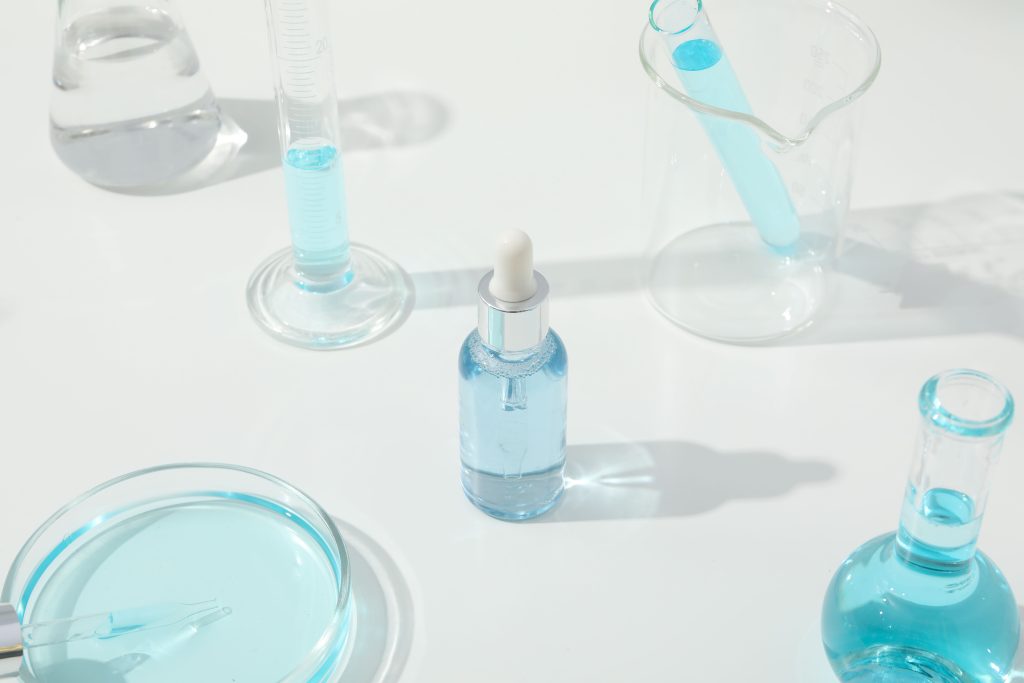
The First Step in Building Your Brand? Choosing the Right Partner.
With Taiwan’s thriving beauty and skincare market, more and more brands are shifting from in-house product development to contract manufacturing partnerships. The reason is clear: partnering with the right OEM manufacturer not only eliminates the need for costly in-house facilities, but also allows brands to launch products faster and with consistent quality—bringing your brand vision to life with greater efficiency.
But here’s the challenge: how do you choose the right skincare contract manufacturer? And how do different cooperation models affect your cost structure? This guide will walk you through everything you need to know.
What Is Skincare Contract Manufacturing? Understanding OEM, ODM, and OBM Models
Skincare OEM (Original Equipment Manufacturing) — in its broad, everyday sense — refers to outsourcing the product manufacturing process to a professional factory, allowing your brand to focus on marketing and distribution. Within it, there are three terms to know:
-
OEM (Original Equipment Manufacturing)
You provide the formulation and packaging design; the factory produces according to your specifications. Ideal for brands with R&D capabilities looking to save on production costs. -
ODM (Original Design Manufacturing)
You have a product idea but no formula; the factory provides formulation, design, and production. Suitable for new brands or those seeking rapid market entry. -
OBM (Original Brand Manufacturing)
The manufacturer develops and sells products under its own brand — a business model rather than a service you commission. Factories that run their own brands can often share that experience (positioning, market research, product design, marketing planning) as added support for OEM/ODM clients.
For a deeper look at how the two main models play out in practice — including the two ODM timelines and who owns the formula — see our OEM vs ODM comparison.
Case in Point: Graminton
As both a brand owner and an OEM/ODM manufacturer with over 30 years of experience, Graminton offers more than just production. Their specialized teams support clients from the product ideation stage, providing services such as formula development, packaging planning, and the formula, testing, and manufacturing documentation that feeds a PIF (Product Information File)—especially valuable for startups launching their first skincare line.
How Are Skincare OEM Costs Calculated? 6 Key Cost Drivers You Must Know
Unlike standardized retail products, OEM pricing is composed of multiple elements. The most significant cost factors include:
| Cost Item | Description & Impact |
|---|---|
| Formulas & Ingredients | Organic, imported, or patented ingredients drive higher per-unit prices. |
| Packaging Materials & Design | Material type (glass/plastic), print finishes (foil stamping, embossing), etc. |
| Production Volume | Higher volumes lower unit costs; small orders may face minimum order quantity (MOQ) limits. |
| Manufacturing Model | Custom-development ODM > mature-formula ODM / OEM—the more development work the factory takes on, the higher the cost. |
| Testing & Quality Checks | Additional fees apply for SGS, organic certifications, stability testing, etc. |
| Regulatory & Compliance | PIF setup (Product Information File) is essential for compliance in both EU and Taiwan. |
Each of these line items has its own pricing logic — quotation structures, MOQ tiers, and where small-batch flexibility exists are broken down in our cosmetic OEM costs & MOQ guide.
Real-World Practice: Graminton’s Approach
Graminton recommends ingredient and packaging combinations based on each brand’s market positioning and budget. Working within a defined budget to reach the target performance is a core part of how Graminton scopes each project.
From Concept to Delivery: The Ideal Skincare OEM Workflow
Many people think OEM is just about placing an order for manufacturing, but in fact, it’s a step-by-step process that spans from brand idea to product launch. The typical OEM journey includes:
-
Product Concept & Positioning
-
Formula Development & Sampling
-
Testing & Adjustments
-
Quotation & Contract Confirmation
-
PIF Setup & Raw Material Procurement
-
Production & Quality Inspection
-
Packaging & Final Delivery
Operational Efficiency in Action
With over 30 years of experience, Graminton integrates its in-house brand marketing insights into its OEM process. With ISO 22716-certified cosmetics manufacturing and in-house labs, Graminton can conduct stability tests, produce samples, and prepare PIF documentation in parallel after formula approval—shortening time-to-market and helping clients seize distribution opportunities quickly.
8 Key Factors for Choosing a Trusted OEM Partner
-
Does the manufacturer have an in-house R&D team and custom development capabilities?
-
Are they GMP and ISO 22716 certified?
-
Can they handle small MOQs for startup brands?
-
Do they offer sampling and stability testing services?
-
Can they provide full PIF documentation?
-
Are production lines modern and fully equipped?
-
Is pricing transparent with clear contract terms?
-
Do they offer marketing consultation or content support?
The Graminton Advantage
Dual integration of biotech R&D and nonwoven technology opens new product possibilities.
With experience running its own brand, Graminton can advise from a brand management perspective.
FAQ: Choosing a Skincare OEM Partner
Q1: How do I choose an OEM partner for my skincare brand?
All eight factors above count, but three carry the most weight: certified quality systems (ISO 22716 GMP), in-house R&D with sampling and stability testing, and full documentation capability. Strength in all three shows before you commit — in an audit, sample rounds, and the document set — rather than resting on reputation.
Q2: What is the difference between OEM and ODM in skincare?
OEM means you bring the formula and the factory manufactures it; ODM means the factory supplies the formula — either by adapting a validated mature formula (the fastest route) or by developing one from scratch (slower, but differentiated). Which route fits depends on whether your brand’s edge is the formula itself or the positioning around it.
Q3: What documents should a skincare OEM partner provide?
Typically: formula records with exact concentrations, ingredient specifications, stability and preservative challenge test reports, and GMP evidence — the raw material of your PIF (Product Information File), which both the EU and Taiwan require. Agreeing on audit-ready documentation at the contract stage keeps a compliance gap from surfacing at inspection time.
Q4: Can international brands work with a Taiwan-based skincare OEM?
Yes — Taiwan pairs mature manufacturing quality systems with export-oriented documentation practice, and remote-friendly workflows (video audits, courier sampling rounds) are standard. The logistics, timeline, and document flow from the buyer’s side are covered in our guide to sourcing skincare OEM from Taiwan.
More Than Just a Manufacturer—A Strategic Brand Partner
Whether you’re launching your first product or expanding an existing line, choosing the right OEM partner is the critical first step. With over 30 years of manufacturing experience and strong R&D capabilities, Graminton has helped hundreds of brands go from zero to market-ready, becoming a reliable backbone in a competitive industry.
Ready to Start? Contact Graminton for a Tailored Evaluation Today.
👉 https://www.graminton.com/contact
Contact Us
Welcome to contact us by filling out the form.