
Lint-free vs low-lint wipes is mostly a difference in wording. No textile wipe is completely free of lint: every wiper releases some fibers or particles when it is folded, pulled, and dragged across a surface. “Lint-free” is the industry’s name for the lowest-shedding category, usually continuous-filament polyester knits, often with sealed edges. “Low-lint” is the more precise description and covers most nonwoven and paper wipers made for clean work. The question for a buyer is how little lint a job needs, and which construction delivers it.
This guide explains what the labels mean, what makes a wipe shed, how the main constructions compare, which jobs need a low-lint wiper, and how to specify one for your line.
What Is the Difference Between Lint-Free and Low-Lint Wipes?
Lint is the loose fibers and fiber fragments a wipe leaves on a surface or releases into the air. A low-lint wipe releases only small amounts of fiber in normal use. A lint-free wipe is the industry’s name for the lowest-shedding end of the range, a term that spread through electronics and semiconductor manufacturing; it still sheds a little. There is no shared numeric threshold behind either label, so the construction, the edges, the format, and the data say more than the name.
In the market, the labels are used like this:
- Lint-free: the industry name, usually for continuous-filament polyester knits, often with sealed edges; they still release small amounts of fiber.
- Low-lint: designed to shed little in normal use; spunlace, meltblown, and many paper wipers carry this label.
- Cleanroom-grade: wipers specified to a room's cleanliness class; how grades are matched is covered in our guide to cleanroom wipe classes.
- General-purpose: no lint claim; enough for floors, heavy grease, and rough castings.
Graminton describes its wipers as low-lint, the way each product page lists them, and uses “lint-free” only as the industry’s name for the category.
What Makes a Wipe Shed Lint?
Five factors decide how much a wipe sheds:
- Fiber length. Continuous filaments have no loose ends inside the fabric. Staple fibers and wood pulp fibers have fiber ends that can work loose under friction.
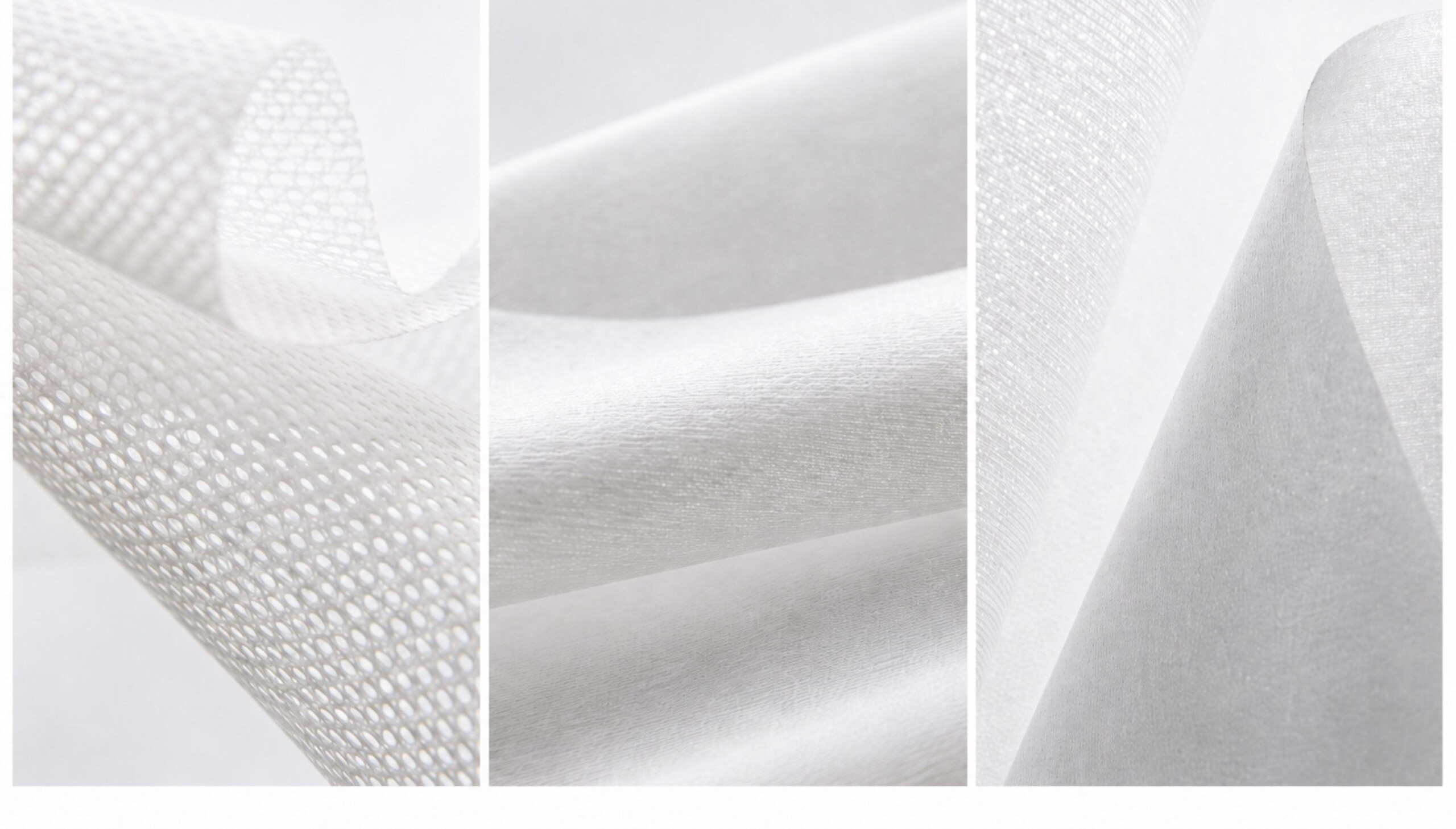
- How the fibers are held. Knitting loops yarns together; spunlace nonwoven entangles fibers with high-pressure water jets and needs no binder; meltblown microfibers bond to each other as they land; paper is a sheet formed from short wood pulp fibers.
- Edges. A cut edge exposes fiber ends. Sealing the edge by heat, laser, or ultrasound fuses those fibers together, which is common on the highest-grade cleanroom wipes.
- Format. Pre-cut, folded single sheets come off the pack ready to use, with nothing to tear at the workstation; the L8138 quarterfold pack is designed that way for lint-sensitive work.
- How the wipe is used. Dry wiping, rough or sharp surfaces, and hard wringing all pull fibers out, and a solvent the fiber is not listed for can weaken the sheet (see the FAQ on solvents).
The same wipe can be low-lint on a smooth panel and still pick up fibers on a rough casting, which is why the final check is always a trial on your own surfaces.
How Do Knitted, Spunlace, Meltblown and Paper Wipers Compare?
| Construction | How the fibers are held | Lint and handling | Typical jobs | Graminton examples |
|---|---|---|---|---|
| Knitted synthetic cloths (continuous-filament polyester, microfiber) | Yarns knitted into a cloth; edges cut or sealed | The category the industry calls lint-free; lowest shedding, especially with sealed edges; microfiber cloths are usually laundered and reused | Critical cleanroom zones, optics, polishing glass and screens | — |
| Spunlace (hydroentangled) | Staple fibers entangled by water jets, with no binder | Low lint; polyester-rich blends keep their strength wet and with solvents, while cellulose-rich blends absorb faster | Clean manufacturing, labs, GMP and food equipment, electronics | LGK3 (polyester), LGK5 (plant fiber and polyester), LGK7, L7209, L9151 (wood pulp and polyester) |
| Meltblown | Microfibers drawn out by hot air bond as they land in a dense web | Low lint; holds oil and ink; the L7207 and L8138 pages list acid and base resistance and use with solvents and alcohol | Printing, paint plants, LCD panel assembly, glass, engines and machine parts | L7207 (perforated roll), L8138 (quarterfold), both polyester |
| Paper wipers and tissue | Short wood pulp fibers formed into a sheet | Listed as low lint on the LICK paper and tissue pages; soft on surfaces; for light-duty wiping, dry or wet | Lab benches, instruments, assembly parts, small spills | L9133 tissue; L7280 and L7282 paper rolls |
The construction sets the starting point; edges, format, and use decide the rest. For how the meltblown web is formed, see our guide to meltblown fabric. Graminton’s low-lint range is built on spunlace, meltblown, and wood pulp paper constructions; knitted cloths are listed here for comparison.
Which Jobs Need Low-Lint Wipes, and Which Don't?
A wiper’s grade should match how sensitive the job is: too high a grade is money spent without a return, and too low a grade means rework.
| Job | Why lint matters there | What usually fits | Graminton examples |
|---|---|---|---|
| Clean manufacturing and electronics assembly | A fiber on a wafer, board, or panel becomes a defect | Low-lint spunlace; classified rooms follow a cleanroom specification | LGK3 cleanroom wipes (labs, clean manufacturing, LCD-related areas), LGK5 (semiconductor-related areas; won’t leave scratches), LGK7 (high-tech, pharmaceutical, biotechnology, medical-device) |
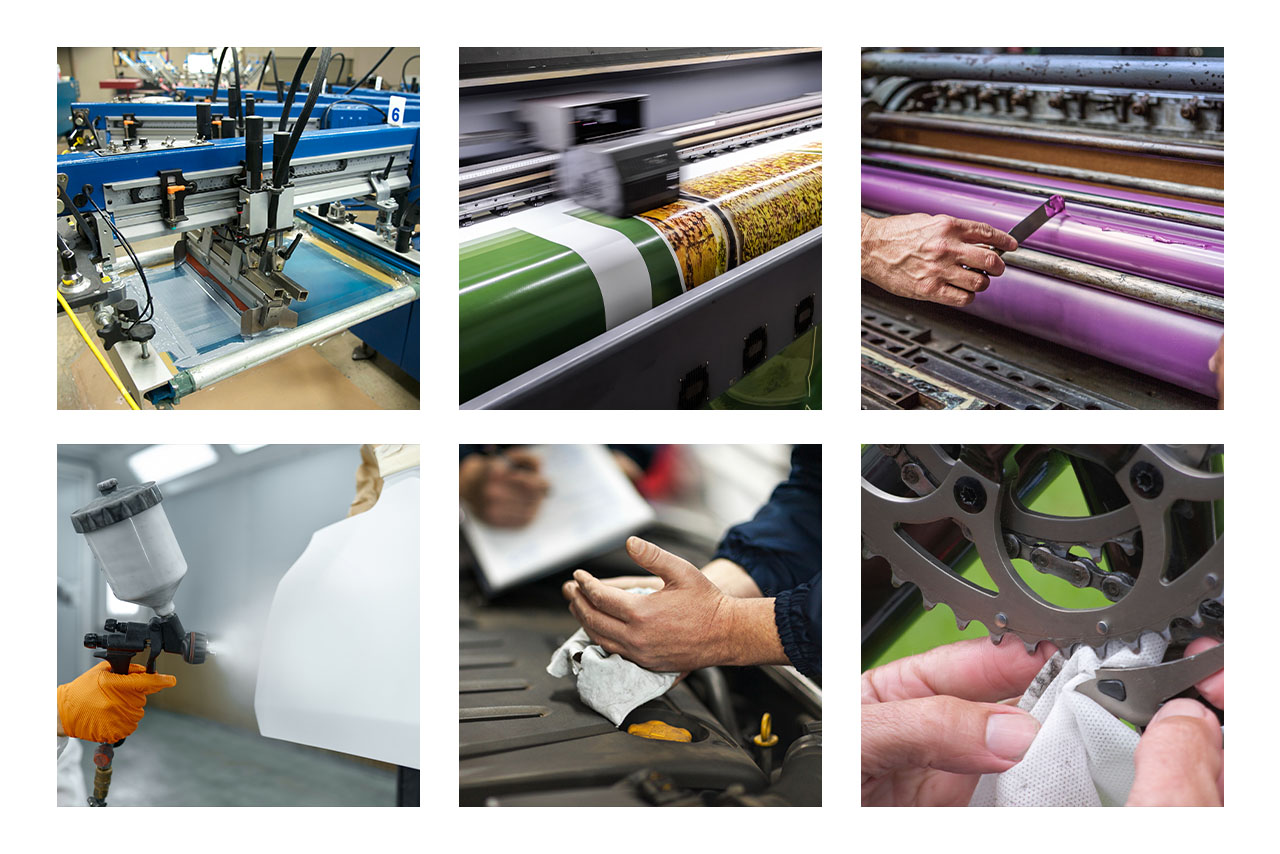
| Printing: screen printing machines, presses, rollers | Lint on a screen, plate, or roller prints into the job | Meltblown or low-lint spunlace that holds up in the press solvent | L7207 power cleaning cloths and L8138 (absorb printing ink and machine oil); LGK3 (screen printing machines) |
| Paint and coating lines | A fiber left on a part is sealed under the finish | A low-lint wiper that tolerates the prep solvent | L7207 (listed for printing and paint factory wiping, with solvents and alcohol) |
| Engine and machine assembly, LCD panels, PCBs, glass | Fibers left in an assembly or on glass show up as contamination or streaks | Meltblown cloths, dry or with solvent and alcohol | L7207, L8138 (machine and part, engine assembly and repair, LCD panel assembly, glass; L8138 also PCB) |
| Food, GMP, and precision machinery surfaces | Fibers left on equipment can end up in the product | Durable low-lint nonwoven, wet or dry, with the plant’s detergents or alcohol | L7209 (GMP, food, and precision machinery plants), L7212 (food equipment factories, production-line machinery, maintenance workshops) |
| Labs and instruments | Fibers on slides, probes, and instrument surfaces get in the way of the work | Soft light-duty wipes sized for single use | L9133 (surfaces, parts, and instruments in labs; the flip-top pack reduces dust) |
| Healthcare instruments and hard surfaces | Equipment and hard surfaces are wiped often, with alcohol and solvents | Durable low-lint dry wipes, used dry or wet | L8151 low-lint dry wipes (instruments and hard surfaces in hospitals, nursing homes, and healthcare settings) |
Floors, rough castings, and heavy grease rarely need a low-lint grade: a few fibers do not change the result, so general-purpose wipers, shop towels, or absorbents are the economical choice. For lab benches and controlled areas, our low-lint wipers for cleanrooms and labs are grouped in one place. Optics have their own needs for softness, low lint, and wiping technique, which are covered in our guide to lens cleaning tissue.
How Do You Specify a Low-Lint Wiper for Your Line?
A low-lint specification comes down to six lines:
- Construction and fiber. The fiber line on the specification defines the material, not the product name: for example, LGK3 is polyester, LGK5 is plant fiber and polyester, and L7207 and L8138 are polyester meltblown.
- Size and format. Where a workstation should not tear sheets on site, use quarterfold single sheets (L8138: 30 × 23 cm, 30 per pack); high-use stations can run from a perforated roll (L7207: 32 × 25 cm, 640 per roll).
- Dry, wet, and solvents. Match the wiper to the solvent the station actually uses; what each product page lists is summarized in the last FAQ.
- Packaging and storage on site. Keep packs closed between uses. A flip-top pack (L9133) and boxed quarterfolds (L9151, which the product page describes as packed in a box to prevent dust) keep the stack clean, and open packs are best kept away from grinding and cutting areas.
- A trial on your own surfaces. Wipe a dark or polished test panel and check it under raking light, using your own solvent and your own wiping method; run two candidates on the same station for one shift each.
- Documents. Documents that typically support a low-lint claim include particle-release test data for cleanroom grades and restricted-substance test reports. The LGK3, LGK5, and LGK7 product pages list low lint among their SGS items, next to formaldehyde, heavy metals, E. coli, and migrating fluorescent agent; the other wipers in this guide carry the same four SGS tests, except L9133, which lists RoHS compliance. The LICK industrial line is made under an ISO 9001-certified quality system, and the SGS report for a specific SKU is available on request.
How to read a supplier’s cleanroom claims is covered in our cleanroom wipes supplier guide.
FAQ
Are lint-free wipes really lint-free?
No textile wipe is completely free of lint; even sealed-edge, continuous-filament polyester knits release small amounts of fiber and particles. “Lint-free” is the industry’s shorthand for very low shedding. Judge a wipe by its construction, edges, format, and test data rather than the label, and trial it on your own surfaces. Graminton labels its wipers low-lint.
What is a lint-free cloth made of?
Cloths sold as lint-free are usually continuous-filament polyester or microfiber knits, often with sealed edges. Low-lint nonwovens are mostly spunlace, in polyester or polyester blends, and meltblown. Graminton’s low-lint range covers spunlace (LGK3 in polyester; LGK5 in plant fiber and polyester; LGK7, L7209, and L9151 in wood pulp and polyester), polyester meltblown (L7207, L8138), and wood pulp tissue (L9133).
Are paper towels lint-free?
No wipe is lint-free, paper included. Paper and nonwovens are built differently: paper is a sheet formed from short wood pulp fibers, while a nonwoven holds its fibers together by entanglement or bonding. The LICK L7280 (1-ply) and L7282 (2-ply) paper rolls are listed as low lint and are positioned for light-duty wiping of surfaces, lab benches, instruments, and assembly parts. When a job adds solvents, heavy oil, or repeated wet wiping of the same sheet, a nonwoven such as L7212 or L7207 takes over. For more on that choice, see our guide to shop towels vs paper towels.
What is the difference between low-lint wipes and cleanroom wipes?
Low-lint describes how a wipe sheds; cleanroom wipes are wipers specified to a room’s cleanliness class. Every cleanroom wipe is low-lint, but not every low-lint wipe is a cleanroom wipe: printing, paint prep, food and GMP equipment, and labs all use low-lint wipes outside cleanrooms. At Graminton, the LGK series are the cleanroom wipes, while L7207, L8138, L7209, and L7212 are low-lint wipers for plant use.
Can low-lint wipes be used with alcohol and solvents?
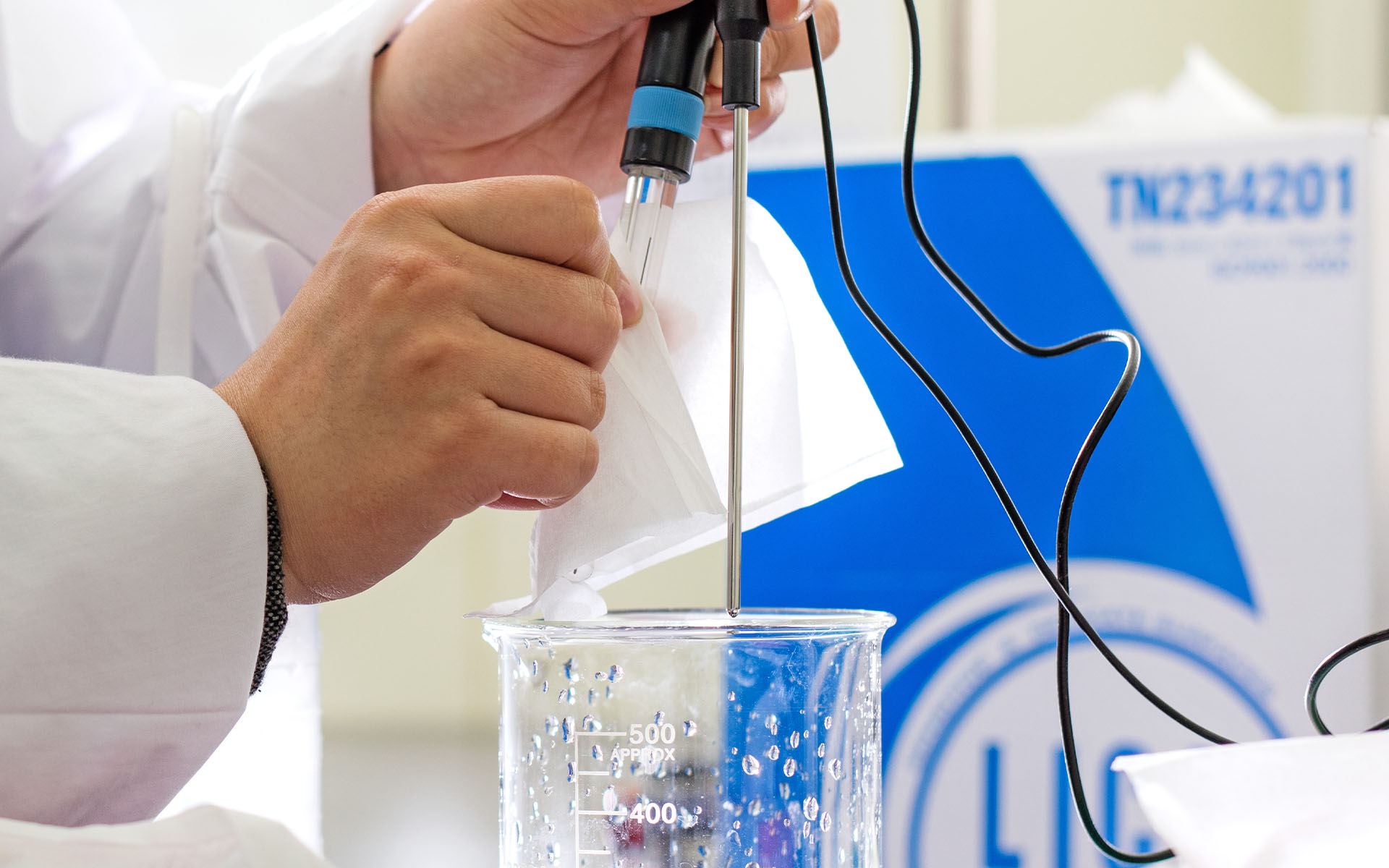
It depends on the construction and on what the product page lists. L7207 and L8138 are acid- and base-resistant and suited to solvents and alcohol; LGK3 and LGK7 are listed as acid-, base-, and solvent-resistant; L7212 is compatible with solvents; L7209 can be used with alcohol, solvents, or detergents; and L8151 can be used with alcohol and solvents. The paper roll pages do not list solvent use. Before standardizing a wiper, trial it with your own solvent.
Choosing wipers for printing, paint, lab, or production-line work, or building a low-lint range for a distribution business? Tell us the job, the surfaces, the solvents, and your monthly volume. We’ll reply with samples of the wipers that fit, the SGS reports for the SKUs you shortlist, and carton pricing. LICK industrial wipers such as L7207, L7209, and L7212 can also carry your brand; the LGK cleanroom series is supplied in its stock specifications.