
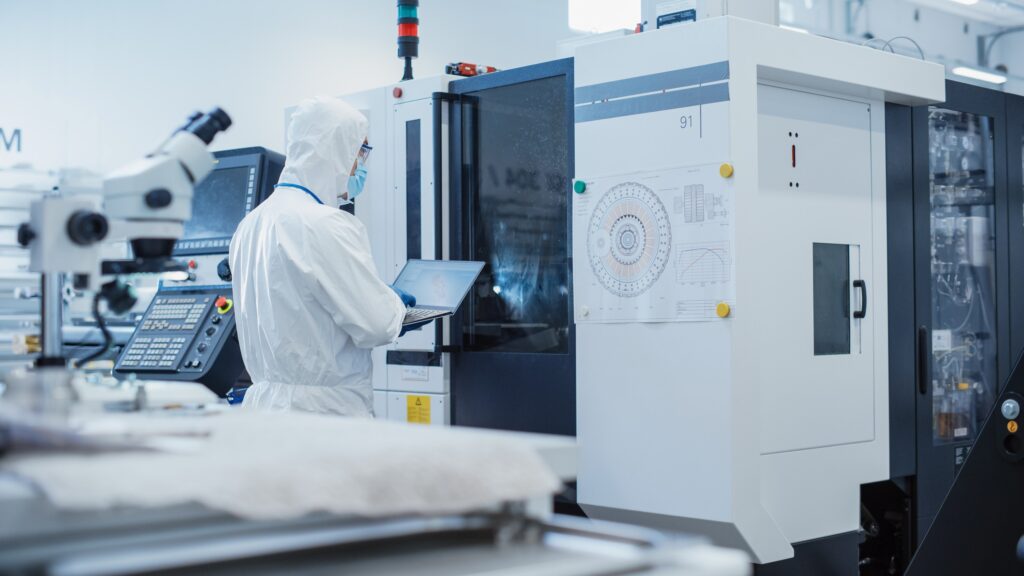
Evaluating a cleanroom wipes supplier comes down to six things: whether they actually manufacture (or just resell), the test reports behind their cleanliness claims, converting and packaging quality, how well the stock specifications fit your procedures, supply stability, and how sampling and minimum orders work. Wipes touch your process — inconsistent particle performance shows up as contamination and yield loss, not as a line item. This guide walks through each criterion the way a purchasing or QA manager would audit it, and shows what the answers look like from a Taiwan-based nonwoven manufacturer.
Why Does Supplier Choice Matter More Than Unit Price?
A cleanroom wipe is a process material: every sheet contacts surfaces, tools, or product. Three failure patterns cost far more than any per-carton saving:
- Batch drift — wipes that pass incoming inspection one quarter and shed the next, because the source mill changes from order to order.
- Silent substitutions — "equivalent" material swapped in during shortages, forcing re-validation of your cleaning SOPs.
- Stockouts on a consumable — wipes are consumed continuously; a supply gap means either halting cleaning protocols or improvising with unqualified material.
All three trace to the same root: buying from someone who doesn’t control production. That is why the first question in any evaluation is about the production line, not the price list. (If you’re still deciding which wipe grade you need, start with our cleanroom wipers guide and the ISO class matching guide — this article assumes you know the spec and are choosing who to buy it from.)
What Should You Evaluate? The Six-Point Checklist
| Criterion | What to look at | Why it matters |
|---|---|---|
| Production & origin | In-house line or trading company? Can you audit the factory? | Batch consistency and traceability start at the line |
| Test reports | Low-lint test data plus safety testing (formaldehyde, heavy metals, microbes) | Objective evidence beats “lint-free” marketing copy |
| Converting & packaging | Edge-cutting quality; cleanroom-compatible inner bags | Rough-cut edges shed fibers — poor converting cancels good fabric |
| Specification fit | Do the sizes, materials, and pack formats on offer match your wipe-down SOP? | A spec that fights your procedure gets misused on the floor |
| Supply stability | Capacity, lead times, safety-stock arrangements | A consumable needs a supply plan, not just a quote |
| MOQ & sampling | Sample-first policy; reasonable per-SKU minimums | Validate in your own environment before you commit |
The practical sequence: test reports and samples come first, then a run in your own facility — particle behavior, absorbency, shedding under your actual solvents and motion — and only then volume and price.
Which Cleanroom Wipes Does Graminton Manufacture?
Graminton is a Taiwan-based nonwoven manufacturer — the LICK wiping products line runs on its own production, and the cleanroom range has passed low-lint testing plus SGS safety checks (formaldehyde, heavy metals, E. coli, migrating fluorescent agent):
| Product | Size & pack | Built for |
|---|---|---|
| LGK3 cleanroom wipes | 25 × 20 cm, 100 pcs/pack | Laboratories, clean manufacturing, LCD-related areas |
| LGK5 cleanroom wipes | 23 × 23 cm, 300 pcs/pack | Semiconductor-related production, precision component work |
| LGK7 cleanroom wipes | 30 × 30 cm, 100 pcs/pack | High-tech, pharmaceutical, biotech and medical-device wiping; solvent-resistant for acid, base and solvent use |
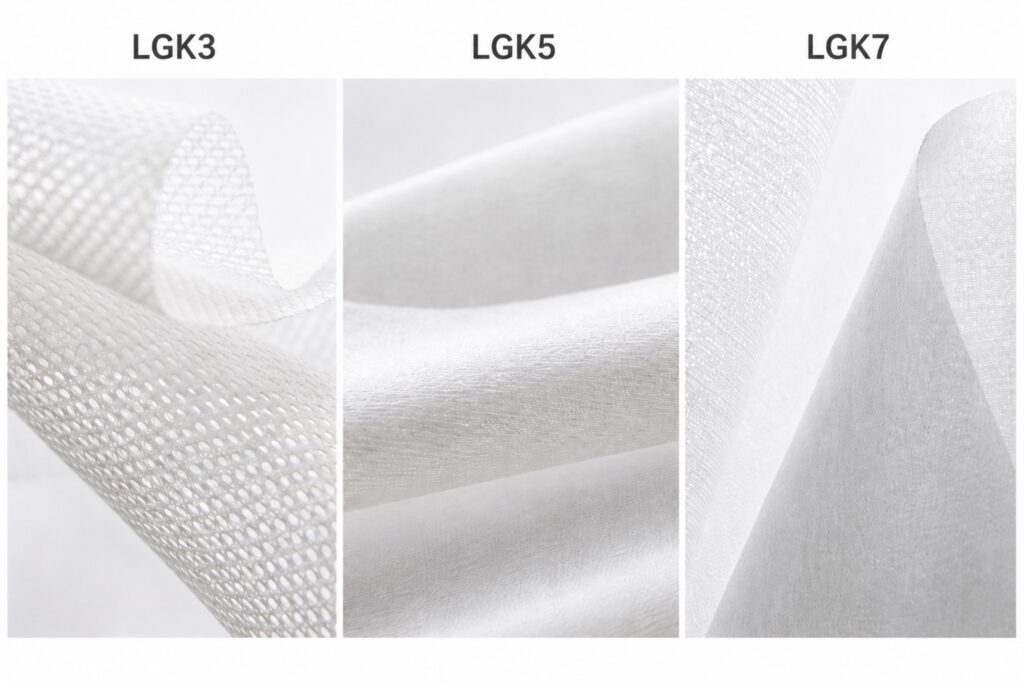
Adjacent to the cleanroom range, low-lint dry wipes cover healthcare and instrument cleaning where full cleanroom spec isn’t required. Application environments from cleanrooms and labs to GMP plants are covered on the solutions pages.
How Do You Match a Stock Specification to Your SOP?
The three LGK formats are sized as a working range, and choosing among them is a procedure question, not a catalog one. Three practical rules:
- Match sheet size to the wiping motion. Small sheets (LGK3, 25 × 20 cm) suit tool and small-surface wiping with frequent changes; the larger LGK7 (30 × 30 cm) covers benches, equipment housings, and solvent wipe-downs with fewer sheet changes.
- Match pack count to the station. High-count packs (LGK5, 300 pcs) fit fixed high-consumption stations; 100-piece packs suit distributed stations where opened packs shouldn't sit for weeks.
- Match durability to the chemistry. Where acid, base, or solvent wiping is routine, the solvent-resistant LGK7 is the default; for dry particle pickup and general surface work, LGK3/LGK5 cover it.
Bring your SOP to the sampling conversation — matching an existing specification correctly beats forcing a special one into a validated cleaning protocol.
How Do Sampling and Ordering Work?
The standard path: share your environment and current spec → receive samples and test documentation → validate in your own facility → confirm specification and packaging → schedule recurring supply. For buyers replacing an existing supplier, running both wipes side by side in the same zone for one cleaning cycle is the fastest honest comparison. Carton-level economics and lead times are quoted per specification — tell us your consumption rate and we’ll propose a supply cadence with safety stock.
FAQ
What’s the difference between a cleanroom wipes supplier and a manufacturer?
A supplier may be a distributor or trader reselling wipes from mills it doesn’t control; a manufacturer runs the production line. Distributors add value in logistics and consolidation, but for a process-contact consumable, know where the fabric is actually made — and whether the same line will make your next batch.
How do I verify a “lint-free” claim?
Through test data, not labels. Every wiper sheds at some level — “lint-free” is marketing shorthand — so the real questions are how the product performs in particle testing and whether that performance holds batch to batch. Graminton’s LGK cleanroom range has passed low-lint testing, and test documentation is supplied with samples.
What is the minimum order quantity?
Cleanroom wipes sell in carton quantities (for example, LGK5 packs 300 pcs/pack, 10 packs/carton), with per-SKU minimums quoted on inquiry. Sampling comes first in every case — validating performance in your environment before committing to volume is the process working as intended, not a delay.
Which wipe grade matches my ISO class?
Grade-to-class matching — including why GMP zones typically standardize one wiper grade per zone class — is covered in our cleanroom wipes classes guide. Bring your zone classification to the sampling conversation and the grade recommendation follows from it.
Are the wipes available outside Taiwan?
The wipes are made in Taiwan and packed in standardized cartons with inner packaging suitable for cleanroom transfer. International buyers and distributors can inquire through the contact form with their location and volumes for shipping arrangements.
Qualifying a new wipes supplier? Tell us your cleanroom class, current spec, and monthly consumption — we’ll send samples with test documentation to validate in your own facility.