
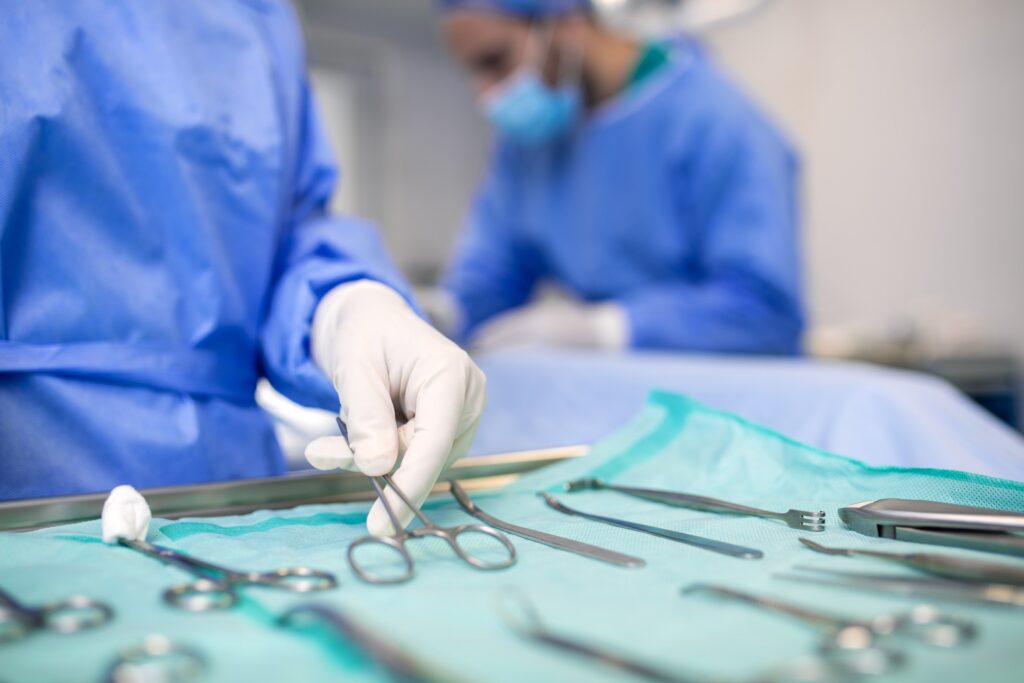
Surgical drapes are barrier fabrics that isolate the procedure site: laid over the patient and surrounding surfaces, they create and protect the sterile field so that only the intended area is exposed. Three formats cover most clinic and hospital needs — large SMS drape sheets for broad coverage, aperture (fenestrated) drapes with a precise opening over the site, and small absorbent towel drapes for minor procedures and instrument surfaces. This guide explains how each type works, the fabric engineering behind them, and what to check when sourcing.
What Does a Surgical Drape Actually Do?
A drape has two jobs at once:
- Block migration. The fabric must stop fluids — and the microorganisms they carry — from passing between the unprepared surroundings and the surgical site. That is why drape materials are water-repellent or waterproof.
- Define the working zone. Visually and physically, the drape marks what is sterile territory and what is not, which keeps the whole team's technique consistent.
Single-use nonwoven drapes have largely displaced laundered cloth in these roles: every piece arrives new with consistent barrier performance, and nothing depends on the previous wash cycle. For the broader consumables list beyond drapes, see our clinic disposables guide.
Which Drape Type Fits Which Procedure?
| Type | Construction | Typical use | Sterile or non-sterile options | Our SKU |
|---|---|---|---|---|
| SMS drape sheet | Spunbond–meltblown–spunbond barrier fabric; durable, withstands high-temperature sterilization processes | Broad coverage: patient draping, table and trolley covers, fenestrated material, sterilization wrap | Supplied non-sterile; sterilization and end use follow the facility’s own protocols | SMS Drape — blue or white, width 100–320 cm |
| Aperture (fenestrated) drape | Two-layer: absorbent wood-pulp top + waterproof PE film bottom, with a defined opening | Site-specific procedures in emergency and treatment rooms — the hole frames the working area, the fabric covers everything else | Supplied non-sterile; sterilization and end use follow the facility’s own protocols | Drape with Aperture — 50 × 50 cm (±1), aperture Ø 6–30 cm |
| Towel drape | Two-layer: absorbent wood-pulp top + waterproof PE film bottom | Minor procedures, instrument tables, under-limb placement, fluid control at the site | Supplied non-sterile; sterilization and end use follow the facility’s own protocols | HC8308 Towel Drape — 40 × 50 cm (±1), 200 pcs/pack × 5 packs/carton |
Terminology note that trips up first-time buyers: “fenestrated drape” and “aperture drape” are the same thing — fenestration is simply the medical term for the opening. Specialty formats (incise films, split drapes, equipment covers) exist for specific surgical disciplines, but the three above cover the daily needs of most clinics.
Why Is SMS the Default Drape Material?
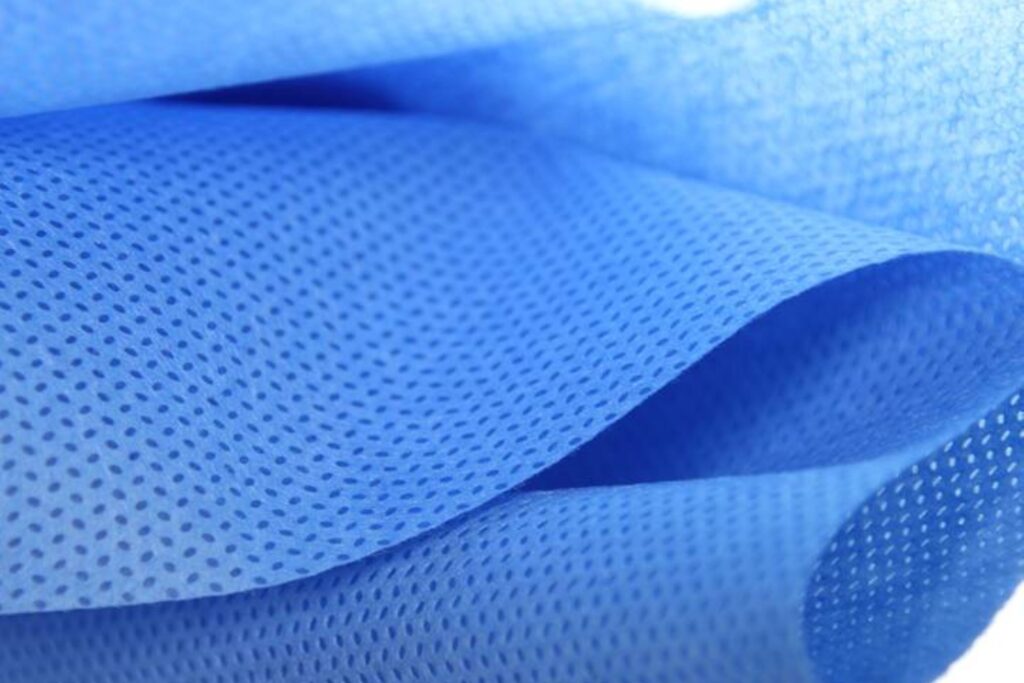
SMS sandwiches a meltblown filtration/barrier layer between two spunbond strength layers — the same composite logic used across medical barrier fabrics (our nonwoven fabric types comparison covers how each layer is made). For drapes, the result is:
- Fluid holdout from the meltblown core, without a plastic-film feel.
- Tear and abrasion strength from the spunbond faces — a drape gets pulled, clamped, and leaned on.
- Sterilization compatibility: SMS drape fabric withstands high-temperature sterilization processes, so a facility can process it within its own sterile workflow.
- Breathability relative to film-laminated fabrics, which matters for patient comfort in longer procedures.
Wide-format supply (100–320 cm) means kit makers can cut patient-size sheets without seams — a seam is a barrier weak point.
How Does the Absorbent-Top / Waterproof-Bottom Design Work?
Aperture and towel drapes take a different approach from SMS: a two-layer laminate where the job is split between layers.
1. The absorbent top layer (wood pulp fiber) captures irrigation fluids and blood at the site, keeping the working area dry enough to see and grip.
2. The waterproof PE film bottom stops everything the top layer absorbs from soaking through to the patient, table, or floor.
This is why a towel drape under an instrument tray or a limb does more than a plain absorbent sheet: it holds liquid and blocks strike-through. The same absorb-above/block-below construction serves ward and home care as disposable underpads — the non-sterile member of the family. When choosing an aperture drape, size the fenestration to the procedure — apertures from 6 to 30 cm cover everything from injection sites and biopsies to larger fields.
What Should Buyers Check When Sourcing Drapes?
1. Barrier construction — SMS for durable coverage, absorbent/waterproof laminates where fluid capture matters; ask for the material spec, not just the name.
2. Restricted-substance testing — Graminton’s drape line carries SGS formaldehyde test reports — the kind of documentation that matters for skin-contact medical textiles.
3. Sterilization pathway — confirm the fabric is validated for your sterilization method, and note that drapes are typically supplied non-sterile for downstream sterilization by the buyer or kit assembler; regulatory registration in your market is the importer’s process (our mask OEM guide explains that division of labor — it applies to drapes as well).
4. Dimensions and aperture options — width range, sheet sizes, and hole diameters that match your procedure mix.
5. Packaging counts — e.g., towel drapes at 200 pcs/pack × 5 packs/carton — match to your usage rate and storage.
Hospital-scale programs can consolidate drapes with gowns, masks, and bedding through the hospital solutions line.
FAQ
Is a fenestrated drape the same as an aperture drape?
Yes — “fenestration” is the clinical term for the opening. Product listings use both words; what matters is the aperture diameter and whether the surrounding fabric is absorbent, waterproof, or both.
Are these drapes supplied sterile?
No. They are supplied non-sterile; sterilization and end use follow the facility’s own protocols. If you need pre-sterilized packs, raise it in your inquiry so the supply chain can be scoped accordingly.
Disposable nonwoven or reusable cloth drapes — which is better?
Reusable cloth can look cheaper per use but depends entirely on laundering quality, and barrier performance degrades over wash cycles. Single-use nonwoven drapes arrive new with consistent, documented performance and no dependence on laundering — which is why many modern facilities choose them; guidelines such as WHO’s accept either sterile disposable or sterile reusable drapes.
How do I choose the aperture size?
Match the hole to the exposed field your procedure needs, with a small margin — an oversized aperture defeats the drape’s purpose. Common practice is to stock two or three diameters (small for injections/biopsies, larger for wound care) rather than one compromise size.
What is the difference between a surgical drape and a surgical towel?
A surgical drape is the barrier that creates the sterile field: an SMS sheet or an aperture drape covers the patient and surrounding surfaces so only the intended site is exposed. A surgical towel is a small absorbent sheet placed inside that field — under an instrument tray or a limb, or beside the site — to capture fluids. In our range, the towel drape (40 × 50 cm) has an absorbent wood-pulp top over a waterproof PE film bottom, so it both absorbs and blocks strike-through; the “towel” label refers to its size and absorbency, not to a laundered cloth. Both the drape and the towel drape are supplied non-sterile, and sterilization follows the facility’s own protocols.
Sourcing drapes for a clinic, distributor line, or surgical kit? Tell us your procedure mix, sizes, and volumes — we’ll reply with specs, test reports, and carton pricing.