
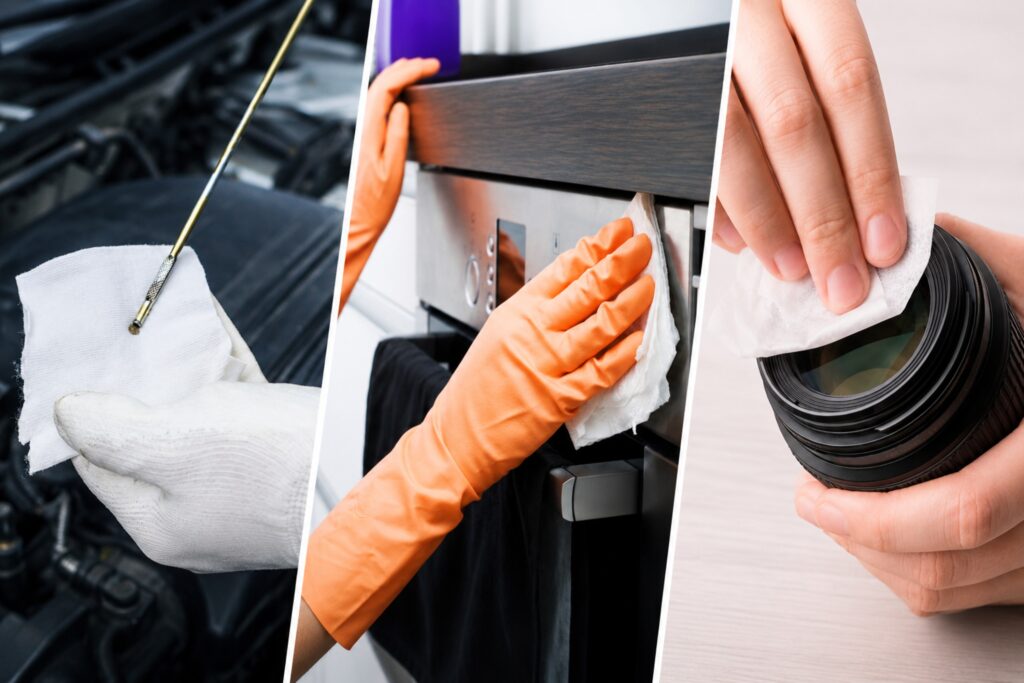
Industrial cleaning wipes are disposable nonwoven cloths engineered for one job: removing grease, oil, solvents, and grime from machines, parts, and work surfaces — consistently, and without the lint and hygiene problems of recycled rags. They come in two main material families: wood-pulp wipes that soak up liquids and wet messes, and melt-blown wipes that stand up to solvents and heavy grease. Choosing between them is what this guide is about, using Graminton’s LICK industrial wipes range — made in Taiwan — as the working example.
What Counts as an Industrial Cleaning Wipe — vs a Shop Towel or a Rag?
Industry uses three words loosely, but they name three different products:
- Wipers (industrial wipes): purpose-made disposable cloths with uniform size, material, and quality — you know what every sheet will do.
- Shop towels: traditionally, laundered cotton towels supplied and collected by a rental service; the term is also used loosely for disposable wiping rolls.
- Rags: cut-up recycled textiles sold by weight. Cheap per kilo, but every piece differs in size, absorbency, and cleanliness.
The practical difference is variability. A production line or repair bench that depends on wiping needs the same result every time — which is why facilities that audit their consumables usually standardize on purpose-made wipes rather than mixed rags.
Multi-Purpose vs Power Cleaning Cloths: What's the Difference?
The two families solve different problems. In the LICK range they look like this:
| Multi-purpose (wood-pulp) wipes | Power cleaning cloths (melt-blown) | |
|---|---|---|
| Material | Wood pulp, or wood pulp + polyester | 100% melt-blown nonwoven |
| Core strength | High absorbency for water, oils, and wet messes | Durability with solvents; acid- and alkali-resistant |
| Lint | Low | Very low — safe near precision surfaces |
| Wet or dry use | Both | Both; ideal carrier for degreasing solvents and alcohol |
| Typical jobs | Countertops, tableware, equipment surfaces, spill wiping | Engine assembly and repair, machine parts, LCD panels, printing equipment, glass |
| Example products | Multi-purpose wipes, multi-task cleaning cloths | Power cleaning cloths (flat rolls or quarterfold packs) |
Rule of thumb: if the enemy is liquid, go wood pulp; if the enemy is grease plus chemicals, go melt-blown. Melt-blown fibers are extruded so fine that the fabric grips oil films and survives solvent soaking without falling apart — the same material class used in filtration.
Which Wipe Fits Which Workplace?
- Machinery and repair shops — degreasing parts, wiping tools, soaking up cutting fluids: power cleaning cloths with solvent, in a quarterfold pack beside each station. See the machine industry solution for the full workflow.
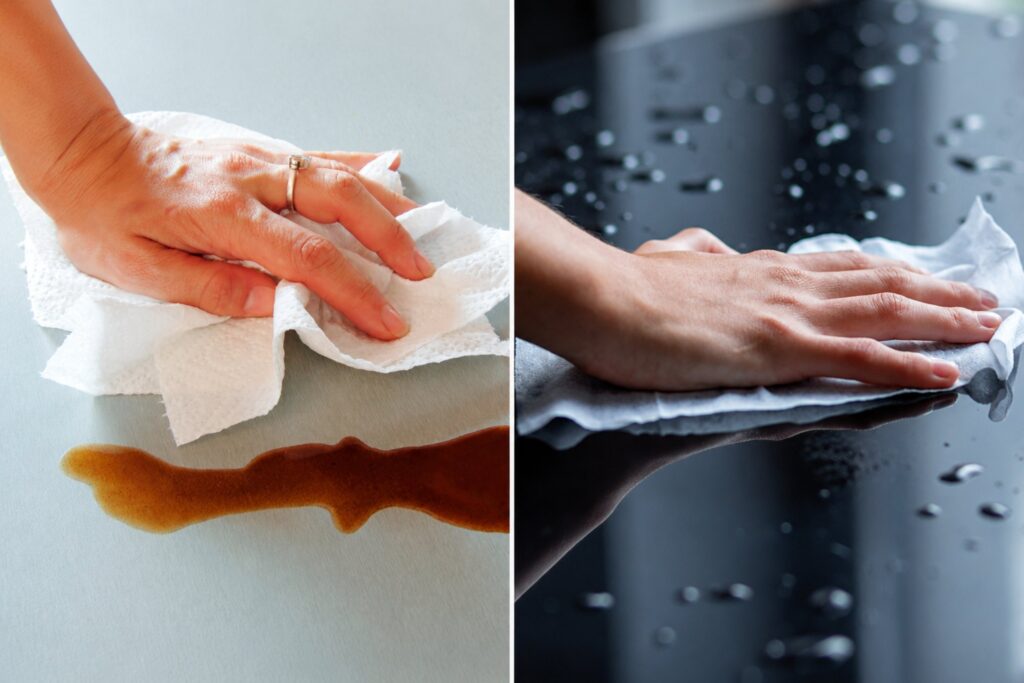
- Restaurants and commercial kitchens — counters, tableware, stainless surfaces: colorfast wood pulp + polyester wipes that can carry sanitizing solution without tearing or bleeding dye. The food industry solution maps products to kitchen zones. For the Food Code rules on wet and dry cloths, see our food service wiping cloths guide.
- GMP and food manufacturing plants — where wiping is part of documented hygiene procedure: durable general cleaning cloths (absorbing more than twice their weight) with SGS test reports for formaldehyde and heavy metals — evidence an auditor can file. Details in the GMP plants solution.
- Laboratories and instrument benches — lenses, instruments, delicate surfaces: small-format light duty wipes, low-lint with anti-static packaging and RoHS compliance.
- Cleanrooms are their own discipline — wiper class, linting, and solvent compatibility are specified differently there; see our cleanroom wiper selection guide.
How Do You Clean a Production Line with Disposable Wipes?
A repeatable five-step routine used across food and precision plants:
1. Zone the line. Split the line into product-contact and non-contact zones; assign each zone its own wipe type and color logic to prevent cross-use.
2. Dry-wipe first. Remove loose debris and standing liquid with high-absorbency wood-pulp wipes — detergent works better on a pre-wiped surface.
3. Apply cleaner or degreaser with the right carrier. For oily residues, load a melt-blown cloth with the degreasing solvent; it will not break down mid-task.
4. Wipe in one direction, fold as you go. Each fold exposes a fresh face; discard when all faces are used — the discipline that makes disposables more hygienic than rags.
5. Document and dispose. In GMP settings, log the cleaning event; used wipes leave the line rather than returning to a laundry loop, which removes a contamination path.
The consumable cost per cleaning event is easy to calculate with wipes (sheets used × unit price) — one reason quality teams prefer them to rental towels with hidden logistics fees.
Why Are Facilities Switching from Rags to Disposable Wipes?
Four reasons come up in nearly every conversion:
1. Consistency — rags vary piece to piece; wipes are identical, so procedures behave the same on every shift.
2. Hygiene — laundered rags and towels can retain residues from previous unknown uses; a disposable wipe starts clean, every time.
3. Surface safety — rags hide buttons, zippers, and metal debris that scratch machined and polished surfaces; wipes contain only fabric.
4. True cost — rags look cheaper per kilo until you count sorting time, rework from lint and scratches, and rental logistics. Standardized wipes make the cost visible and controllable — and are easy to buy in carton volumes matched to consumption.
FAQ
Are “shop towels” and industrial wipes the same thing?
Not strictly. Shop towels traditionally means laundered rental towels; industrial wipes (wipers) are single-use, purpose-made nonwoven cloths. If you are comparing quotes, compare per-use cost and consistency rather than the label on the box. For paper rolls, 1-ply vs 2-ply, and floor-stand stations, see our guide on when paper wiper rolls are enough.
Can I use industrial wipes with solvents and degreasers?
Yes — but match the material. Melt-blown power cleaning cloths are acid- and alkali-resistant and hold up in alcohol and degreasing solvents; ordinary paper towels and light wipes disintegrate. Check the product’s stated chemical compatibility before standardizing.
Are industrial cleaning wipes reusable?
Heavier cloths are durable enough to be rinsed and reused within a single task or shift, but they are designed as disposables: when a wipe has done its job, discarding it is what keeps the process clean. They should not be laundered and returned to service like rental towels.
What about oil spills on the floor — same product?
No. Wiping surfaces and absorbing spills are different jobs. For leaks, drips, and spill response around machines, use dedicated oil absorbent pads and booms (polypropylene, oil-only) rather than cleaning wipes — our guide to oil absorbent pads and booms covers that selection. For the cleanup itself, see our step-by-step oil spill cleanup guide.
Standardizing wipes across a plant, kitchen, or workshop? Tell us your surfaces, chemicals, and monthly volume — we’ll recommend the right LICK products and send samples with carton pricing.