
To clean up an oil spill at work, make the area safe and stop the source, contain the oil with absorbent booms (also sold as absorbent socks), lay oil-only absorbent pads over it from the edges inward, wipe the remaining film off the floor with a degreaser and a solvent-compatible cloth, collect the used material for disposal under your site’s rules, and restock what you used. On bare concrete, speed matters: the longer oil sits, the deeper it soaks in.
This guide is written for maintenance, facilities, and EHS teams in plants, workshops, warehouses, vehicle fleets, and aviation ground operations, and for the distributors who supply them. It covers machine oil, hydraulic oil, and fuel on floors and work areas. Cooking oil and kitchen grease traps are a different job, covered in our guide to grease trap oil absorbents.
What Are the Steps to Clean Up an Oil Spill at Work?
Most spill response steps for oil on a work floor come down to the same six actions:
- Assess the spill and stop the source if it is safe to do so.
- Place booms around the outside edge of the spill.
- Lay oil-only pads on the oil, working from the outer edge toward the center.
- Wipe the remaining film off the floor with a degreaser and a meltblown cloth.
- Put the used pads, booms, and cloths in a closed, labeled container.
- Replace what you used and keep absorbents near the places where spills start.
| Step | Goal | What it uses |
|---|---|---|
| 1. Assess | Keep people safe and stop more oil escaping | Gloves, eye protection, warning signs, a drip tray |
| 2. Contain | Stop the oil spreading toward drains and walkways | Oil absorbent booms (socks) |
| 3. Absorb | Take up the pooled oil | Oil-only pads, or a roll cut to length |
| 4. Wipe | Remove the slippery film | Degreaser and meltblown power cleaning cloths |
| 5. Dispose | Keep used absorbents contained until collection | Leak-proof bags or closed containers, labels |
| 6. Restock | Be ready for the next spill | Replacement booms, pads, and cloths |
How Do You Assess and Contain an Oil Spill?
Step 1: Assess the spill and make the area safe
- Identify the liquid. Check whether it is machine oil, hydraulic oil, diesel, or another oil; a water-based fluid such as coolant; or something you cannot identify. LICK LD absorbents are oil-only: they take up oil and repel water, so they still work on a wet floor, but they do not absorb coolant or other water-based fluids. Those need universal absorbents, which the LICK line does not include; our guide to oil-only vs universal absorbents explains the difference.
- See where the oil is heading. Look for floor drains, doorways, walkways, and open ground in its path.
- Protect the people doing the cleanup. Wear chemical-resistant gloves, eye protection, and slip-resistant shoes. Ventilate the area if there are fuel vapors, remove ignition sources (no smoking, no hot work, and switch off nearby equipment), and let hot oil cool before handling it.
- Stop the source if it is safe. Close the valve, turn the container upright, switch off the leaking machine, or set a drip tray under the leak.
- Mark off the area. Cordon off the spill and put out warning signs.
If the spill is larger than the absorbents on hand can contain, if oil has reached a drain, soil, or water, if the liquid is unknown, or if there is a fire risk, follow your site’s emergency response plan and call the responders it names.
Step 2: Contain the oil with booms
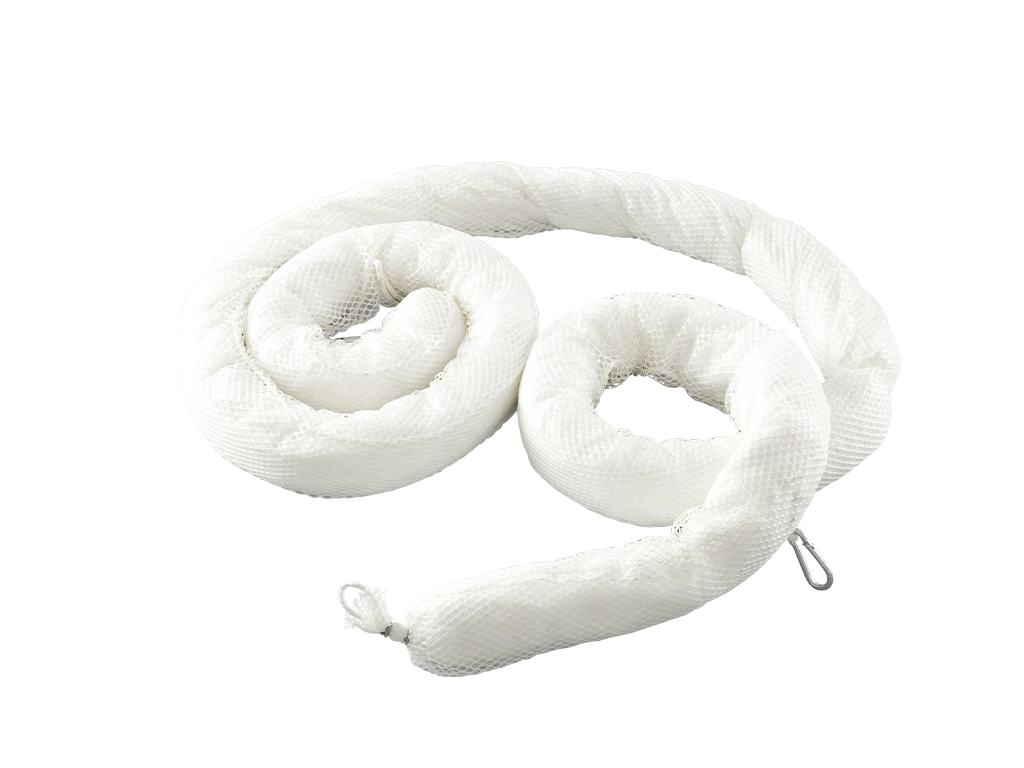
Contain first, then absorb. Place the first boom on the side facing the nearest drain, doorway, or walkway, then run booms around the outside edge of the spill to form a closed ring, overlapping the ends so there are no gaps. Press each boom down against the floor so oil cannot run underneath it. When the oil is leaking from a machine, place the booms around the outside of the machine base.
The LICK oil absorbent booms LD3, LD5, and LD8 are oil-only polypropylene, 3, 5, or 8 inches in diameter and 10 feet long, and they contain and absorb oil at the same time. The diameter is chosen for the site. As a general rule, thinner booms bend more easily around machine feet and door thresholds, while thicker ones suit larger spills and open areas. Because the booms repel water, they can also hold back oil floating on water, for example in an industrial water treatment tank.
How Do You Absorb Spilled Oil: Pads, Rolls or Granular Absorbent?
Step 3: Absorb the oil with pads or a roll
- Lay each pad on the oil from the outer edge toward the center, so the oil is not pushed outward.
- Press the pad down lightly and let it absorb; do not scrub the floor with the pad or wring it out.
- Expect thin oils to absorb quickly and thick or cold oils more slowly.
- Replace a pad once it has turned dark and stops taking up oil.
- Lift each saturated pad straight into the bag instead of dragging it across clean floor.
The LICK oil absorbent pads and rolls come in two formats. LD4843 sheets (50 × 41 cm, 100 per carton) are ready to use for spot spills. The LD360 roll (100 cm × 42 m) is cut to length for large areas, long leaks along a machine line, and walkways. Both are oil-only polypropylene that absorbs more than 12 times its own weight in oil; actual take-up varies with oil viscosity and temperature. They are acid- and base-resistant and lock in the oil they take up. The pad surface is perforated and heat-pressed: the holes speed up absorption, and the heat-pressing adds strength and toughness.
Pads vs granular absorbent: which suits your floor?
| Factor | Pads and rolls | Granular absorbent (clay, oil dry) |
|---|---|---|
| How it is applied | Laid on the oil and lifted off | Spread over the oil, worked in, then swept up |
| Best surfaces | Smooth or sealed floors, walkways, around machine bases | Rough, cracked, or uneven ground and gaps a sheet cannot reach |
| After the cleanup | Saturated pads lift out in one piece | Grit and dust to sweep and vacuum |
| What goes in the waste | Used pads and booms | Spent granules mixed with the oil |
Many sites keep both: granules for rough outdoor ground, and pads and booms for floors and machines. The LICK LD range covers pads, rolls, and booms; granular absorbent is a separate product category.
How Do You Remove Oil Residue From a Concrete Floor?
Step 4: Wipe the film off the floor
Once the pads have taken up the pooled oil, a thin film is left behind, and it is just as slippery. Bare concrete is porous, so a film left in place keeps soaking in.
- Apply a degreaser suited to your floor surface to the oily area.
- Leave the degreaser on for the time its label gives, without letting it dry.
- On bare concrete, scrub the area with a stiff brush to lift the oil out of the surface.
- Wipe up the loosened residue with a meltblown power cleaning cloth, wiping in one direction and refolding the cloth to a clean face as you go.
- Rinse only if the degreaser’s instructions call for it, and keep the rinse water out of floor drains.
- Dry the floor and check that it is no longer slippery before you reopen the area.
LICK meltblown power cleaning cloths are durable, low lint, and acid- and base-resistant, and they are suited to use with solvents and alcohol. L7207 comes as a perforated roll (32 × 25 cm sheets, 640 per roll, 2 rolls per carton) for a fixed station, and L8138 comes in quarterfold packs (30 × 23 cm, 30 per pack, 24 packs per carton) that are easy to carry to the spill. Old oil stains on bare concrete may need a second round of degreaser and brushing, while sealed floors usually clean up more easily. For other wiping jobs around the plant, see our guide to industrial cleaning wipes.

What Do You Do With Used Absorbents, and What Should You Restock?
Step 5: Collect and dispose of used absorbents
- Put saturated pads, booms, and used cloths into leak-proof bags or a closed container, along with disposable gloves.
- Label the container with what was spilled.
- Do not wring out used absorbents or reuse them on the next spill.
- Keep the container away from heat and flame until collection; absorbents that have taken up fuel can still burn.
How the waste is classified and collected is set by your site’s spill response plan and local waste rules; requirements vary by jurisdiction, so check the rules that apply to you.
It also helps to log each spill: the date, the liquid, the approximate amount, and what was used. The log tells you what to reorder and where leaks keep happening.
Step 6: Restock and keep absorbents where spills start
Restock the same day with the same items, so the next spill has a complete set. Keep absorbents close to where spills start and near drains:
- machine lines and hydraulic equipment
- fueling and transfer points
- drum storage
- loading docks
- vehicle or aircraft maintenance bays
Keep one visible, labeled point in each area, whether it is a cabinet, a wall station, or a spill kit, with booms, pads, and cloths stored together. LD pads and booms are durable and do not deteriorate easily, which makes them simple to store; keep them dry and away from flame.
| Format | LICK product | Size | Pack |
|---|---|---|---|
| Pads | LD4843 | 50 × 41 cm | 100 per carton |
| Roll | LD360 | 100 cm × 42 m | 1 roll per bag |
| Booms | LD3 and LD5 | 3 in or 5 in diameter × 10 ft | 4 per pack |
| Booms | LD8 | 8 in diameter × 10 ft | 3 per pack |
| Power cleaning cloths, roll | L7207 | 32 × 25 cm, 640 per roll | 2 rolls per carton |
| Power cleaning cloths, quarterfold | L8138 | 30 × 23 cm | 30 per pack, 24 packs per carton |
Distributors can use this set as the reorder list that plant customers work from after each spill. For estimating how much to keep on hand and where to buy, see how many absorbent pads a facility needs, and for plant settings, see our machine industry solutions. LICK absorbents and wipes are made in Taiwan under an ISO 9001-certified quality system.
FAQ
What is the best way to clean up an oil spill on a floor?
Contain it with booms first, then lay oil-only pads over the oil from the edges toward the center. Once the pooled oil is up, remove the remaining film with a degreaser and a meltblown cloth, bag the used material, and reopen the area only when the floor is dry and no longer slippery. Do not hose the oil away with water, and follow your site’s emergency response plan if the spill is large or the liquid is unknown.
Can you mop up an oil spill?
Not as the first step. A wet mop spreads oil around, and the water can carry it toward floor drains. Absorb the oil first, and use a mop or brush only for the final film, following the degreaser’s instructions. Oil-only pads repel water, so they still work if the floor is already wet.
Does kitty litter absorb oil?
Clay litter and granular oil dry can absorb small drips, but they work more slowly, have to be swept up, and leave grit and dust behind. On smooth floors, pads lift out in one piece, which makes the cleanup faster; granules are better suited to rough ground where a sheet cannot sit flat.
How do you know when an oil absorbent pad is saturated?
A saturated pad turns dark and heavy across its whole surface, and oil sits on top instead of soaking in. That is the point to lift the pad into the bag and lay a fresh one. For booms, the sign is oil getting past the ring: add another boom or replace the saturated one.
How long do oil absorbent pads last in storage?
The product pages do not list a shelf life. LD pads and booms are durable and do not deteriorate easily, so keep them in a dry, covered place away from heat and flame, and use older stock first. Replace any pack that has been damaged or has taken on moisture.
Restocking spill response supplies for a plant, a fleet depot, or a distribution business? Tell us the oils you handle, the areas you need to cover, and your monthly usage, and we’ll reply with samples, specifications, and carton pricing for LICK oil-only pads, rolls, and booms and power cleaning cloths, made in Taiwan.