
Private label toner pads are pre-soaked pads packed in a jar or pouch, each carrying a measured dose of toner or essence, sold under your brand. The format made popular by Korean toner pads is really two products developed as one: a nonwoven pad and a liquid formula. Most problems buyers run into, such as pads that dry out at the top of the jar, pads that tear or fuzz when wet, or a formula that behaves differently on fiber than in a bottle, come from choosing the two separately.
This guide explains how toner pads differ from related formats, which pad formats brands develop, why the pad matters as much as the formula, what has to be tested when the two meet, and how a project runs. For the formula, filling and packaging scope, see our cosmetics OEM services.
What Are Toner Pads, and How Are They Different From a Toner and a Cotton Pad?
A toner pad is a pad that comes already soaked in formula, so each pad delivers a set amount of liquid. Compared with a bottle of toner and a dry cotton pad, the work of dosing moves from the user to the product developer. That shift changes what has to be designed.
| Format | Who doses the liquid | Shelf-life consideration | Packaging |
|---|---|---|---|
| Bottled toner with dry cotton pads | The user pours it | The dry pad carries no formula | Bottle plus a separate pack of pads |
| Pre-soaked toner pads | Set by the product, pad by pad | The formula sits on the pads, and the jar is opened again and again | Jar or pouch with a seal and a way to lift pads out |
| Sheet mask | Set by the product, one sheet | Each sheet is sealed and used once | Single-sheet pouch; see sheet mask OEM |
Because a toner pad jar is opened every day for weeks, preservation and sealing are designed together with the formula from the start. The pad itself is chosen to hold and release that formula evenly.
Which Toner Pad Formats Are Brands Developing?
Toner pads come in a few recognizable formats. Each one starts from a different kind of pad:
| Format | Pad character | Brief notes |
|---|---|---|
| Daily wipe pads | Thin, plain or finely textured; one pad covers the face | Liquid load per pad, wiping feel |
| Textured or dual-sided pads | One textured side and one smooth side | Which side does what, how the texture holds liquid |
| Soaking pads for local application | Thin and stretchable, laid on the cheeks | Stretch when wet, how long it stays in place |
| Acid-containing pads | Any of the above | Check fiber and formula compatibility; labeling and claims follow the rules of each market |
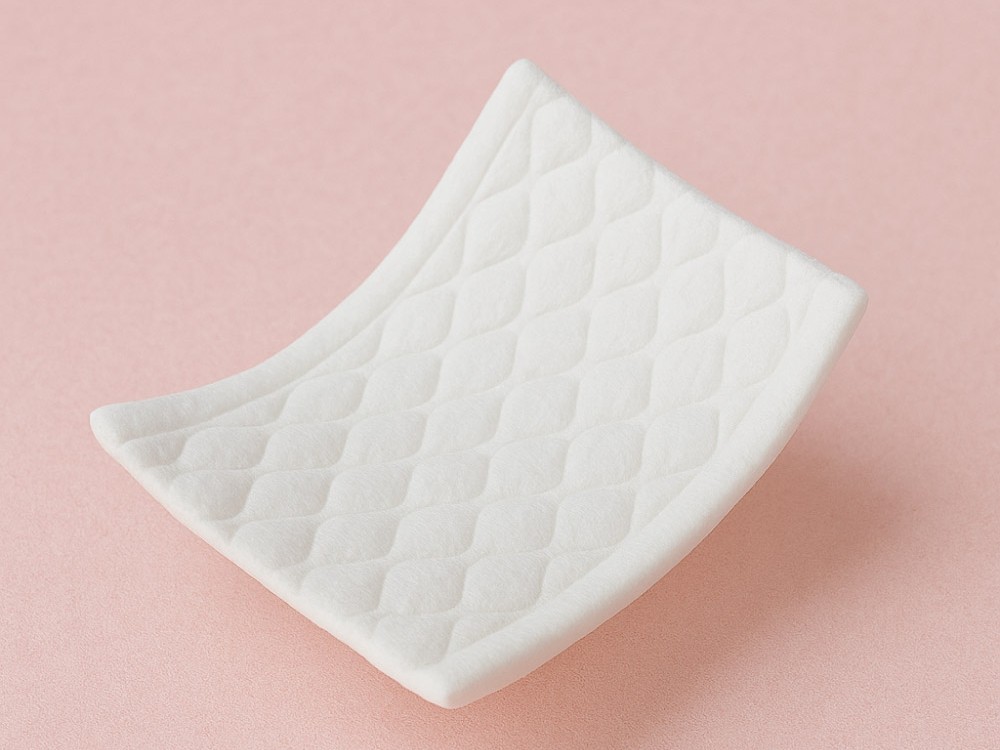
Existing pads show the constructions available as starting points. The skinprep cushion pads (BU9101) have a quilted diamond surface, 50 × 60 mm, 120 per pack. The stretchable makeup pads (NK8108) are 10 × 10 cm sheets of lyocell and plant fiber, 400 per pack, made to be soaked and gently stretched over the face. The BU8110 premium cotton pad is a three-layer, dual-sided pad with a plain side and a reticulated side.
Why Is the Pad Half of the Product?
The pad decides how much liquid each piece holds, how evenly it releases it, and whether it survives being lifted out of a wet jar. Nonwoven performance depends on the fiber blend, structure, weight and production method, and each of those is a choice in a toner pad brief:
- Fiber blend: the mix of plant fiber, cotton or lyocell changes how much liquid the pad takes up and how strong it stays when wet.
- Structure: spunlace pads can be plain, textured, quilted or layered.
- Thickness and basis weight: a heavier pad carries more liquid but changes the feel and the number of pads per jar.
- Size and shape: round, square or oval, sized to the jar and the face.
- Wet strength: the pad should not tear or fuzz when saturated.
Stock pads are the usual starting point. Cotton pad SKUs can be adjusted for size and shape, pad thickness and pack count. The pad substrates carry SGS reports for formaldehyde, heavy metals, E. coli and migrating fluorescent agents.
What Has to Be Tested When the Pad and the Essence Meet?
A formula that works in a bottle can behave differently once it sits on fiber in a jar. These checks are where the two halves are tested as one product:
- Essence pick-up and distribution: whether the top and bottom pads in the jar carry the same amount, and whether the last pads dry out.
- Pad integrity when saturated: whether pads tear, stretch out of shape or fuzz when lifted.
- Formula and fiber compatibility: acids and oil-rich formulas especially need checking on the chosen fiber.
- Preservation under repeated opening: the jar is opened and closed many times over weeks of use.
- Packaging and seal: jar, inner lid, tweezer or spatula, or single-pad sachets.
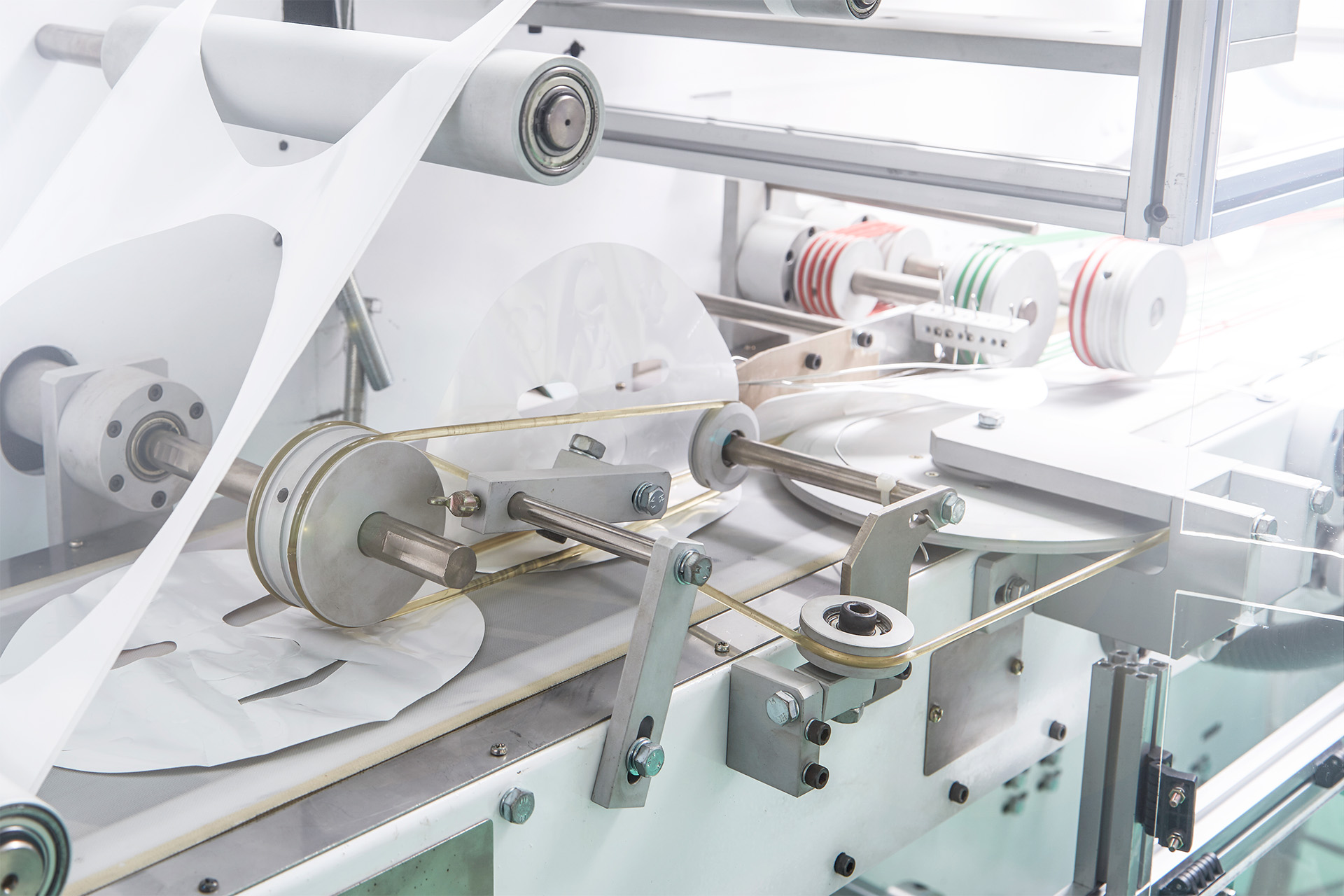
Quality work includes stability testing and three-stage cosmetic testing, and process water is treated through a seven-stage filtration process. The same pad-and-liquid thinking runs through our sheet mask production, where substrate and essence are also designed together. How a pad is classified and labeled depends on its formula and claims in each market, so confirm the rules where you sell.
How Does a Private Label Toner Pad Project Run, and What Sets the Minimum Order?
A toner pad project follows the same six steps as other cosmetics projects, with the pad and the essence moving together:
- Project brief: format, pads per jar, target channel and market.
- Product proposal: pad candidates and a formula route, either a mature formula or a new one; for how the formula side works, see our guide to serum ODM.
- Formulation and samples: pad and essence are sampled together to test liquid load and feel.
- Approval and quotation: sign off the pad spec, formula, packaging and claims.
- Manufacturing: production against the approved spec.
- Inspection and shipment: batch QC before release.
The minimum order is set by four variables: the pad spec (stock or adjusted size and thickness), the formula route (mature or new), the jar and lid (stock or custom), and the number of pads per jar and SKUs. Starting from a stock pad, a mature formula and a stock jar keeps the first order lean. For how costs and minimums break down, see cosmetic OEM costs and MOQ.
FAQ
Are toner pads just cotton pads soaked in toner?
The idea is similar, but the finished product carries a formula. The pad is chosen for the viscosity and load of the essence, and the essence is adjusted for the fiber and for a jar that is opened daily, so the two are developed together. For a dry pad, see the premium cotton pad.
Can we start with a stock essence instead of a custom formula?
Yes. Formula work can use your own recipe or start from a mature formula library. Adjusting a mature formula is usually faster than developing a new one.
Can the pad itself be customized?
Cotton pads can be adjusted for size and shape, thickness and pads per pack, starting from an existing pad construction. Entirely new materials go through product development, where past projects include a three-layer makeup pad.
Should a brand launch toner pads or sheet masks first?
It depends on how customers will use them: daily wiping from a multi-pad jar, or a single sheet used once. Both rely on the substrate and the essence being designed together, so a brand with a sheet mask can extend its essence direction into pads.
Tell us the pad format you have in mind (size, texture, pads per jar), the essence direction, your target market and estimated first order. We will suggest pad candidates and a formula route, arrange samples, and send SGS reports for the pad substrates with our quote.