
Industrial wipes vs shop rags comes down to consistency: an industrial wipe is made to a stated size, count and material, while a shop rag’s size, fiber and finish change from piece to piece. Rags still suit rough scrubbing where a laundry routine exists. For repeatable jobs, plants replace rags tier by tier: paper wiper rolls for quick spills, nonwoven wipers for general wet or dry wiping, meltblown cloths for grease and solvents, low-lint spunlace for finishing and clean areas, and small tissues for instruments.
The same tiers are how buyers find an alternative to a brand-name wiper they use today. This guide matches each task to a tier and a LICK or LGK spec, then covers how to trial a switch and how distributors can build the line. For definitions of wipers, shop towels and rags, and how to work out cost per use, see our guide to industrial cleaning wipes.
Industrial Wipes vs Shop Rags: What Changes When a Plant Switches?
The switch changes what arrives on the shelf and how use is counted:
| Factor | Cloth shop rags | Industrial wipes |
|---|---|---|
| What you buy | New cotton shop towels, or reclaimed textile pieces often sold by weight | Sheets or rolls made to a stated size, count and material, sold by the roll, pack or carton |
| Piece to piece | Size, fiber and finish vary with the source textile | The same sheet every time |
| Lint | Depends on the textile and its wear | Low-lint grades are stated on the product page |
| Solvents and alcohol | Depends on the fiber | Listed grade by grade |
| After use | Laundered and reused, or discarded | Discarded when the task is done; heavier cloths can be rinsed and reused within a shift |
| How use is counted | Weight bought, or towels in circulation | Sheets per task |
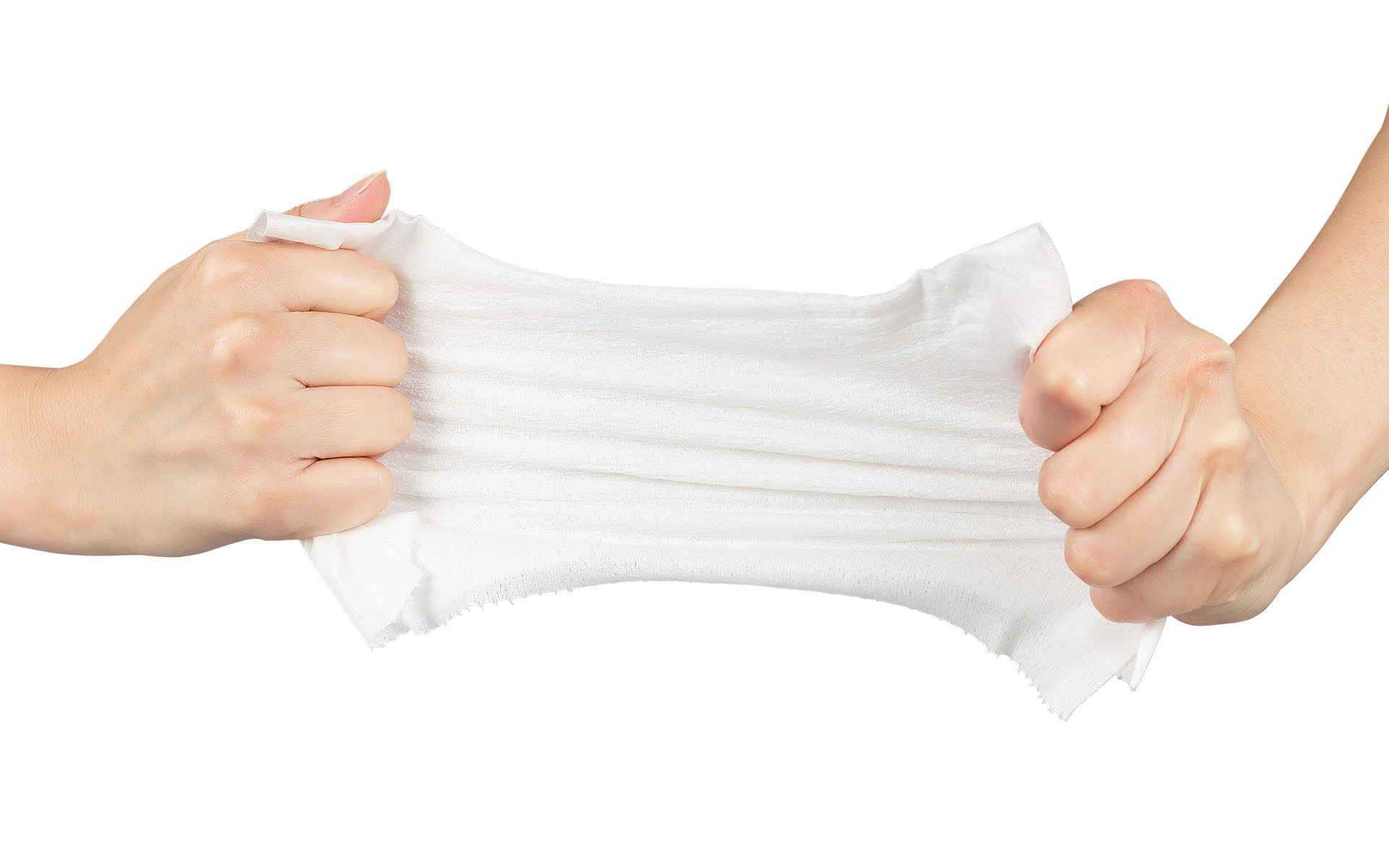
Neither option replaces the other everywhere. Plants that already run a laundry routine often keep cloth for scrubbing rough surfaces, and move repeatable tasks to wipers so every shift gets the same sheet. The heavier nonwoven cloths are durable enough to be rinsed and reused within a single task or shift, but they are designed as disposables.
Which Wiper Replaces a Shop Rag, Task by Task?
Start from what the rag was doing. Six tiers cover most plants:
| Tier and typical tasks | LICK option | Size and pack | Material | Notes from the product page |
|---|---|---|---|---|
| Paper wiper roll: water, light oil, dust, small spills | L7280 Paper Towel Roll 1 ply | 25.5 cm × 794 m per roll, 2 rolls per carton | Wood pulp paper | Surfaces, tables, countertops, assembly parts |
| L7282 Paper Towel Roll 2 ply | 23 cm × 637 m per roll, 2 rolls per carton | Wood pulp paper, 2-ply | Small liquid, oil and dust without leaving marks | |
| General-purpose nonwoven: wet or dry wiping of machines, parts, surfaces | L7206 Multi-Task Cleaning Cloths | 23 cm × 176 m per roll, 2 rolls per carton | Nonwoven | Dry or wet use; machines, parts and surfaces in food plants and precision machinery plants |
| L7212 Multi-Purpose Wipes Roll | 20 × 30 cm, 580 sheets per roll, 2 rolls per carton | Wood pulp and polyester, raised-dot texture | Low lint; compatible with solvents; production line machinery, maintenance workshops, workpieces | |
| Heavy-duty spunlace cloth: repeated wiping of equipment and counters | L7209 General Cleaning Cloths | 25.5 × 30 cm, 680 per perforated roll, 2 rolls per carton; or 30 × 35 cm, 900 per perforated roll, 1 roll per carton | Wood pulp and polyester, spunlace | Equipment surfaces, counters and tables in GMP, food and precision machinery plants |
| Meltblown power cloth: grease, oil, ink, solvents, alcohol | L7207 Power Cleaning Cloths | 32 × 25 cm, 640 per perforated roll, 2 rolls per carton | Meltblown polyester | Low lint; acid- and base-resistant; machines and parts, engine assembly and repair, LCD panel assembly, printing, glass |
| L8138 Power Cleaning Cloths Quarterfold | 30 × 23 cm, 30 per pack, 24 packs per carton | Meltblown polyester | Same jobs, one cloth at a time from the pack | |
| Low-lint spunlace: finishing, labs, clean manufacturing | LGK3 Cleanroom Wipes | 25 × 20 cm, 100 per pack, 30 packs per carton | Polyester, spunlace | Low lint; acid-, base- and solvent-resistant; laboratories, clean manufacturing, LCD manufacturing |
| LGK5 Cleanroom Wipes | 23 × 23 cm, 300 per pack, 10 packs per carton | Plant fiber and polyester, spunlace | Low lint; won’t leave scratches; semiconductor, car and bicycle component manufacturing | |
| LGK7 Cleanroom Wipes | 30 × 30 cm, 100 per pack, 16 packs per carton | Wood pulp and polyester, spunlace | Low lint; dry or wet use; acid-, base- and solvent-resistant; high-tech, pharmaceutical, biotechnology, medical-device wiping | |
| Delicate task tissue: instruments, lab surfaces, laboratory lenses | L9133 Light Duty Wipes | 11 × 19 cm, 280 per pack, 60 packs per carton | Wood pulp paper | Soft, low lint; anti-static package; surfaces, parts and instruments in labs, laboratory lenses |
Paper wiper rolls. For water, light oil, dust and small spills, a paper roll is often enough. How to choose between 1-ply and 2-ply, and how to set up a floor-stand station, is covered in our guide to 1-ply and 2-ply paper wiper rolls.
General-purpose nonwoven. For dry or wet wiping of machines, parts and benches, a nonwoven wiper takes over most of what a rag did. L7206 is a 176 m continuous roll, and the multi-purpose wipes roll L7212 comes as 20 × 30 cm sheets with a raised-dot texture; its product page lists low lint and compatibility with solvents.
Heavy-duty spunlace. Where a rag was used again and again on equipment and counters, move to spunlace general cleaning cloths: L7209 comes on perforated rolls in two sheet sizes.
Meltblown. For grease, oil, ink, solvents and alcohol, use meltblown power cleaning cloths: L7207 on a perforated roll, or L8138 in quarterfold packs. The product pages list them as acid- and base-resistant and low lint, for machines and parts, engine assembly and repair, LCD panel assembly, printing and glass.
Low-lint. Where fiber left on a surface means rework, such as pre-paint preparation, labs and clean manufacturing, use a low-lint spunlace such as LGK7 cleanroom wipes. What a low-lint label does and does not promise is explained in our guide to lint-free vs low-lint wipes. Classified cleanrooms follow their own cleanroom specification.
Delicate tasks. For instruments, lab benches and laboratory lenses, use a small tissue: the light duty wipes L9133 measure 11 × 19 cm, come 280 per pack, and are listed as soft and low lint in an anti-static package.
How Do You Find an Alternative to a Brand-Name Wiper?
Buyers who search for WypAll® or Kimwipes® alternatives usually want a second source, a private-label program, a format their current line does not offer, or a closer fit for one task. Here, an alternative means a wiper that does the same task at a spec you have checked, not a copy of a branded product.
- Name the task the current wiper does, and find that task’s tier in the table above, such as a delicate task tissue for instruments or a meltblown cloth for oil and ink.
- Write down the current wiper’s spec from its packaging or data sheet: sheet size, sheets per roll or pack, packs per carton, material, color, fold or roll format, and the dispenser it fits.
- Shortlist the LICK SKU in the same tier that is closest in sheet size and format.
- Trial the shortlisted wiper next to the current one on your own soils, solvents and surfaces, and count the sheets each task uses.
- Switch one zone or line at a time, keep one wiper per task, and update the reorder list and the dispenser label.
An alternative is judged by its stated spec and your own trial, not by the name on the box.
WypAll® and Kimwipes® are trademarks of Kimberly-Clark Worldwide, Inc. or its affiliates. Graminton is not affiliated with or endorsed by Kimberly-Clark; the names are used only to describe the tasks these product ranges are known for.
How Do You Trial and Roll Out a Switch?
A trial on real work tells you more than any data sheet:
- Test on real tasks. Use the same soils, solvents and surfaces, dry and wet, side by side with the current wiper.
- Count sheets per task, not cartons. Sheets per task is the unit you will compare later.
- Check the surface after wiping. Look at a dark or polished surface under a light for residue and fiber.
- Check how the wiper is dispensed. Perforated rolls go on a floor stand such as the LE-0002 or a wall holder; quarterfold and pop-up packs dispense one wiper at a time and cut waste.
- Plan disposal. Wipers used with solvents or oils may fall under waste rules in some jurisdictions, so check the rules that apply to your site.
- Roll out one area at a time. Change one zone or line at a time, keep one wiper per task, and put each SKU on the reorder list and the dispenser label.
Request samples of the shortlisted SKUs first; a trial over one or two shifts usually shows the difference.
What Should Distributors Know About Carrying an Alternative Wiper Line?
A compact line answers most requests: one paper roll, one general-purpose nonwoven roll, one heavy-duty spunlace, one meltblown cloth in both roll and quarterfold, one low-lint wipe and one delicate task tissue, all from the table above.
LICK wiping cloths and wiping paper can be supplied under a private label. Sheet size, fold, roll length and dispenser or box packaging can be adjusted, with feasibility confirmed line by line, and minimums are usually driven by the printed packaging. LGK cleanroom wipes and the LE-0002 floor stand are supplied as standard LICK items. Our industrial wiper supplier guide covers how a private-label program runs.
The wiping cloths, paper rolls and LGK wipes in the table carry SGS results for formaldehyde, heavy metals, E. coli and migrating fluorescent agents, and several grades also carry SGS food-contact and packaging-material testing; L9133 is SGS-tested for RoHS. The LICK industrial line is made under an ISO 9001-certified quality system, and the report for a specific SKU is available on request. All the wipers in this guide are made in Taiwan.
FAQ
What is the difference between a shop rag and an industrial wipe?
A shop rag is a new cotton towel or a piece of reclaimed textile, so its size, fiber and condition vary from piece to piece, and it is often laundered and reused. An industrial wipe is a sheet or roll made to a stated size, count and material, and it is discarded after the task. Choose by task, using the tier table above.
What can I use instead of Kimwipes?
For delicate tasks, use a small, soft, low-lint wood pulp tissue in a dispenser pack. In the LICK range that is the L9133 light duty wipe: 11 × 19 cm, 280 per pack, listed for lab surfaces, instruments and laboratory lenses. For lenses and optics, see our guide to lens cleaning tissue.
What are rag replacement wipers?
Rag replacement wipers is the trade name for heavier disposable wipers that take over the work of cloth rags. They are spunlace, airlaid or meltblown constructions for dry or wet use, and some grades work with solvents. LICK examples include the spunlace L7209, the raised-dot L7212 roll, and the meltblown L7207 and L8138.
Can one wiper replace all the rags in a plant?
Usually not. Most plants settle on three or four tiers: a paper roll for spills, a general-purpose nonwoven, a meltblown cloth for grease and solvents, and a low-lint wipe for finishing and clean areas. Fewer SKUs keep restocking simple; trial each tier first.
Is an alternative wiper the same as the brand-name wiper it replaces?
No. It is a different wiper that does the same task at a spec you have checked. What you compare is the stated spec and the result of your own trial, not the brand name.
Replacing rags or a brand-name wiper across a plant, or building a wiper line for a distribution business? Tell us the tasks, the wipers you use now (size, count and format), and your monthly usage. We’ll reply with samples matched to each tier, the SGS reports for the SKUs you shortlist, and carton pricing.