
A dental disposables checklist is easiest to build by where each item sits around the chair: a bib on the patient’s chest, covers on the instrument tray and counter, a cover on the headrest, masks for the team, and wipes for the surfaces between patients. The monthly order then follows from the count each visit uses, multiplied by visits, and rounded up to full cartons.
This guide is for dental supply distributors and for buyers at group practices and dental service organizations (DSOs) that stock several clinics. It maps each zone of the operatory to an item, gives the count per patient and the carton math, and ends with how to evaluate an overseas dental bib manufacturer. The examples use GhealthCare HC8401, HC8310, HC8305 and HC8312; the wider range of dental clinic supplies is on our clinics page.
What Goes on a Dental Disposables Checklist?
Work around the chair zone by zone. Each zone takes one disposable, changed for every patient:
| Zone | Item | Graminton option | Changed |
|---|---|---|---|
| Patient’s neck and chest | Patient bib (also called a patient towel or napkin) | HC8401 dental bib (flat) or HC8310 U-shaped bib (adhesive) | Every patient |
| Instrument tray | Tray cover or liner | HC8305 table paper sheet (S or L); HC8401 also works | Every patient |
| Counter and bracket table | Barrier sheet | HC8305 table paper sheet, L | Every patient |
| Headrest | Headrest cover | HC8312 pillow tissue (try a sample on your headrest first) | Every patient |
| Clinical team | Face masks | GhealthCare adult face masks | Per your practice protocol |
| Surfaces after each patient | Dry wipes used with your surface disinfectant | L8151 low-lint dry wipes | Every patient |
Most checklists also carry gloves, cotton rolls, gauze, saliva ejectors, rinse cups and sterilization pouches. Those are not Graminton items, so stock them from your usual suppliers; this guide covers the paper and nonwoven layers.
GhealthCare adult face masks are verified to CNS 14774, Taiwan’s national standard for medical face masks, with a bacterial filtration efficiency (BFE) of at least 95%. What the dental channel sells as dental masks are usually procedure masks. For items the whole clinic shares, such as exam table sheets and wipes, see our guide to clinic-wide nonwoven essentials.
Which Dental Bib Fits: Flat HC8401 or U-Shaped HC8310?
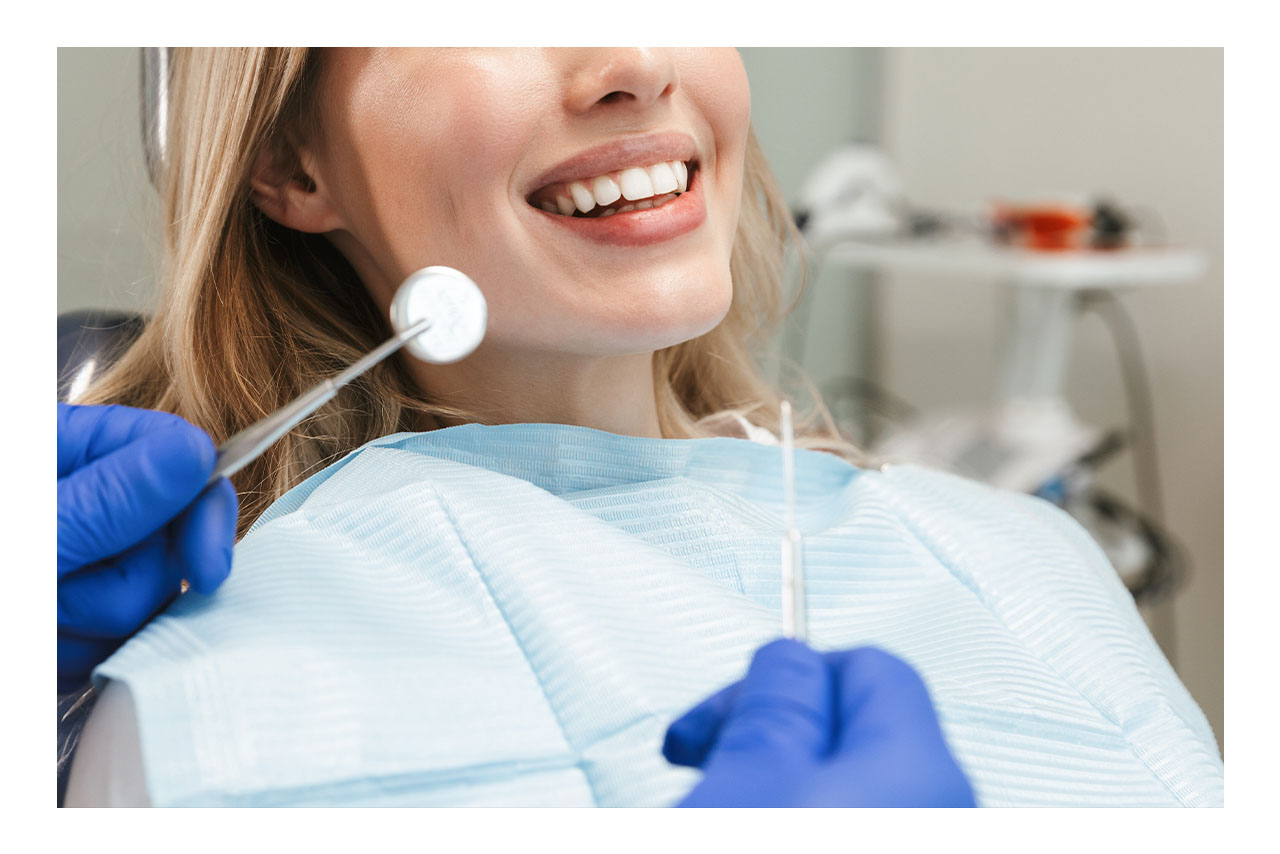
Both bibs share the same two-layer build: an absorbent paper layer on top that takes up saliva and spray, and a PE film underneath that stops it from reaching the patient’s clothing. They differ in format, size and pack count.
| HC8401 dental bib | HC8310 U-shaped bib | |
|---|---|---|
| Format | Flat sheet, held with a bib clip or chain | Semi-circular neck cut-out with adhesive backing |
| Size | 33 × 45 cm (13 × 18 in), ±1 cm | 40 × 50 cm, ±1 cm |
| Pack | 50 per pack, 10 packs per carton (500) | 100 per pack, 10 packs per carton (1,000) |
| Color | Pink or blue | White |
| Material | Wood pulp fibers with a PE film back | Wood pulp fibers with a PE film back |
| Uses named on the product page | Dental visits, medical visits, lab inspection; kids and adults | Dental visits, nasopharyngeal exams, nursing homes |
| Test items | SGS: formaldehyde, heavy metals, E. coli, migrating fluorescent agents | The same four SGS items |
Full specs are on the HC8401 dental bibs and U-shaped adhesive bib product pages. How to choose between them:
- Routine exams and cleanings: the flat HC8401. At 13 × 18 in it matches the most common bib size in the US dental channel, and the product page lists it for both kids and adults.
- Patients who move, or a bib that should stay put: the HC8310. The semi-circular cut-out sits around the neck, and the adhesive strip peels off so the bib presses onto the patient's clothing without a clip.
- Color coding: HC8401 comes in pink and blue, which some practices use to tell rooms apart or to mark a pediatric operatory.
- A bib as a tray liner: HC8401 can also be laid on a tray or counter under instruments, paper side up (see the FAQ).
Where Else Is the U-Shaped Bib Used Beyond the Dental Chair?
The HC8310 product page lists nasopharyngeal (ENT) examinations and nursing homes alongside dental visits. For a seated ENT exam, the semi-circular cut-out and the adhesive backing hold the bib on the patient’s chest without a clip. In care homes, the same bib protects clothing at mealtimes.
For distributors, that means one item serves three channels: dental practices, ENT clinics and long-term care. At 100 bibs per pack and 1,000 per carton, it suits high-volume rooms and facilities. The HC8310 is supplied non-sterile.

How Should Trays, Counters and Headrests Be Covered?
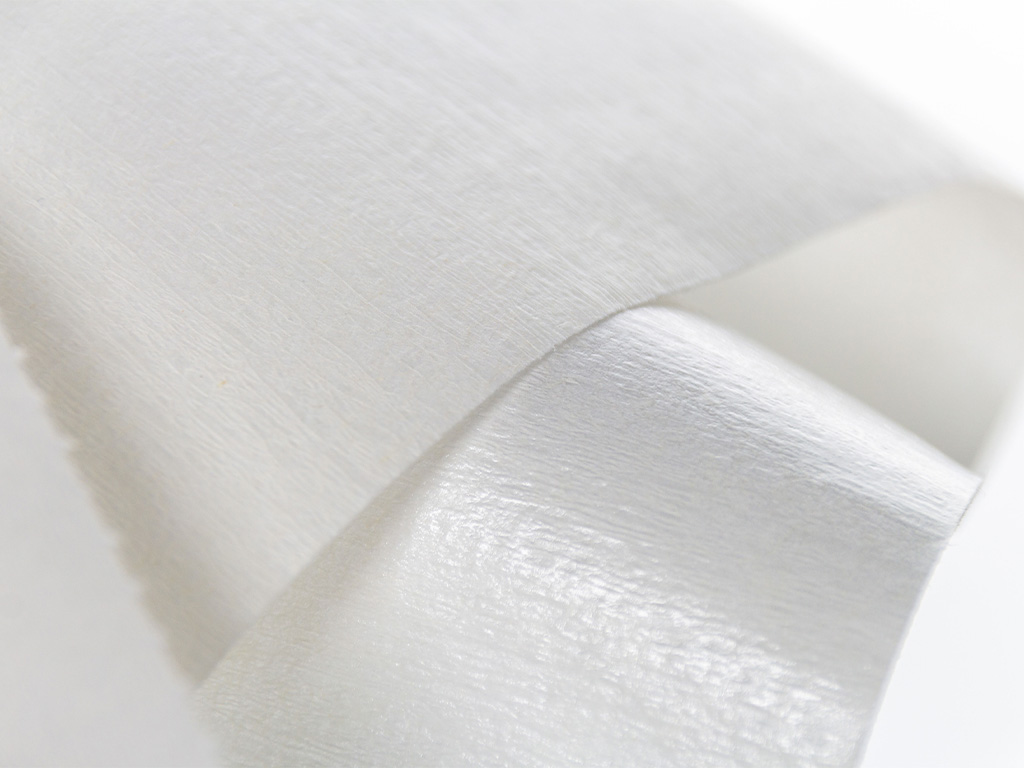
For trays and counters, HC8305 table paper sheets come as stacked single sheets with an absorbent top and a PE film back: S at 35 × 50 cm and L at 55 × 50 cm, 200 sheets per pack (S: 7 packs per carton, or 1,400 sheets; L: 5 packs per carton, or 1,000 sheets). The product page lists dental clinics, labs and gynecological examinations. Measure the tray or counter and pick the size that covers it; if your trays vary, stock both.
Lay the sheet on the tray with the absorbent side up and the film side down, then set out the instruments on top. A cover is changed between patients; it does not replace cleaning the surface underneath. For single sheets versus rolls, and how the paper-and-PE build works, see how poly-backed table paper compares.
For the headrest, the HC8312 pillow tissue is a 40 × 40 cm polyester sheet, 90 per pack and 10 packs per carton (900 sheets), made to lie flat on an examination pillow. Headrest shapes differ from chair to chair, so try a sample on your own chairs before ordering by the carton.
How Many Bibs and Covers Does a Practice Use per Month?
Two formulas cover the whole order:
- Monthly use = the sum, for each procedure type, of items per visit × visits of that type in the month
- Packs = monthly use ÷ pieces per pack, rounded up; cartons = monthly use ÷ pieces per carton, rounded up
There are two ways to find the count per visit. A spot check records, for one to two weeks that include weekdays and weekends, how many of each item every patient used, counting mid-visit changes and doubled bibs as they happen. Working back from stock gives the month’s actual use: opening stock plus deliveries minus closing stock. Divide it by the month’s patient visits for an average, and use the spot check to split it by procedure type, such as exams, cleanings, fillings, root canals and pediatric visits. Visit counts come from the scheduling or practice management system.
For example, with example inputs of four chairs, 10 patients per chair per day and 22 working days, a practice sees 880 visits a month. At 1.1 bibs per visit (a second bib on about one visit in ten), that is 968 bibs, or 2 cartons of HC8401 at 500 each. One tray cover per visit on HC8305 S is 880 sheets, or 5 packs, inside a single 1,400-sheet carton. One headrest cover per visit is 880 HC8312 sheets, within one 900-sheet carton. Replace every input with your own figures.
| Item | Per pack | Packs per carton | Pieces per carton |
|---|---|---|---|
| HC8401 dental bib | 50 | 10 | 500 |
| HC8310 U-shaped bib | 100 | 10 | 1,000 |
| HC8305 table paper sheet, S | 200 | 7 | 1,400 |
| HC8305 table paper sheet, L | 200 | 5 | 1,000 |
| HC8312 pillow tissue | 90 | 10 | 900 |
To set a reorder point, work out the daily average use (monthly use ÷ clinic days), a safety stock (daily average × buffer days) and the reorder point (daily average × lead-time days + safety stock). Confirm lead times with your supplier, and set buffer days from your own delivery record. Packs carry a small count tolerance of about 1 to 2 pieces, so at the month-end count, record full packs plus what is left in the open one. Groups and distributors should run the numbers per location first, then add them up, and split cartons to each clinic on its own delivery cycle.
How Do You Evaluate an Overseas Dental Bib Manufacturer?
The first page of results for a dental bibs supplier is mostly domestic distributors’ category pages. When you buy direct from an overseas manufacturer, five checks decide whether the bibs sell and perform once they land:
- Spec sheet. Size and tolerance, the layer build (absorbent layer plus PE film), color, pieces per pack with its tolerance, and packs per carton. HC8401 lists all of these on its product page.
- Samples in your own operatory. Put a few drops of water on the absorbent side, leave it for a while and check that the film side stays dry; see whether the clip or the adhesive holds on a patient who moves; and check that sheets pull cleanly one at a time from the pack.
- Documents. Documents that typically support a bib listing include the material declaration, the spec sheet with tolerances, and third-party reports for restricted substances. GhealthCare bibs and covers carry SGS results for formaldehyde, heavy metals, E. coli and migrating fluorescent agents, and the report for a specific SKU is available on request. How bibs and covers are classified, and what registration they need, differs by market, so check the requirements that apply to you.
- Landed cost per bib. Divide the carton price by the bibs per carton, then add freight and import costs per carton. Compare cost per bib, not price per carton: a 500-bib carton and a 1,000-bib carton cannot be compared directly.
- Range and reorder fit. A maker that also supplies tray covers and headrest covers lets one order restock a whole operatory. For the general supplier checks, see our guide to evaluating a medical consumables supplier.
HC8401, HC8310, HC8305 and HC8312 are GhealthCare items, made in Taiwan and supplied by the carton. The same 13 × 18 in bib is also sold in the tattoo channel as a lap cloth, as the FAQ below explains.
FAQ
What size are dental bibs?
The most common size in the US dental channel is 13 × 18 in. HC8401 measures 33 × 45 cm (13 × 18 in), and its product page lists it for both kids and adults. The U-shaped HC8310 is larger at 40 × 50 cm and covers more of the chest.
What do 2-ply and 3-ply mean on dental bibs?
In most catalogs, ply counts the paper layers, usually plus one PE film layer, and suppliers count them differently. When comparing bibs, test how fast the absorbent layer takes up liquid and whether the film holds it back; that tells you more than the ply number. The HC8401 product page describes two layers: an absorbent layer and a PE leak-proof bottom.
Can dental bibs be used as tray covers?
Yes. HC8401 can be laid on a tray or counter as a liner under instruments, paper side up and film side down. Tattoo studios use the same bib the same way; see our guide to tray covers and lap cloths in tattoo studios. For a large tray that one bib will not cover, use the HC8305 L sheet.
How many dental bibs should a new practice order first?
Without records, estimate the first month’s visits from the number of chairs and booked appointments, apply a count per visit (for example, one bib per patient plus one more for long procedures), and turn the total into cartons. Recount at the end of the first month and adjust. Trying samples on your own chairs first also helps.
Can children use the same dental bib as adults?
The HC8401 product page lists its 13 × 18 in size for both kids and adults, and the pink and blue colors can mark a pediatric operatory. The pack precautions say to keep the bibs away from children’s mouths and from flames.
Supplying dental practices, a group of clinics, or a distribution business? Tell us how many chairs or locations you supply, your monthly patient visits, and which items you need: flat or U-shaped bibs, tray covers or headrest covers. We’ll reply with samples, the SGS reports for the SKUs you shortlist, and carton pricing.