
Dry wipes vs wet wipes for care facilities comes down to two formats of the same single-use nonwoven cloth. Dry wipes arrive as fiber only and are wetted at the point of care with water or the facility’s own cleanser; wet wipes arrive pre-moistened with a lotion and a preservative system, ready to use. Neither wins across the board: wet wipes are faster and travel well, while dry wipes give control over ingredients, store without drying out, and ship light. Most care facilities stock both and assign each by task.
This guide is for procurement teams at nursing homes, hospitals, and home-care agencies, and for the distributors who supply them. It compares the two formats factor by factor, maps each to everyday care tasks, and closes with a specification checklist and the adult and patient care consumables in Graminton’s G Dolphin line.
What Is the Difference Between Dry Wipes and Wet Wipes?
In care settings, four formats are in play:
| Format | What it carries | Typical care uses |
|---|---|---|
| Dry wipes (dry disposable washcloths) | Nothing until use; staff add water or a cleanser | Incontinence care with a no-rinse cleanser, bed baths, drying skin |
| Wet wipes (pre-moistened, rinse-free, or incontinence wipes) | Water, cleansing agents, a preservative system, often fragrance | Quick clean-ups, incontinence care, bed baths without a basin |
| 3-in-1 continence care cloths | Cleanser plus a skin protectant such as dimethicone | Cleansing and protection in one step |
| Surface wipes | Cleaning or disinfecting chemistry, used as the label directs | Tables, bed frames, and equipment; not skin |
Product names are an unreliable guide. Some “baby wipes” are sold dry, some “washcloths” arrive pre-moistened, and an “antibacterial” wipe may be meant for surfaces rather than skin. What counts is the format on the pack and the uses its label lists, so file every SKU in a care range by format and task, not by name.
This guide covers adult care. The infant side of the decision is in our baby dry wipes sourcing guide, which explains why daycares, nurseries, and postpartum centers standardize one fiber-only cloth for newborn skin and keep wet wipes for speed; the full daycare item mix is in our guide to childcare facility hygiene supplies.
Dry Wipes vs Wet Wipes: How Do They Compare in Care Facilities?
Seven factors decide which format earns shelf space; the notes below the table give the evidence behind the rows that matter most in adult care.
| Factor | Dry wipes | Wet wipes |
|---|---|---|
| Cost per use | Fabric and packaging only; cleanser added at the bedside; light freight | Lotion built into the price; liquid adds freight weight; dried-out packs are a loss |
| Skin integrity | Pairs with the facility’s pH-balanced, fragrance-free cleanser; doubles as the drying cloth | Delivers the cleanser, or in 3-in-1 cloths a barrier too, in one step |
| Infection control | Replaces reusable washcloths; the water source becomes the control point | No basin; opened packs need resealing and one-sheet dispensing |
| Storage and shelf life | Nothing to evaporate; keep packs sealed and dry | Can dry out once opened; follow the shelf life on the label |
| Preservatives and fragrance | Fiber only; the ingredient choice moves to the cleanser | Needs a preservative system; fragrance is common |
| Waste | Not flushable | Not flushable; California mandates “Do Not Flush” labeling |
| Staff time | One extra step to wet the cloth | Ready to use; faster for quick clean-ups |
Staff time usually outweighs the price of the cloth. In a Danish randomized trial with 58 patients, pre-packed disposable baths warmed before use took significantly less time than basin baths at the same supply cost, making them cheaper once nurse time was counted (Nøddeskou et al., Scandinavian Journal of Caring Sciences, 2015). Compare formats on cost per task, not price per pack.
Reusable cloths and shared basins are the infection-control weak points. Sampling studies found bacteria in 98% of 92 bath basins at three U.S. hospitals (Johnson et al., American Journal of Critical Care, 2009) and hospital-acquired pathogens in 62.2% of 1,103 basins from 88 hospitals (Marchaim et al., American Journal of Infection Control, 2012). A U.S. hospital that replaced basins with prepackaged disposable washcloths saw no significant change in infections but less skin deterioration (Martin et al., American Journal of Infection Control, 2017).
With dry cloths, the water source therefore belongs in the protocol: fresh water in a clean, single-patient container, or a no-rinse cleanser applied straight to the cloth. On cleaning power the methods look similar; a crossover trial found soap and water and disposable wet wipes equally effective at removing microorganisms from the groin and perineum (Veje et al., American Journal of Infection Control, 2020).
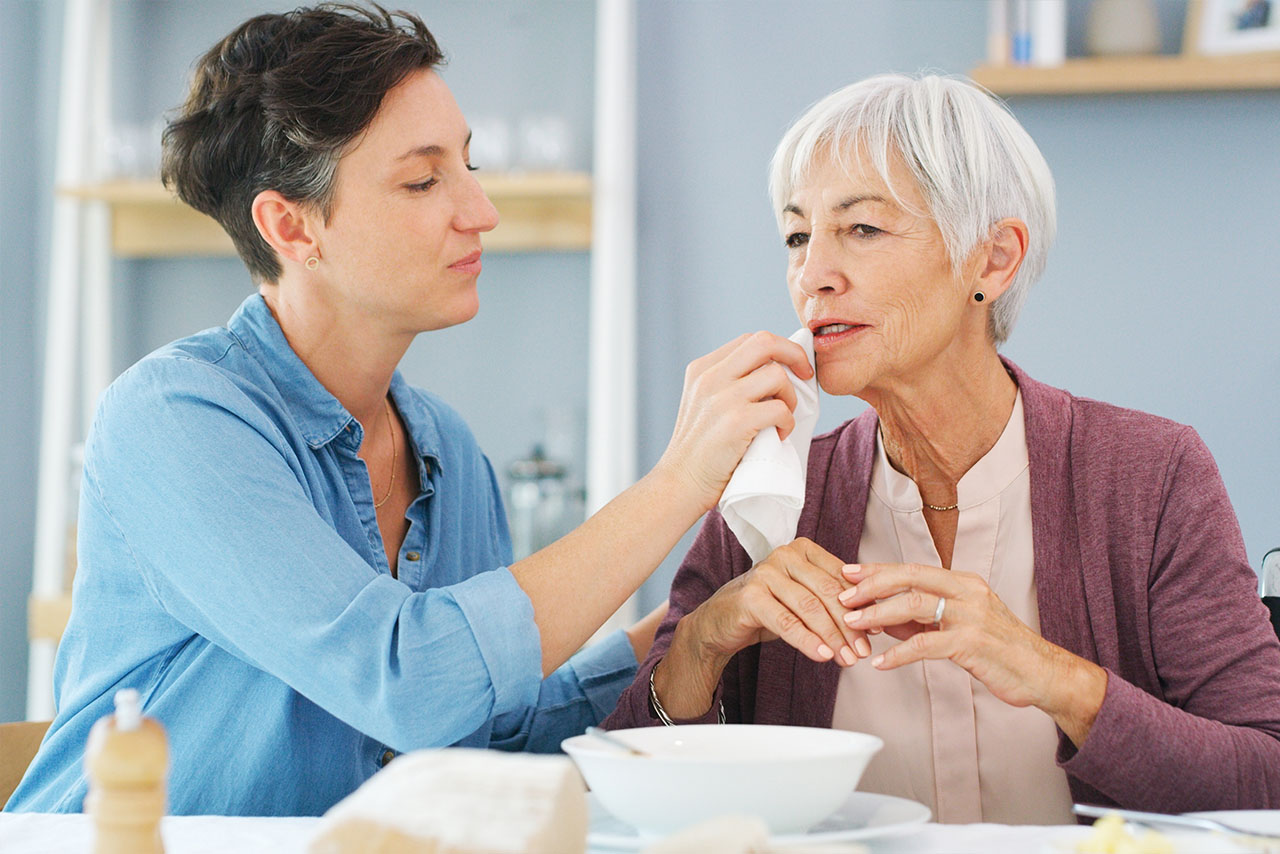
Wet wipes need preservatives; dry cloths move the ingredient decision to the buyer. A wet wipe’s water content can allow microbial growth, and dispensing from an opened pack is a likely contamination route (Rodriguez et al., Pediatric Dermatology, 2020). A U.S. analysis of 54 personal hygiene wet wipes found fragrance in 72.2% of them and named wet wipes a significant allergen source for anogenital allergic contact dermatitis (Aschenbeck and Warshaw, Dermatitis, 2017).
Regulators have acted on the concern: in the EU, where wet wipes are grouped with leave-on cosmetic products, the preservative methylisothiazolinone has been banned from them since February 12, 2017 (Commission Regulation (EU) 2016/1198). A dry cloth carries no formula, so what touches the skin depends on the cleanser the facility picks, and that cleanser deserves the same scrutiny.
Treat both formats as non-flushable. California’s labeling law (Public Resources Code §49650–49651) requires a “Do Not Flush” symbol and notice on covered premoistened wipes manufactured on or after July 1, 2022, a list that includes baby wipes, antibacterial wipes, and adult incontinence wipes. Dry cloths go in the same bin, and every Graminton wipe in this guide carries a do-not-flush precaution.
What Does Current Guidance Say About Incontinence Care and Skin Integrity?
Incontinence-associated dermatitis (IAD), skin damage caused by prolonged contact with urine or stool, is where the wipe choice matters most in adult care. The Global IAD Expert Panel’s 2026 update, Incontinence-Associated Dermatitis: Moving Prevention Forward (Beeckman et al., Wounds International), sets out cleansing principles that apply to both formats:
- Timing: at least once daily and promptly after each episode of fecal incontinence, ideally within 10 to 15 minutes; with urinary incontinence, at every product change.
- Chemistry: a gentle no-rinse cleanser, or a pre-moistened wipe designed and indicated for incontinence care, close to skin pH (about pH 5) and free of alcohol and fragrance; no standard alkaline soap.
- Cloth: a soft, disposable nonwoven cloth, used without rubbing or scrubbing; the panel advises against flannels and reusable face cloths, which may increase friction and microbial transfer.
- Drying: gentle, thorough drying before any skin protectant.
Read as a purchasing brief, that guidance supports both formats. A pre-moistened incontinence wipe delivers the cleanser in one step; a dry cloth carries the facility’s chosen no-rinse cleanser and doubles as the soft drying cloth. The panel adds that 3-in-1 cloths can simplify care and save staff time, but their protection may be limited for high-risk skin.
On the dry side, the HU9201 dry disposable washcloth is a plant fiber and polyester nonwoven cloth listed for elderly and incontinence care, used dry or with added water. Whatever the format, the buyer’s specification is the same: a soft sheet, a size that covers the task, and fragrance-free chemistry in the wipe or the cleanser bottle.
Product-level evidence remains thin. A 2025 Cochrane review of 15 trials rated the evidence low to very low certainty and could not show that any cleanser or leave-on product outperforms another, although very uncertain evidence favors a skin cleanser over soap and water (Graham et al., 2025). The regimen itself belongs to each facility’s clinical protocol; this guide covers purchasing, not clinical advice.
Which Wipe Should Staff Use for Each Care Task?
Assigning a format to each task gives every SKU a usage basis:
| Care task | Better fit | Graminton option |
|---|---|---|
| Routine incontinence care | An incontinence wipe, or a dry cloth with a no-rinse cleanser | HU9201 dry disposable washcloth |
| Drying after cleansing | Dry | HU9201 |
| Full bed bath | Pre-packed bath cloths, or dry cloths with warm water | HU8201 dry bath wipes |
| Face, hands, and mealtimes | A dry cloth with plain water, or a water-based wipe | HU9201; MB8210 water-based wipes for maternity and pediatric units |
| Home-care visits | Wet for portability, with dry cloths as a light backup | HU8201 in 8-sheet packs |
| Environmental surfaces | A dry low-lint wipe with the facility’s disinfectant, or a pre-saturated surface wipe | L8151 low-lint dry wipes; MB8211 antibacterial wipes |
Bed baths are where pre-packed cloths save the most time, and where dry cloths let staff set the water temperature and choose the cleanser. HU8201, a rayon/polyester dry bath wipe, is listed for home care and the hygiene of bedridden patients. The bedside routine, from sequence to cloths per bath, is in our guide to disposable bed bath wipes, also sold as rinse-free bathing wipes or shower wipes.
For maternity and pediatric units, MB8210 is the wet option: a wipe made with EDI ultra-pure water and listed as gentle enough for cleaning baby skin and suitable for sensitive skin. Keeping it on those units, and the larger dry cloths on adult wards, matches sheet size and formula to the patient.
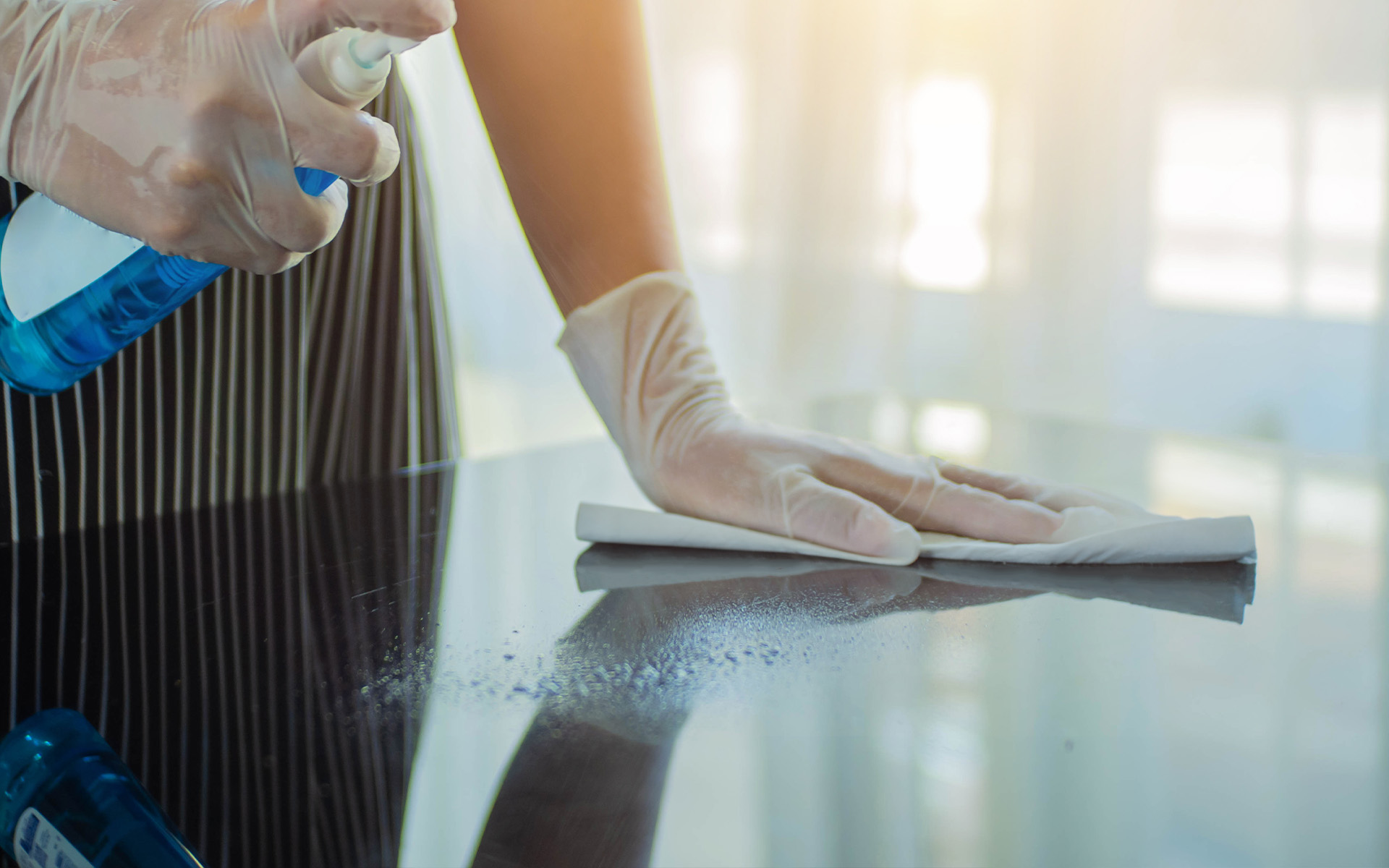
Surfaces follow a different rulebook. L8151 low-lint dry wipes are listed for instruments and hard surfaces in hospitals, nursing homes, and healthcare environments, and can be used with alcohol and solvents for cleaning and disinfection. MB8211 antibacterial wipes are a pre-moistened surface wipe listed for surfaces such as tables, chairs, and toys.
Use surface products on surfaces, as their labels direct, and shelve them apart from skin-care wipes. Antimicrobial claims on surface products are regulated differently from market to market, so how a surface wipe is positioned is part of each distributor’s own market review. For the wider range, see our environmental cleaning supplies for hospitals.
What Should Buyers Check When Specifying Care Wipes?
Once the task map is set, five checks complete the specification:
- Sheet size by task. Adult care needs more cloth than an infant change: HU9201 is 24 × 30 cm and HU8201 20 × 30 cm, against 20 × 20 cm for Graminton’s standard baby dry wipe. Undersized sheets raise the count per task.
- Pack count by point of use. Ward stock suits large packs (HU9201, 50 sheets); per-resident or per-visit kits suit small ones (HU8201, 8 sheets). Smaller wet packs also spend less time open.
- Packaging. Wet packs need a reliable reseal; dry packs stay sealed and dry until use. Check that labels show the fiber, size, count, and lot number, plus a do-not-flush notice where your market requires one.
- Test documentation. Documents that typically support a care-wipe listing include restricted-substance tests (formaldehyde, heavy metals), microbial tests (E. coli), and migrating fluorescent agent tests. The Graminton wipes in this guide carry SGS results for all four, and the SGS report for a specific product is available on request.
- Cost per task. Divide the carton price by the sheets per carton, multiply by the sheets a task uses, and add cleanser, barrier product, and staff minutes. At three sheets per change, two to cleanse and one to dry, one HU9201 carton of 2,250 sheets covers 750 changes.
| Product | Format | Size and packing |
|---|---|---|
| HU9201 Dry Disposable Washcloth (G Dolphin) | Dry, plant fiber and polyester nonwoven; use dry or with water | 24 × 30 cm; 50 per pack, 45 packs per carton |
| HU8201 Dry Wipes Bath (G Dolphin) | Dry, rayon/polyester | 20 × 30 cm; 8 per pack, 50 packs per carton |
| L8151 Low-lint Dry Wipes | Dry, low-lint; use dry or wet | 30 × 33 cm; 100 per pack, 16 packs per carton |
| MB8210 Water Based Wipes (G Bear) | Wet, rayon/polyester, made with EDI ultra-pure water | 20 × 15 cm; 80 per pack |
| MB8211 Antibacterial Wipes (G Bear) | Wet surface wipe, rayon/polyester | 20 × 20 cm; 10 per pack |
Distributors serving maternity wards, pediatric units, or postpartum centers can add the G Bear baby dry wipes range. Private label is available on its MB9201/MB8206, MB8201, MB8202, MB8203, and MB9203 lines, with materials, testing, and sampling covered in our baby dry wipes OEM guide. For the bed-protection side of an incontinence care order, see our disposable underpads buyer’s guide.
FAQ
Are dry wipes better than wet wipes?
Neither is better for every task. Wet wipes are faster and more portable, which suits quick clean-ups and home visits. Dry wipes give the facility control over the cleanser, double as the drying cloth, store without drying out, and ship without liquid weight. Most care facilities stock both and assign each format by task.
What are dry wipes used for in hospitals?
Hospitals and nursing homes use dry wipes to apply a no-rinse cleanser in incontinence care, give bed baths with warm water, pat skin dry, and absorb spills. Low-lint dry wipes are also used with a disinfectant or alcohol on instruments and hard surfaces, stocked apart from skin-care cloths.
Can you use baby wipes on adults?
For quick face and hand clean-ups, many care settings do. For incontinence care, the 2026 Global IAD Expert Panel update points to cleansers and pre-moistened wipes designed and indicated for that use, and adult care usually calls for a larger sheet: Graminton’s standard baby dry wipe is 20 × 20 cm, while the HU9201 adult washcloth measures 24 × 30 cm.
Do wet wipes dry out or expire?
Wet wipes can dry out once a pack is opened, so reseal the pack after every use and follow the shelf life on the label. Dry cloths have no liquid to lose but still belong in sealed packs in a clean, dry storeroom. First-in, first-out rotation keeps both within date.
Can wet wipes or dry wipes be flushed?
Treat both as non-flushable: care wipes belong in the waste bin, and every Graminton wipe in this guide carries a do-not-flush precaution. Some markets make the warning mandatory. California, for example, requires covered premoistened wipes, including adult incontinence wipes, to carry a “Do Not Flush” symbol and notice (Public Resources Code §49651).
Can antibacterial surface wipes be used on skin?
Use each wipe for the uses its label lists. MB8211 antibacterial wipes are listed for surfaces such as tables, chairs, and toys, while skin cleansing in incontinence care follows the facility’s cleanser protocol. Separate, clearly labeled SKUs for surface and skin wipes keep staff from reaching for the wrong pack.
Sourcing wipes for a nursing home, hospital, or home-care program, or building a care range to distribute? Tell us your care tasks, sheet sizes, and monthly volume, and we’ll reply with samples, the SGS reports for the SKUs you shortlist, and carton pricing for our Made in Taiwan care wipes.