

Disposable bed bath wipes — single-use cloths for cleansing a patient who cannot get to a shower, also searched as rinse-free or no-rinse bathing wipes — are a steady, repeat-purchase item for any care setting. There are two kinds on the market, and the difference matters to both the buyer and the resident: pre-moistened rinse-free wipes, and dry cloths you wet yourself. Graminton makes the dry kind — formula-free cloths that a caregiver warms with water and their own cleanser — supplied from a bath-sized towel down to a handy washcloth. This guide covers the formats, why care facilities choose dry cloths, and how to source them for a facility, distributor, or private label.
What Are Disposable Bed Bath Wipes — Dry or Rinse-Free?
A disposable bed bath wipe is a single-use nonwoven cloth used to clean the body at the bedside. The two formats work differently:
- Rinse-free (pre-moistened) wipes arrive wet, pre-dosed with a cleansing solution, and are used straight from the pack — convenient, but carrying a preservative system and a shelf-life clock.
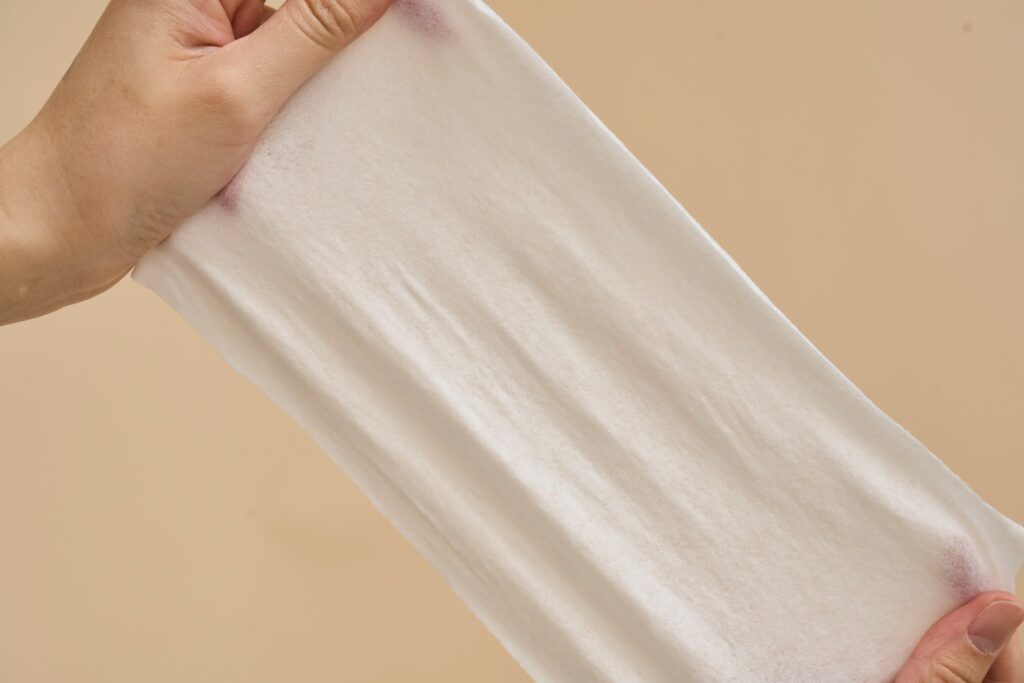
- Dry bath cloths arrive dry — fiber only — and the caregiver adds warm water (and, if wanted, a chosen cleanser). They contain no preservative, no fragrance, and no fixed formula, so the caregiver controls exactly what touches the resident's skin.
Graminton’s cloths are the dry format. For a facility, the practical appeal is control and cost: no preservative on the skin, the freedom to pair the cloth with the facility’s own approved cleanser, and lighter, longer-shelf-life stock. The two formats are not rivals so much as different tools — many facilities keep pre-moistened wipes for quick or on-the-go cleaning and dry cloths for the full bed bath.
Which Formats Cover Patient Cleansing?
A short range covers the bedside from a full-body wash down to a quick wipe:
| Format | Product | Spec | Best for |
|---|---|---|---|
| Full-body bath cloth | Dry bath wipes | Rayon; bath size 60 × 120 cm and towel 30 × 60 cm | The complete bed bath — large enough to wash and dry body and hair |
| Care washcloth | Dry disposable washcloth | Rayon/polyester, 20 × 30 cm, 8 pcs/pack | Bedridden care, perineal cleansing, travel and outdoor freshening |
| Bed protection (pairs with) | Disposable underpad | Absorbent core with leak-guard back, 75 × 150 cm | Protecting the bed during and after the wash |
The bath cloth and the washcloth cover the actual cleansing; the underpad keeps the bed dry underneath. Buyers often range all three together — see our disposable underpads buyer’s guide for that side of the basket.
Why Do Care Settings Choose Dry Bath Cloths?
Three reasons come up repeatedly with care-facility buyers:
- A fresh cloth every time. One clean, single-use cloth per wash removes the shared wash basin and reused flannel from the routine — a simple hygiene improvement caregivers understand immediately.
- No preservative on fragile skin. Elderly and bedridden skin is often thin and reactive; a dry, formula-free cloth lets the facility control the cleanser rather than accept whatever solution a pre-moistened wipe carries.
- Lighter, simpler stock. Dry goods are light and compressible, carry no liquid weight, and have no preservative shelf-life clock — which makes storage and per-carton freight easier at facility volumes.
None of this is medical advice, and a dry bath cloth is a cleansing tool rather than a treatment; skin conditions should follow the facility’s own care protocols.
What Specs and Documentation Should Care Buyers Check?
The checklist for skin-contact care disposables is short but strict:
1. Fiber and softness. Rayon and rayon-blend cloths give a towel-like softness with good wet strength; the fiber should be stated plainly (fabric backgrounds in our nonwoven types guide).
2. Restricted-substance testing. Graminton’s care cloths carry SGS reports for formaldehyde, heavy metals, E. coli, and migrating fluorescent agent — the documentation a facility’s procurement and infection-control teams will ask for.
3. Size and count per pack. Match format to task — bath size for the full wash, washcloth for targeted cleansing — and price by the piece, not the pack.
4. Wet strength and lint. A bath cloth must not tear or shed when wet and wrung; request samples and test them wet before committing.
5. Batch traceability. Per-batch documentation is standard from an export-oriented manufacturer and matters for facility QA.
How Should Facilities and Distributors Purchase?
For professional buyers the maths is per-bath cost and basket consolidation:
- Price per bath, not per carton — divide the carton price by the number of cloths, then multiply by the cloths used per bath, to get the true cost of one bed bath, and compare that against reusable-linen laundering costs.
- Consolidate the care basket — bath cloths, washcloths, and underpads ship together, alongside other disposables for hospital and long-term care and maternal and baby care settings.
- Private label — for distributors and care brands, the dry cloths take your label on proven specs, with minimums usually driven by printed packaging. Graminton runs these under its healthcare line.
How Do You Give a Bed Bath with Disposable Wipes?
A dry-wipe bed bath follows a simple top-to-toe sequence:
1. Warm the cloth — dampen a dry bath cloth with warm water, adding a no-rinse cleanser if your facility uses one.
2. Work clean to dirty — face and neck first, then arms, torso, and legs, with the perineal area last, using a fresh section or a fresh cloth as you go.
3. One area, one cloth face — never return a used surface to clean skin; single-use hygiene is the whole point.
4. Pat dry — blot moisture with a second dry cloth so skin is not left damp.
5. Dispose — one wash, one set of cloths, into the waste stream; do not flush.
For fragile or medically complex skin, follow the facility’s own care protocol.
FAQ
What are bed bath wipes?
Bed bath wipes are single-use cloths for cleansing a person at the bedside without a shower. They come dry — you add warm water and, optionally, a cleanser — or pre-moistened rinse-free; the dry format carries no preservative and lets the caregiver control the cleanser.
Are no-rinse bath wipes as effective as a shower?
For routine daily cleansing and comfort, yes — a section-by-section wipe with fresh cloths cleans effectively and is often gentler on fragile skin than moving a patient to a shower. A full shower or bath is still used periodically per the facility care plan.
How many wipes does one full-body bed bath take?
Usually several per bath — a common approach is a fresh cloth or cloth face per body zone (face, arms, torso, legs, perineal area) plus a dry cloth for blotting, so a full wash runs through roughly five to eight pieces depending on format and patient size.
Do you rinse the skin after using a dry bath cloth?
Usually no — the point of a bed bath cloth is a no-rinse wash: dampen the cloth with warm water and, if used, a rinse-free cleanser, wipe a section, and move on with a fresh area of cloth. Follow your facility’s protocol and the cleanser’s instructions.
Are dry bath cloths gentle enough for fragile, elderly skin?
That is a large part of why facilities choose them: a soft rayon cloth with no preservative or fragrance lets caregivers control what contacts the skin. A soft fiber, documented restricted-substance testing, and a gentle cleanser are the combination that works.
Dry cloths or pre-moistened wipes — which should we stock?
Many facilities carry both: pre-moistened wipes for speed and portability, dry cloths for the full bed bath where control over the cleanser and per-bath cost matter more. Ranging both covers every situation.
How do bath cloths and underpads work together?
The cloth cleanses; the underpad keeps the bed dry during and after. They are the two halves of a bedside wash, which is why buyers usually source them from one supplier — see the underpads guide.
What do MOQs look like for private label?
Product-side minimums are modest for stock specs; printed packaging usually sets the floor. Ask for the breakdown per component for the specific SKU.
Sourcing bed bath wipes for a facility, distributor, or care brand? Tell us your formats and volumes — we’ll send samples, carton pricing, and private-label options.