
When a buyer searches for a “Taiwan nonwoven fabric manufacturer,” they usually mean one of two very different needs — and knowing which one you need saves weeks of the wrong conversations. This guide explains the difference, walks through how to evaluate a Taiwan nonwoven manufacturer, and shows what one integrated nonwoven manufacturer can cover across medical, industrial, beauty, and baby-care categories. Graminton is a Taiwan-based nonwoven manufacturer focused on integrated applications — finished products across those categories — so the sourcing checklist here is the one we answer for buyers every week.
Nonwoven Fabric or Finished Nonwoven Products — Which Do You Need?
“Nonwoven fabric manufacturer” can point to two different buying needs:
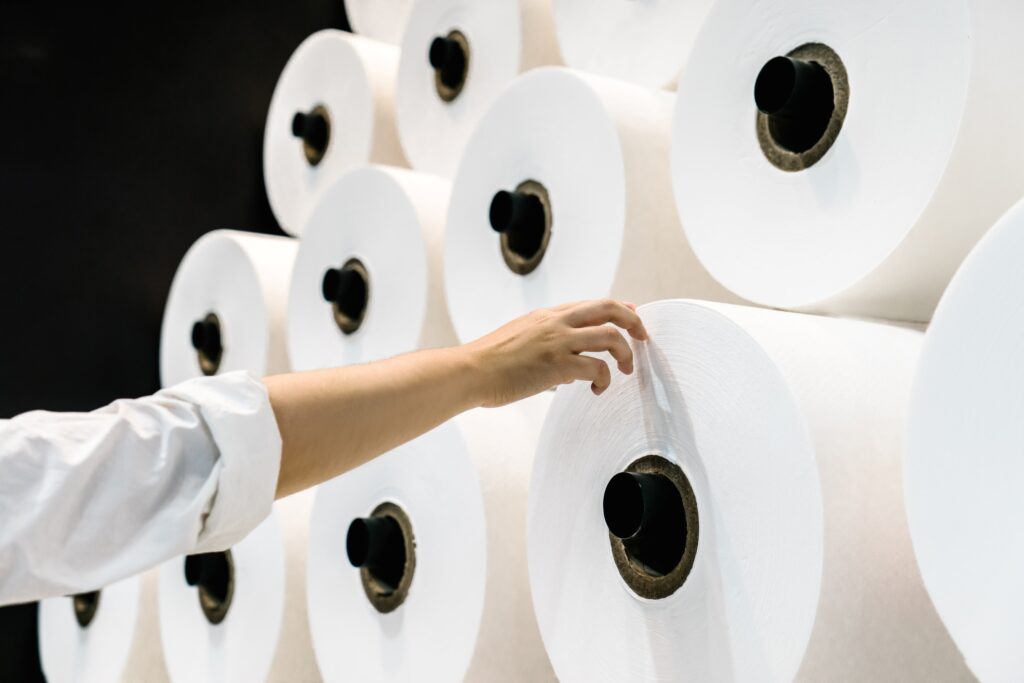
- Bulk nonwoven fabric — spunbond, meltblown, spunlace and other nonwovens in rolls, bought by factories that will cut, laminate, and assemble the material into their own products.
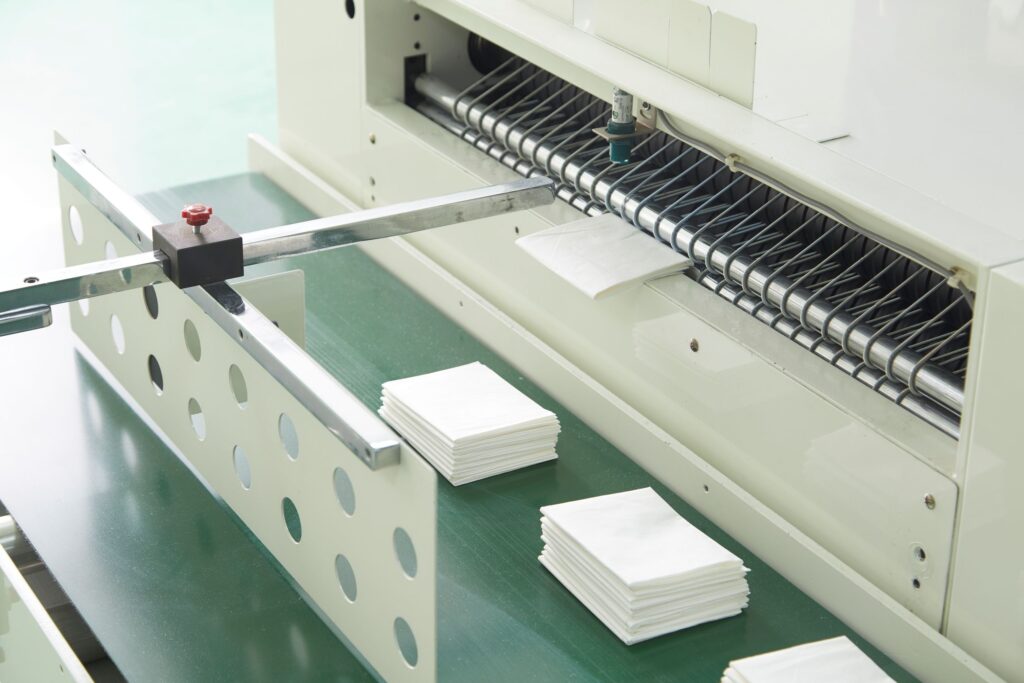
- Finished nonwoven products — face masks, wipes, absorbent pads, cosmetic pads, baby dry wipes — bought by importers, distributors, and brands that sell the end product.
Graminton works on integrated nonwoven applications: application engineering, product design, quality documentation, and consistent production across categories, delivered as finished, tested, retail-ready or clinical-ready nonwoven products (optionally under your own label). For the material science behind the formats, see our guides to what nonwoven fabric is and the main nonwoven fabric types.
Why Source Nonwoven Products from Taiwan?
Taiwan sits in a specific, useful spot for B2B nonwoven sourcing:
- Standards-oriented production. Taiwan manufacturers commonly build to international test standards (SGS restricted-substance testing, ASTM and EN methods, ISO quality systems), which shortens the compliance conversation for importers into regulated markets.
- Mid-volume flexibility. For buyers whose volumes sit below the very large minimums of the biggest commodity mills, a Taiwan finished-products manufacturer is often a better fit for launching a line, testing a market, or running a private-label SKU without over-committing.
- Application breadth in one place. Because the domestic market spans medical, industrial, and consumer categories, a single Taiwan manufacturer can carry unusually broad product lines — which matters when you want to consolidate sourcing.
None of this is a knock on other sourcing regions; large commodity mills exist for a reason. It is about matching the supplier type to the order: standards, mid volumes, and category breadth are where a Taiwan finished-products manufacturer earns its place.
Which Product Categories Can One Taiwan Manufacturer Cover?
The advantage of an integrated nonwoven manufacturer is that one qualified supplier and one quality system can serve several shelves. Graminton runs dedicated brand lines across the main nonwoven application categories:
| Category | Example products | Brand line |
|---|---|---|
| Medical & healthcare | Disposable face masks, surgical drapes, healthcare wipes | GhealthCare |
| Industrial & cleanroom | Industrial cleaning wipes, oil-absorbent pads and booms, cleanroom wipes | LICK |
| Beauty & personal care | Cotton pads, facial cleansing cloths, sheet mask substrates | Gbuuty |
| Baby & maternal | Baby dry wipes, cotton dry wipes, disposable bibs and underpads | G Bear |
Across these lines Graminton lists well over 100 finished SKUs. For a buyer, the practical benefit is consolidation: one vendor qualification, one set of test documentation, and the option to combine categories in a single shipment instead of managing four suppliers in four regions.
How Should You Evaluate a Nonwoven Manufacturer?
Whether you talk to us or anyone else, this is the checklist for judging a nonwoven manufacturer:
1. Material qualification and traceability. What counts is how materials are qualified and how each production batch is traced — material checks, batch records, and lot documentation. This matters more than any single marketing claim.
2. In-house product development. Ask whether the supplier can develop and adjust a product — size, weight, texture, pack format — rather than only reselling a catalog. Graminton runs a nonwoven material research center and a product development function for exactly this.
3. Category and spec literacy. A capable manufacturer talks in specifications, not adjectives — basis weight in GSM, fiber composition, test results. If you are new to the vocabulary, our basis weight (GSM) guide is a fast primer.
4. Testing and documentation. Restricted-substance test reports (SGS) are issued per product; Graminton provides the report for the exact product on request.
5. Consolidation capability. If you buy across categories, a manufacturer that already runs multiple lines under one roof reduces your vendor count, your qualification workload, and your freight.
What Certifications and Documentation Matter?
Certifications are meaningful only when they map to the product line you are buying:
- Quality systems. Graminton operates certified quality systems, with the certification matched to the line — ISO 9001 for industrial products, ISO 13485 for medical device manufacturing, and ISO 22716 (cosmetics GMP) for beauty and personal-care lines.
- Product testing. SGS restricted-substance reports (formaldehyde, heavy metals, and more) are standard across skin-contact lines; the report for your exact SKU is available on request.
- Product-standard compliance. Medical and regulated products carry their own standards (for example CNS, ASTM, or EN methods for masks), which vary by product and market.
What About Private Label, OEM, and Consolidated Sourcing?
For most importers and brands, the reason to work with an integrated manufacturer is that one relationship can cover a lot of ground:
- Private label on proven specs — your brand on existing, tested products; the fastest route to a shelf, with minimums usually driven by printed packaging rather than production.
- Custom development — where a product line supports it, size, weight, texture, and pack format can be tailored through our product customization service; feasibility is confirmed line by line.
- Consolidated orders — combining categories (say, clinic disposables plus cleanroom wipes, or baby wipes plus cotton pads) into one qualification and one shipment. See the full picture of what the factory can do on our capabilities overview.
FAQ
What kind of nonwoven manufacturer is Graminton?
An integrated nonwoven applications manufacturer. Graminton brings nonwoven material know-how, application engineering, and quality documentation together into tested, ready-to-sell products across medical, industrial, beauty, and baby-care categories.
What is the minimum order quantity?
It depends on the product and whether you want stock specs or custom packaging. Product-side minimums are usually modest for existing specs; printed private-label packaging is typically the binding factor. Ask for the breakdown per component for the specific SKU.
Can you combine different product categories in one order?
Yes — that is a core reason buyers use an integrated manufacturer. Medical, industrial, beauty, and baby-care lines can be qualified together and, where logistics allow, shipped together to cut vendor count and freight.
Which certifications do you hold?
Certified quality systems matched to each line — ISO 9001 (industrial), ISO 13485 (medical), and ISO 22716 (cosmetics GMP) — plus SGS testing on skin-contact products.
Are you a good fit for mid-volume or launch orders?
Usually yes. Mid-volume flexibility is one of the main reasons buyers source finished nonwoven products from Taiwan rather than committing to the very large minimums of commodity mills.
Sourcing nonwoven products from Taiwan? Tell us your category, specs, and volumes — we’ll send the product catalog, test documentation, and OEM options.