
Dialysis disposables at the patient’s side come down to three items per treatment: a disposable sheet over the dialysis chair or bed, a pillow cover for the head and arm pillows, and an absorbent, film-backed towel drape under the access arm. Each is changed between patients, so a unit can plan its monthly order from stations, shifts per day and treatment days rather than from last month’s invoice.
This guide is for in-center dialysis units, hospital dialysis rooms and the distributors who supply them. It covers the single-use covers at the patient-contact surfaces only, not dialyzers, lines, needles or the sterile items in cannulation kits. For the wider range of disposables for dialysis centres and clinics, see our clinics page.
Which Disposables Does Each Dialysis Station Use?
Each station has three fixed positions to cover:
| Position | What it does | Item | Size and pack |
|---|---|---|---|
| Chair or bed surface | Covers the seat, back and leg rest, or the mattress | HC8301 disposable bed sheet | S 100 × 240 cm, 10 per pack, 20 packs per carton; L 140 × 240 cm, 10 per pack, 12 packs per carton; pink or blue |
| Head pillow, arm pillow | Keeps the face or arm off the pillow surface | HC8312 pillow tissue | 40 × 40 cm, 90 per pack, 10 packs per carton |
| Under the access arm | Absorbent top takes drips; film back keeps the sheet and armrest dry | HC8308 towel drape | 40 × 50 cm, 200 per pack, 5 packs per carton; four-fold design |
All three are single use and replaced for every patient, and because the positions are fixed, the order can be counted per station.
In-center dialysis in the US mostly uses reclining dialysis chairs, and some units use beds. The HC8301 S size is 240 cm long, enough to run from the headrest to the leg rest; the L size is 140 cm wide for beds or wider chairs. Lay a sample on your own chair model before settling on a size.

What Does Each Item Do at the Chair?
Disposable bed sheet. The HC8301 disposable bed sheet comes as single folded sheets, so staff can pick one with one hand during a busy changeover. The product page describes it as lightweight, breathable and durable, and our clinics page lists it for dialysis centres. It is a breathable sheet, not a waterproof one; the towel drape handles the wet area.
Towel drape. The HC8308 towel drape has an absorbent top and a waterproof bottom, and its product page names clinics, dialysis and microscopy rooms among its uses. Its four-fold design makes it quick to take and open. Laid on the armrest under the access arm, it catches drips and keeps the sheet and armrest dry. It is supplied non-sterile; sterilization and end use follow the facility’s own protocols.
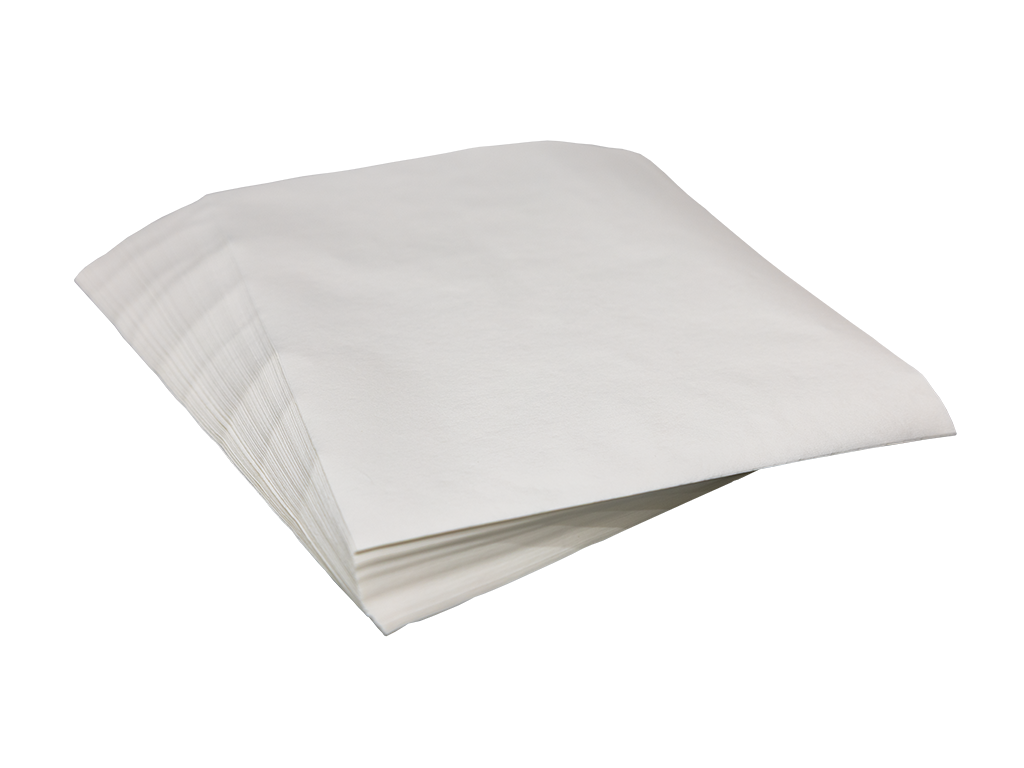
Pillow tissue. The HC8312 pillow tissue is a 40 × 40 cm polyester sheet laid flat on a pillow. Its product page describes it as strong, holding its shape, and water-repellent. It works on both head and arm pillows, so the count per treatment depends on how many pillows each patient uses.
All three are made in Taiwan and carry SGS results for formaldehyde, heavy metals, E. coli and migrating fluorescent agents; the report for a specific SKU is available on request.
How Do You Turn Over a Dialysis Station Between Shifts?
Shift changes are short and stations are many, so where the covers are kept decides how fast a station turns over. Keep all three items on the same cart shelf or in a cabinet beside each station, and restock by station.
- Lift the used towel drape, pillow tissue and sheet off the chair and drop them into the lined bin.
- Clean and disinfect the chair, armrests and pillows as your unit’s infection control policy directs.
- Unfold a fresh HC8301 sheet and lay it over the chair from the headrest down to the leg rest.
- Lay a pillow tissue flat on each pillow the patient will use.
- Unfold a towel drape and place it, absorbent side up, on the armrest under the access arm.
Cleaning, disinfection and waste handling at the dialysis station follow your unit’s infection control policy and the rules where you operate; disposable covers do not replace those steps.
How Much Should a Dialysis Unit Order Each Month?
The monthly order follows directly from the schedule:
- Treatments per month = stations × shifts per day × treatment days per month
- Sheets per month = treatments per month × sheets per treatment
- Pillow tissues per month = treatments per month × pillows used per treatment
- Towel drapes per month = treatments per month × drapes per treatment, plus extra changes
- Cartons = monthly units ÷ units per carton, rounded up
For extra changes, count the sheets replaced mid-treatment over two weeks and add that ratio. Setting reorder points and cost per use for medical supplies is covered in our cost guide.
| Item | Per pack | Per carton |
|---|---|---|
| HC8301 bed sheet, S (100 × 240 cm) | 10 | 200 |
| HC8301 bed sheet, L (140 × 240 cm) | 10 | 120 |
| HC8312 pillow tissue (40 × 40 cm) | 90 | 900 |
| HC8308 towel drape (40 × 50 cm) | 200 | 1,000 |
A planning example, with assumed numbers to replace with your own: 20 stations × 3 shifts a day × 26 treatment days a month is 1,560 treatments. One HC8301 S sheet per treatment is 7.8 cartons, so order 8. One pillow tissue per treatment is 1.7 cartons, so order 2. Two towel drapes per treatment is 3,120 drapes, or 3.1 cartons, so order 4. Packs carry a tolerance of one or two sheets, so count actual stock.
What Should a Dialysis Unit Check Before Switching Suppliers?
A few checks make a switch go smoothly:
- Sizes fit your chair model and pillows, confirmed by laying samples.
- Units per pack and per carton, and how the pack opens, suit a fast changeover.
- The absorbent side and the waterproof side of the towel drape are easy to tell apart.
- Test documents for each SKU are on file during the trial; for these items that means SGS results for the four items above.
- Related items can be delivered together, cutting the number of deliveries to receive.
- Lead time is confirmed for each item when quoting.
Graminton’s quality systems are based on ISO 13485 and ISO 9001 quality management principles; see our quality standards. Graminton supplies single-use patient-contact disposables, not dialysis equipment. For the wider evaluation, see how to choose a medical consumables supplier, and for hospital-wide needs, our range of hospital disposables.
FAQ
Are dialysis chair sheets and towel drapes sterile?
No. The HC8308 product page lists it as supplied non-sterile, with sterilization and end use following the facility’s own protocols; the HC8301 and HC8312 are general hygienic covers. Sterile items used for cannulation are outside the scope of this guide.
Do dialysis patients need an underpad as well as a sheet?
That is for the care team to decide for each patient. Where extra protection for the chair or bed surface is needed, disposable underpads are used.
Can the same sheets be used on dialysis chairs and dialysis beds?
Yes. The HC8301 S size (100 × 240 cm) suits chairs and single beds, and the L size (140 × 240 cm) suits wider beds. Confirm with a sample on your own equipment.
How should used sheets and drapes be disposed of?
Sort them according to your unit’s infection control policy and local waste rules; the product pages also note not to flush them.
Supplying a dialysis unit? Tell us how many stations you run, your shifts per day and treatment days, and whether you use chairs or beds. We will send samples of the bed sheets, towel drapes and pillow tissue to try on your own chairs, the SGS reports for those SKUs, and a carton quote.