
Daycare diaper changing supplies are the consumables a childcare center goes through at every change: a disposable liner for the changing surface, wipes, gloves where the program uses them, tissue for diaper cream, bags for soiled clothing, and the detergent, paper towels, and EPA-registered disinfectant that reset the table afterward. Planning them step by step through the diaper changing procedure, rather than by catalog page, shows how much each change consumes and how often each station needs restocking.
This guide, written for center directors, childcare-group buyers, and their distributors, builds on our overview of childcare facility hygiene supplies, which covers the full facility mix. Here the focus is the changing station alone: what it holds, what each step uses, how to specify liners and wipes, and how change counts become carton orders.
What Daycare Diaper Changing Supplies Does Each Station Need?
Caring for Our Children (CFOC), the national health and safety standards for U.S. early care and education programs, recommends at least one diaper changing table for each infant or toddler group, with no sharing of tables or sinks between groups (Standard 5.4.2.1). Every station therefore carries its own working stock, grouped here by the job each item does:
| Job | Items at the station | Graminton option |
|---|---|---|
| Surface barrier | Disposable liner covering the changing surface, replaced every change | HU9301 disposable underpad, listed for diaper changes |
| Cleaning the child | Wipes, dampened cloths, or wet paper towels | G Bear dry wipes; MB8210 water-based wet wipes |
| Hand protection | Disposable gloves, non-latex where anyone is latex-sensitive | — |
| Diaper cream | Facial or toilet tissue to hold one portion of cream | — |
| Containment | Plastic bags for soiled clothing; a hands-free, plastic-lined, lidded can | — |
| Surface reset | Detergent solution, paper towels, and a fragrance-free, EPA-registered disinfectant suitable for the surface | L8151 low-lint dry wipes, listed for cleaning hard surfaces |
| Hand hygiene | A sink within arm’s reach, soap, disposable paper towels | — |
| Records | The posted procedure and a daily diaper log | — |
Items marked with a dash come from other suppliers. The changing table itself is furniture: CFOC Standard 5.4.2.5 asks for an impervious surface that is easy to disinfect, a working height of 28 to 32 inches, barriers at least six inches high, and no safety straps, which trap soil. Diapers and creams are often parent-supplied; the rest is a recurring order that scales with the number of changes.
What Does Each Step of the Daycare Diaper Changing Procedure Use?
CFOC Standard 3.2.1.4 sets out an eight-step procedure that centers post at the changing area and train staff on; the CDC’s childcare poster condenses it into seven steps. Read as a supply map, each step shows what it consumes:
| CFOC step | What happens | What it uses |
|---|---|---|
| 1. Get organized | Hand hygiene; one change’s worth of supplies set out | Liner reaching from the shoulders to beyond the feet, diaper, wipes, bag, gloves, cream on tissue |
| 2. Bring the child | Soiled clothing kept away from surfaces; a hand always on the child | Shoes and socks removed if they could touch soil |
| 3. Clean the child | Front to back, with a fresh wipe for each swipe | Several wipes, discarded into the diaper or a hands-free can |
| 4. Remove the diaper | Liner folded over any spill; gloves removed | One fresh wipe for the caregiver’s hands, another for the child’s |
| 5. Put on a clean diaper | Cream applied if needed | Tissue or a fresh glove |
| 6. Wash the child’s hands | Soap and warm water at a sink | Soap and paper towel |
| 7. Clean and disinfect | Liner discarded; soil removed with detergent; rinse; disinfect | Paper towels, detergent, disinfectant used as its label directs |
| 8. Hand hygiene and log | Caregiver washes hands and records the change | Soap, paper towels, log sheet |
Two setup rules in CFOC shape the order itself. Standard 5.4.2.4 keeps bulk supplies off the changing surface: staff take only the diapers, wipes, gloves, cream, bag, and liner needed for one change out of storage before bringing the child. And the rationale to Standard 3.2.1.4 notes that caregivers commonly use paper too small for the area that gets soiled; a liner long enough to fold over a spill saves a cleaning pass.
For buyers, pack format therefore matters as much as the sheet: packs that let staff count out sheets without handling the rest, liners that dispense one at a time, and storage within reach but off the changing surface all make the posted routine easier to follow on a busy morning.
How Do You Choose Changing Table Liners for Daycare?
A changing table liner is the disposable layer between the child and the changing pad, discarded after every change. Three formats are common, and they differ in coverage, leak capture, and material per change:
| Liner format | Construction | Where it fits | Watch-outs |
|---|---|---|---|
| Changing table paper (rolls) | Nonabsorbent paper, torn to length | The paper liner CFOC names; length adjusts to each child | Tearing too short leaves soil on the pad |
| Pre-folded station liners | Paper with a poly layer, cut to one size | Wall-mounted public changing stations | A fixed sheet may not reach a toddler’s feet |
| Disposable underpads | Absorbent top over a waterproof film | Leak-prone changes and wide changing pads | More material per change; more stock to store |
Coverage is the specification CFOC spells out: from the child’s shoulders to beyond the feet, with enough extra at the foot end to fold over a spill. That favors roll paper torn to length, or a wide sheet, over small pre-cut liners, especially in toddler rooms, where children are longer.
State licensing rules then decide how the liner is used, and so how many a center buys. Texas lets centers changing several children in a row use a nonabsorbent paper liner, discarded between changes, in place of sanitizing after each one (26 TAC §746.3505(e)). California’s infant-center rule requires the changing table and pads to be disinfected after each use even when disposable covers are used (22 CCR §101428(d)(7)). Confirm the rule in each state you serve.
On Graminton’s side, the HU9301 disposable underpad is a 75 × 150 cm sheet of wood pulp fiber, polyester, and PE film with an absorbent top and a leak-guard back, listed for diaper changes and elderly care and packed 5 per pack, 40 packs per carton. Where a rule names a nonabsorbent paper liner, as the Texas provision does, an underpad is a different construction, so check which your licensing consultant accepts. Our disposable underpads buyer’s guide covers construction and sizing.
Which Wipes Suit a Daycare Changing Station?
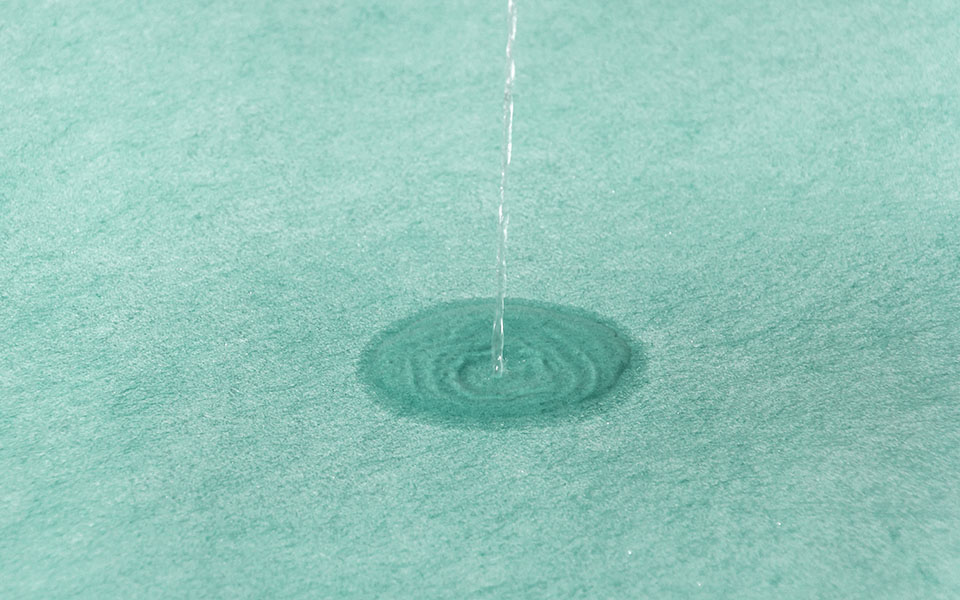
CFOC accepts disposable wipes, dampened cloths, or wet paper towels for cleaning the child. In practice, centers choose between dry wipes wetted with water during Step 1 and ready-to-use wet wipes; our baby dry wipes sourcing guide covers that choice for facilities, so this section covers fit at the station itself.
Three specifications decide station fit. Sheet size sets how many sheets a swipe-by-swipe routine uses: 20 × 20 cm is the everyday size, while 30 × 30 cm sheets cover more on toddlers and double as drying cloths. Pack format decides whether staff can count out sheets without touching the rest. Documentation matters because the sheets touch skin, and every G Bear wipe below carries SGS results for formaldehyde, heavy metals, E. coli, and migrating fluorescent agents.
| Product | Format and material | Size and packing | Listed uses include |
|---|---|---|---|
| MB9201/MB8206 baby dry wipes | Dry; plant fiber and polyester | 20 × 20 cm; 80 per pack, 36 packs per carton; also 15-sheet packs | Diaper changes, nursing, mealtimes |
| MB8203 cotton dry wipes | Dry; cotton | 20 × 20 cm; 70 per pack, 40 packs per carton | Diaper changes, face cleaning, bathing |
| MB9203 baby wipes | Dry; plant fiber and Tencel fiber | 20 × 20 cm; 70 per pack | Diaper cleaning, bibs, drool cloths |
| MB8201 Ultra Soft dry wipes | Dry and low-lint; plant fiber and polyester | 30 × 30 cm; 20 per pack, 60 packs per carton | Baby skin wiping, bathing |
| MB8202 Ultra Thick dry wipes | Dry and thick; pulp nonwoven | 30 × 30 cm; 20 per pack, 60 packs per carton | Baby skin wiping, bathing |
| MB8210 water-based wipes | Wet; rayon/polyester; made with EDI ultra-pure water | 20 × 15 cm; 80 per pack | Cleaning baby skin, sensitive skin |
Whichever format a room uses, the planning count is the same: one sheet per swipe, plus two for the caregiver’s and the child’s hands. Dry wipes ship without liquid weight and have nothing in the pack to dry out; wet wipes save the wetting step on outings and quick changes.
How Many Supplies Does Each Diaper Change Use?
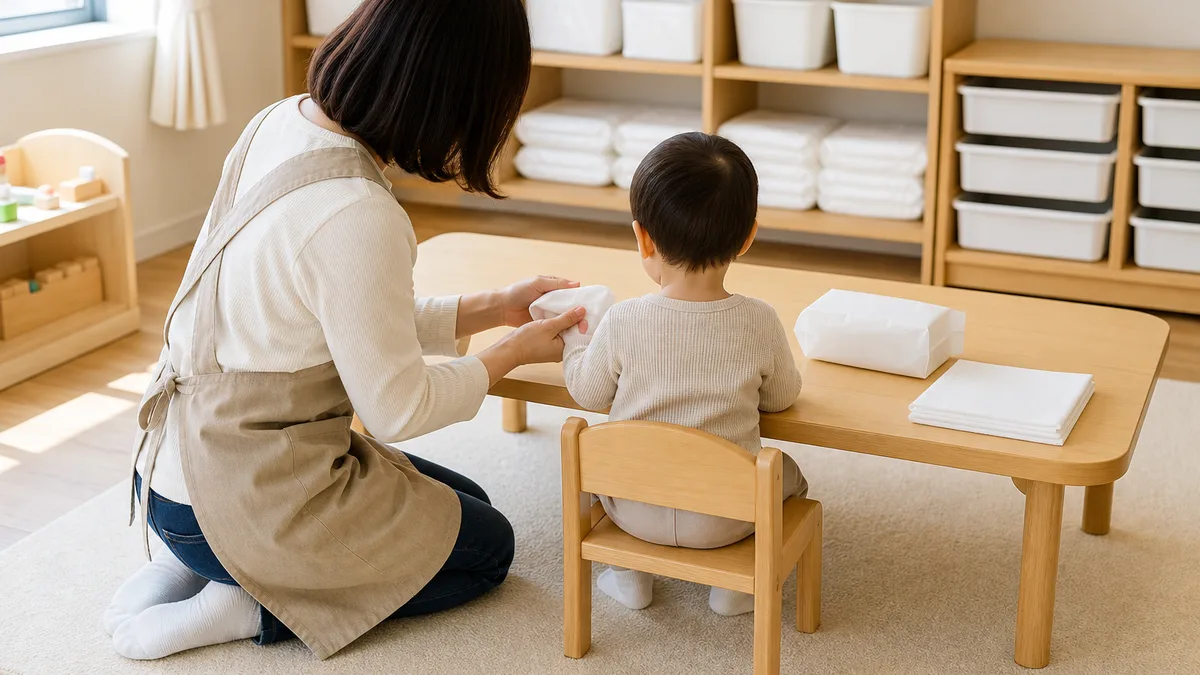
Per-change counts turn the procedure into a purchase order. The figures below follow the CFOC steps; the wipe count is a planning assumption for each center to replace with its own, since soiled changes take more swipes than wet ones.
| Item | Per change | Planning note |
|---|---|---|
| Liner | 1 | Discarded at Step 7 |
| Wipes | Swipes + 2 | For example, 4 for a wet change and 8 for a soiled one, hand wipes included |
| Gloves | 1 pair, if used | One more glove if cream goes on with a gloved finger |
| Tissue | 1, if cream is used | Holds the cream portion |
| Paper towels | 3 to 5 | Detergent pass, rinse, drying, and hand drying |
| Plastic bags | As needed | Only when clothing is soiled |
| Can liners | Per can, daily or when full | Diaper pails are cleaned and disinfected daily (CFOC Appendix K) |
Monthly demand follows one formula: children in diapers × changes per child per day × operating days. CFOC Standard 3.2.1.3 has staff check diapers at least hourly, open and check them at least every two hours, and change them whenever wet or soiled, so a 10-hour day suggests planning for about five changes per child. An infant room of eight children open 21 days a month makes about 840 changes.
At an average of six wipes per change, that room uses about 5,040 wipes a month, or 1.75 cartons of MB9201/MB8206 at 2,880 sheets per carton. If it lines the table with HU9301 underpads, 840 changes take 4.2 cartons at 200 pads each; a room on roll paper multiplies 840 by the length torn per change. Gloves, towels, and can liners follow the same multiplication.
Daily diaper changing station checklist. Restocking each station from a storeroom keeps the working stock small and bulk packs off the table:
- Opening: liners, wipes, gloves, and tissue stocked for the day in covered storage within reach of the table but off the changing surface.
- Opening: soap and paper towels at the sink; disinfectant labeled, in date, and stored out of children's reach.
- Every change: surface cleaned and disinfected; the change recorded in the daily log.
- Closing: diaper pail emptied, cleaned, and disinfected; can liners replaced; the day's change count noted for reordering.
How Can Distributors Package a Diapering Supply Program?
Distributors serving childcare centers sell a routine, not single SKUs. The practical unit is the station: one liner format, an everyday wipe, a larger sheet for toddler rooms, gloves, tissue, bags, can liners, and the surface-care set, reordered on each center’s monthly change count. Whether parents supply diapers and wipes changes the center’s share of that order.
Graminton’s part of that program is the disposables that touch the child and the changing surface: G Bear baby wipes, the G Dolphin HU9301 underpad, and GhealthCare L8151 low-lint wipes, all made in Taiwan and carrying SGS results for formaldehyde, heavy metals, E. coli, and migrating fluorescent agents. The SGS report for a specific product is available on request. Gloves, disinfectants, and hands-free cans come from other suppliers.
For distributors building their own brand, private label is available on the G Bear dry wipes lines MB9201/MB8206, MB8201, MB8202, MB8203, and MB9203, with materials, testing, and sampling covered in our baby dry wipes OEM guide. The G Bear baby care line shows the same products in retail packs, and the wider range sits under our maternal and baby care solutions.
FAQ
Do you have to wear gloves when changing diapers in daycare?
It depends on the state and the program. CFOC treats gloves as optional but useful as a barrier, and calls for non-latex gloves where anyone in the building is sensitive to latex. Texas requires disposable gloves, when used, to be discarded after each change. Gloves never replace hand hygiene: staff wash their hands after every change either way.
Can baby wipes be used to clean a changing table?
Only for the first pass. The CDC’s diaper changing steps for childcare settings allow damp paper towels or a baby wipe to remove visible soil, but a baby wipe is not a disinfectant. The surface then gets an EPA-registered disinfectant suitable for its material, left on for the contact time on the label. With disinfecting wipes, CDC notes that more than one wipe may be needed to keep the surface wet.
How often should a daycare changing table be disinfected?
After every use. CFOC Standard 5.4.2.6 and its cleaning schedule (Appendix K) call for the changing table to be cleaned with detergent, rinsed, and disinfected after each diaper change. State rules vary on liners: California keeps the requirement even when disposable covers are used, while Texas accepts a liner changed between consecutive children in place of sanitizing each time.
Do daycares have to use changing table paper?
Not everywhere. CFOC recommends a nonabsorbent paper liner large enough to cover the surface from the child’s shoulders to beyond the feet, but CFOC is a national guideline, not a law. State rules differ on how liners are used, so check the licensing rules in each state you serve. Many centers use one at every change because it keeps soil off the pad and shortens the cleaning step.
How many changing tables does a daycare need?
CFOC Standard 5.4.2.1 recommends at least one diaper changing table per infant group or toddler group, with tables and sinks not shared between groups. Each table needs its own working stock of liners, wipes, and gloves, which is why supply plans start with the station count.
How many wipes does one diaper change use?
There is no fixed number. CFOC calls for a fresh wipe for each front-to-back swipe, plus one wipe for the caregiver’s hands and another for the child’s hands after the soiled diaper is removed. Soiled changes use more sheets than wet ones, so the most reliable planning figure is a week of counted changes in each room.
Stocking changing stations across a childcare group, or building a diapering range to distribute? Tell us your rooms, age groups, and monthly change count, and we’ll reply with samples, the SGS reports for the SKUs you shortlist, and carton pricing for our Made in Taiwan wipes and underpads.