

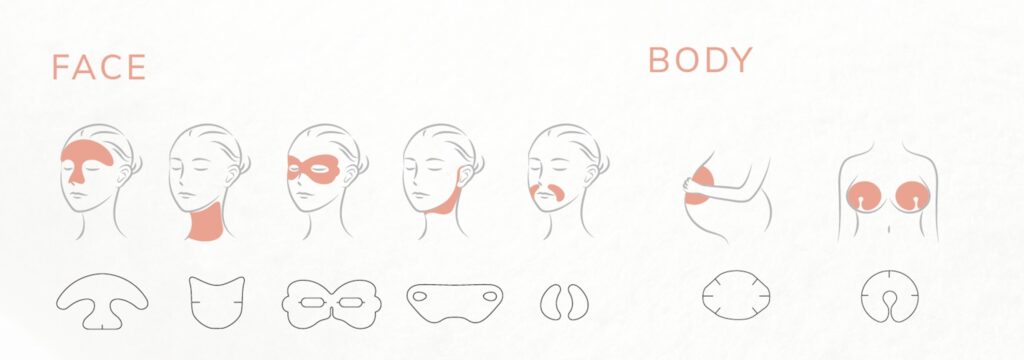
Partial face masks (also called targeted masks or patch masks) are sheet masks cut to treat one zone instead of the whole face — under-eye crescents, neck and décolleté sheets, forehead strips, and body panels like abdomen masks. The logic is simple: different zones have different skin, so a shape and essence dosed for exactly that area outperforms a one-size full mask there. This guide maps the partial mask category, explains why the format works, and shows how brands develop their own — from fabric selection to die-cut shape.
How Is a Partial Mask Different from a Full Sheet Mask?
A classic sheet mask covers the whole face with one essence, one fabric, one wear time. A partial mask narrows all three choices to a single zone:
- Shape: die-cut to fit the target area's contours — a crescent hugs the orbital bone in a way a full mask's eye holes never can.
- Essence: the formula targets that zone's concern (firmness for the jawline and neck, hydration and brightening under the eyes) and is dosed for the smaller fabric area.
- Wear behavior: smaller patches stay put during movement, which is why eye and spot formats work for multitasking users — and even under makeup routines.
The two formats are complements, not rivals: full masks for all-over treatment, partials for concentrated work where the full mask fits worst — which is exactly the range logic behind Graminton’s facial and partial masks line.
What Types of Partial Masks Are on the Market?
| Type | Zone | Typical goals |
|---|---|---|
| Under-eye masks / eye patches | Orbital area | Hydration, brightening, de-puffing |
| Neck & décolleté masks | Neck, upper chest | Firmness, smoothing horizontal lines |
| Forehead / T-zone strips | Forehead, nose | Lines, oil balance |
| Lip masks | Lip contour | Plumping, moisture |
| Body-zone masks | Abdomen, arms, thighs | Firming, hydration — e.g., Graminton’s Firming Tummy Mask (30 ml per piece) for abdominal skin |
| Spot patches | Single blemish or line | Concentrated overnight treatment |
Body-zone formats are a fast-growing edge of the category: the same substrate-plus-essence engineering as facial masks, scaled to larger panels and skin that gets far less skincare attention.
Why Does the Targeted Format Actually Work Better?
Three mechanical reasons, before any formula chemistry:
1. Fit equals contact. Essence transfers where fabric touches skin. Curved zones — under-eye, jaw, neck — pucker a full mask; a die-cut shape designed for that curve keeps full contact for the entire wear time.
2. Dose lands where intended. An essence load held in a small panel means more essence per square centimeter of sheet than the same load stretched across a full-face cut.
3. The fabric can specialize. Thin, translucent cloths (28–35 gsm) fit tight curves invisibly; heavier substrates (60–70 gsm) carry more essence and hold gentle tension for firming applications — the same basis-weight logic explained in our GSM guide.
How Do Brands Develop a Partial Mask Line?
For a brand, partials are the natural line extension after a hero sheet mask — same manufacturing ecosystem, new shapes and claims. The development sequence with an OEM partner:
1. Pick the zone and claim. Eye brightening, neck firming, belly firming — one zone, one clear promise.
2. Choose the substrate. Fiber (lyocell, cotton, viscose blends) and weight set the feel and essence capacity; the substrate menu is the same one behind full sheet masks.
3. Design the die-cut. Shape is tooling: the cutting die defines fit, and nesting shapes efficiently on the fabric web controls cost.
4. Match the essence. Formula development or adaptation from a mature library — the OEM vs ODM choice works the same way it does for full-face products.
5. Sample on real users. Fit testing matters more than for full masks — a crescent that slides off during a 15-minute wear kills repurchase.
Because Graminton runs integrated sheet mask production — substrate, converting, filling — shape, cloth, and essence are engineered together; finished-product references across the Gbuuty line show the execution quality. Scope your target zones through the cosmetics OEM service.
FAQ
Are partial masks and sheet masks the same product category?
Partials are a sub-category of sheet masks: same substrate-plus-essence construction, cut for one zone instead of the full face. Retail treats them as separate shelves (eye care vs face masks), which is worth knowing when you plan distribution.
Can I use a partial mask and a full sheet mask together?
Yes — a common routine layers under-eye patches beneath a full sheet mask, or follows a face mask with a neck sheet. Each piece is dosed for its own zone rather than for the whole face.
What is a tummy (abdomen) mask?
A large-panel partial mask for abdominal skin — hydration and firming for a zone that rarely gets targeted care. It is applied like a face mask: position the panel, wear for the stated time, massage in the remaining essence.
What should a brand expect for partial mask OEM minimums?
Shape tooling and per-SKU filling set the economics, so minimums behave like sheet mask MOQs with a die-cutting component added. Ask for the breakdown per shape in your first inquiry — shared substrates across shapes usually improve the numbers.
Planning eye patches, neck masks, or a body-zone line? Tell us your target zones, claims, and timeline — we’ll come back with substrate options, shape feasibility, and sample arrangements.