
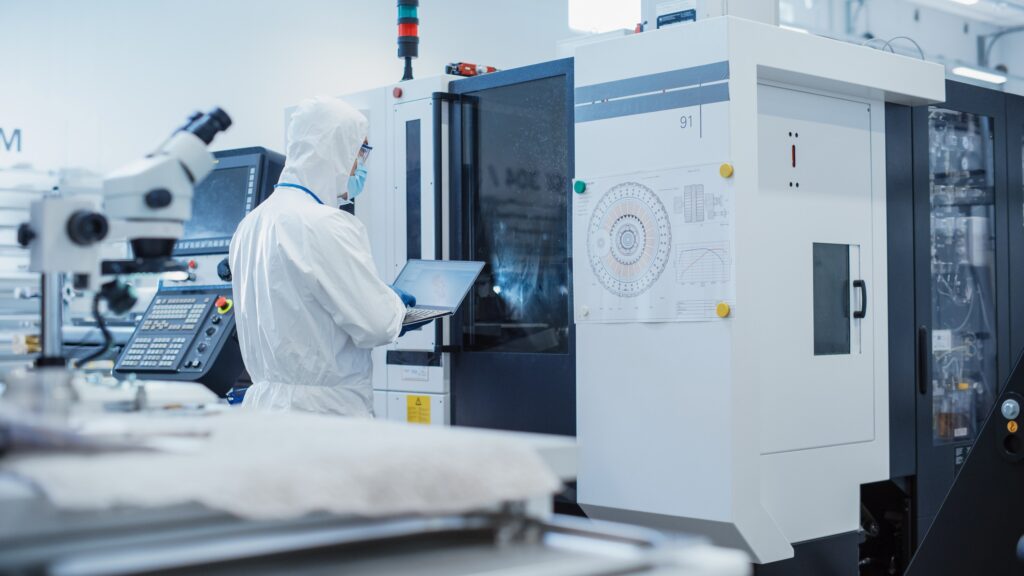
Cleanroom wipes are selected to match the cleanliness class of the room they serve: the stricter the room’s particle limits, the lower-linting and better-edge-sealed the wiper must be. Rooms are classified under ISO 14644-1 (ISO Class 1–9), though the older Federal Standard names — Class 100, 1,000, 10,000 — are still what most people say out loud. This guide translates between the two systems, explains which wiper constructions fit which class, and shows how to match a grade to your environment without overpaying for cleanliness you don’t need.
How Are Cleanrooms Classified?
A cleanroom class is a particle-count ceiling: the maximum number of particles (of a given size) allowed per volume of air. Two naming systems coexist:
| ISO 14644-1 | Legacy name (Fed Std 209E) | Typical settings |
|---|---|---|
| ISO 4–5 | Class 10–100 | Semiconductor front-end, sterile filling cores |
| ISO 6 | Class 1,000 | Semiconductor support, optics, electronics assembly |
| ISO 7 | Class 10,000 | Pharma/GMP production, medical device assembly, labs |
| ISO 8 | Class 100,000 | Packaging areas, gowning rooms |
Matching a wiper to your cleanroom class? Tell us your class and the surfaces you wipe and we’ll suggest the grade, edge type and pack format to trial.
The wiper rule of thumb: your wipe must not become a particle source your class can’t tolerate. A wiper that’s perfectly fine in an ISO 8 gowning room can be a contamination source in an ISO 5 core.
Which Wiper Construction Fits Which Class?
Wiper cleanliness is determined by fiber type, construction, and edge treatment:
- Knitted continuous-filament polyester, sealed edges — the top grade. Continuous filaments shed the least, and laser-sealed edges minimize cut-edge particle release. Standard for ISO 4–5 (Class 10–100) environments.
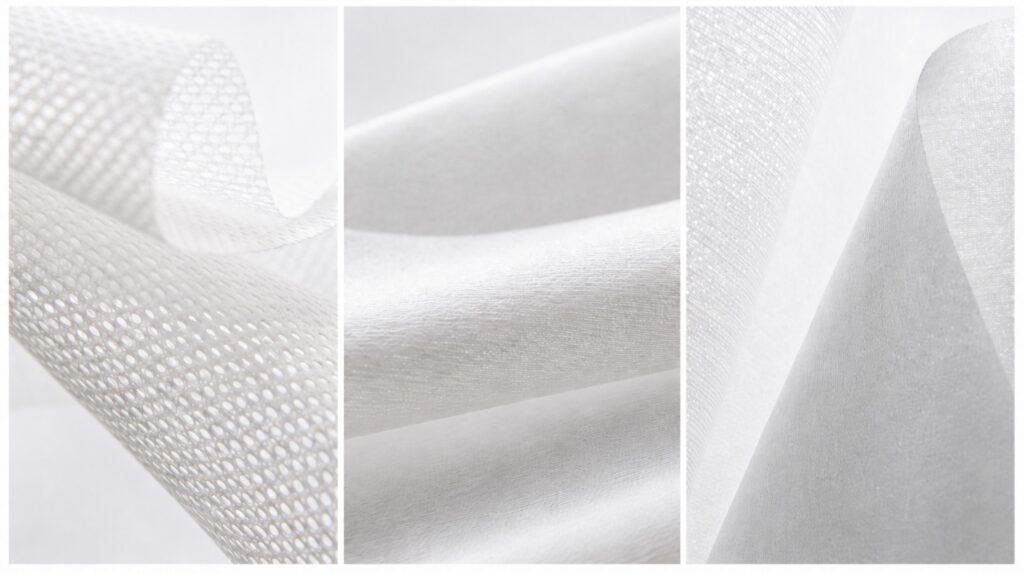
- Nonwoven polyester/cellulose blends — hydroentangled construction balancing absorbency, low lint, and cost. The workhorse for ISO 6–7 (Class 1,000–10,000) rooms and general critical-environment wiping.
- General low-lint wipes — for controlled-but-not-classified spaces: equipment exteriors, pass-throughs, healthcare surfaces.
Beyond class fit, three properties decide day-to-day performance — absorbency (spill pickup speed), solvent compatibility (IPA and process chemicals), and wet strength (no shredding mid-wipe). Our cleanroom wipers guide covers those selection criteria in depth; this article stays focused on matching grades.
Matching Graminton's LGK Series by Application
Graminton’s LICK LGK series is organized by application environment, so you can match by what your facility does:
| Wiper | Construction | Designed for | Format |
|---|---|---|---|
| LGK3 | Polyester nonwoven, soft & absorbent, solvent-resistant | Laboratories, clean manufacturing, LCD-related areas | 25 × 20 cm, 100 pcs/pack |
| LGK5 | Plant fiber and polyester nonwoven, super-absorbent, scratch-free | Cleanrooms, semiconductor-related and precision component areas | 23 × 23 cm, 300 pcs/pack |
| LGK7 | Durable nonwoven, dry/wet use, acid-base-solvent resistant | High-tech, pharmaceutical, biotechnology, medical device production | 30 × 30 cm, 100 pcs/pack |
| Low-lint dry wipes | High-absorbency low-lint, works with alcohol/solvents | Healthcare environments, instruments and hard surfaces | 30 × 33 cm, 100 pcs/pack |
Two practical notes. First, scratch behavior matters as much as lint in optics and semiconductor work — LGK5’s scratch-free construction targets exactly that. Second, for wet wiping with disinfectants or IPA, confirm chemical resistance (LGK7’s acid-base-solvent rating) so the wiper doesn’t break down mid-task.
What About GMP Facilities?
GMP pharmaceutical plants often run ISO 7–8 (Class 10,000–100,000) production zones around stricter ISO 5 cores, depending on the product and process step. Wiper selection there adds two requirements beyond particle counts: documentation (lot traceability for audits) and procedure fit (wipes compatible with your approved disinfectants). Facilities of this type — see our GMP plant solutions — usually standardize one wiper per zone class rather than mixing, which simplifies both training and audit trails. The same zoning logic applies across cleanrooms and labs generally: buy per zone, not per building.
How to Choose Without Overpaying
1. Confirm your room class (ISO or legacy name — translate with the table above).
2. Match the wiper grade to the strictest zone it will enter, not the average.
3. Zone your purchasing: premium sealed-edge wipers only where the class demands them; nonwoven grades for support areas — the cost difference per wipe is significant at volume.
4. Test in your actual process: run candidate wipers with your solvents and surfaces before standardizing.
5. Lock specifications with your supplier so reorders stay identical — consistency is a cleanliness property too (choosing that supplier in the first place: see our cleanroom wipes supplier guide). The full industrial wiping range is under the LICK brand.
FAQ
Is there such a thing as a truly lint-free wipe?
No — “lint-free” is marketing shorthand. All wipers shed at some level; the engineering question is how little, which is why specifications say low-lint with tested particle-release data. Shed data says more than a “lint-free” claim.
What wipes should I use in a Class 100 (ISO 5) cleanroom?
Knitted continuous-filament polyester with sealed edges is the standard answer for ISO 4–5. Nonwoven wipers are more often specified for ISO 6 and above — some are rated by their makers for ISO 5, so check tested particle-release data before using one in an ISO 5 core.
Can one wiper cover my whole facility?
Only if your whole facility is one class, which is rare. Zoned purchasing — one grade per class — costs less than buying top-grade everywhere and performs better than buying mid-grade everywhere.
Dry wipes or pre-wetted wipes?
Dry wipes plus your own qualified solvent give flexibility and audit-friendly control of what chemical touches what surface; dry/wet-capable wipers like LGK7 support both modes. Pre-wetted formats trade flexibility for convenience.
Tell us your room class, process chemicals, and monthly usage — we’ll recommend a zoned wiper program with samples from the LGK series.