
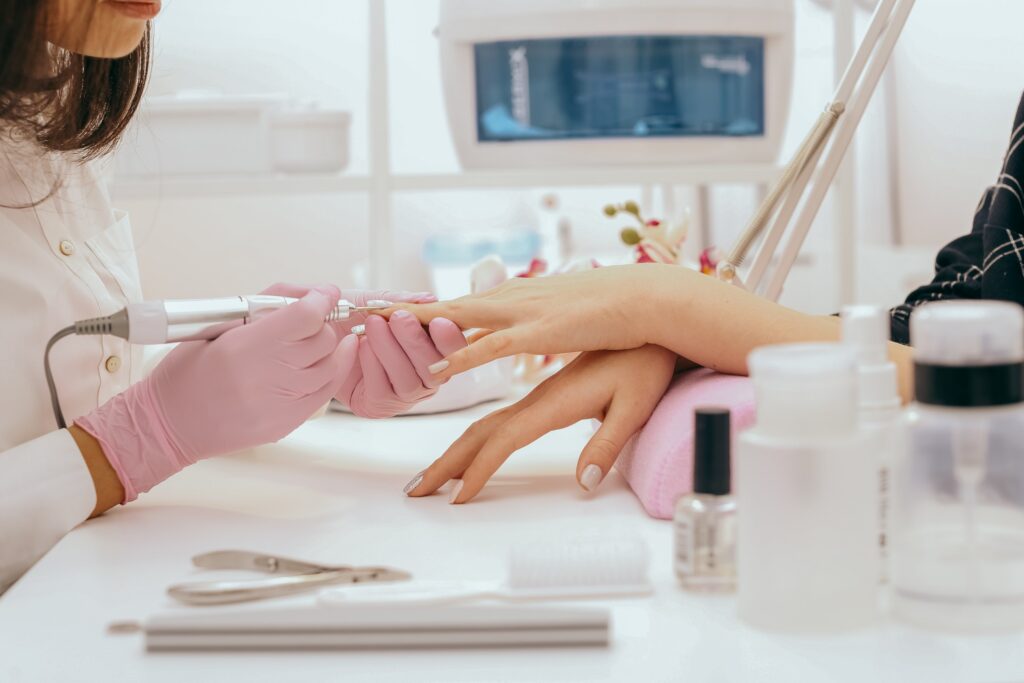
A disposable nail mat is a single-use absorbent pad laid on the nail table to catch dust, polish, acetone, and monomer during a manicure — one fresh mat per client, then folded and thrown away. This guide explains what nail mats do, compares the two formats salons choose between (disposable paper and reusable silicone), covers the specs to check, and shows how to source disposable mats for a salon or distributor from Taiwan.
What Is a Disposable Nail Mat?
A disposable nail mat is a soft, absorbent pad that covers the working area of a nail table or desk. Its job is simple: soak up the filings, polish drips, gel wipe-off, acetone, and acrylic monomer that a service generates, keep the table clean, and give each client a fresh, hygienic surface. When the service is done, the mat is folded up with the debris inside and discarded — far less table wiping between clients.
The mat is a sanitary barrier, not a treatment surface, so the properties that matter are absorbency, a liquid-resistant base so nothing soaks through to the table, and a size that covers the working zone.
Disposable Paper vs Reusable Silicone — Which Should a Salon Use?
Nail techs choose between two formats, and each genuinely fits a different situation:
| Factor | Disposable paper mat | Reusable silicone mat |
|---|---|---|
| Hygiene | A fresh mat per client; debris folds away with the mat | Must be wiped and disinfected between clients |
| Cleanup | Fold and toss — minimal table wipe-down | Wipe clean with acetone; reusable |
| Absorbency | Absorbs dust, polish, acetone, and monomer | Non-absorbent — liquids sit on the surface |
| Cost shape | A small per-service cost that adds up at volume | Higher up front, lower long-run cost per use |
| Waste | Single-use waste per service | Reused many times, less waste |
| Best for | High-volume client work where hygiene and turnover matter | Practice, training, and lower-volume or cost-focused setups |
Neither is universally right. A busy salon prioritizing per-client hygiene and fast turnover leans disposable; a training bench or a cost-focused solo tech may prefer a silicone mat’s reusability. Many salons keep both — silicone at a practice station, disposables at the client chairs. This guide is about sourcing the disposable side.
What Specs Should a Salon or Buyer Check?
For a disposable mat, four things decide whether it performs and what it really costs:
1. Size. The mat should cover the working zone with margin; Graminton’s nail table mat is 33 × 45 cm, sized for a standard nail desk.
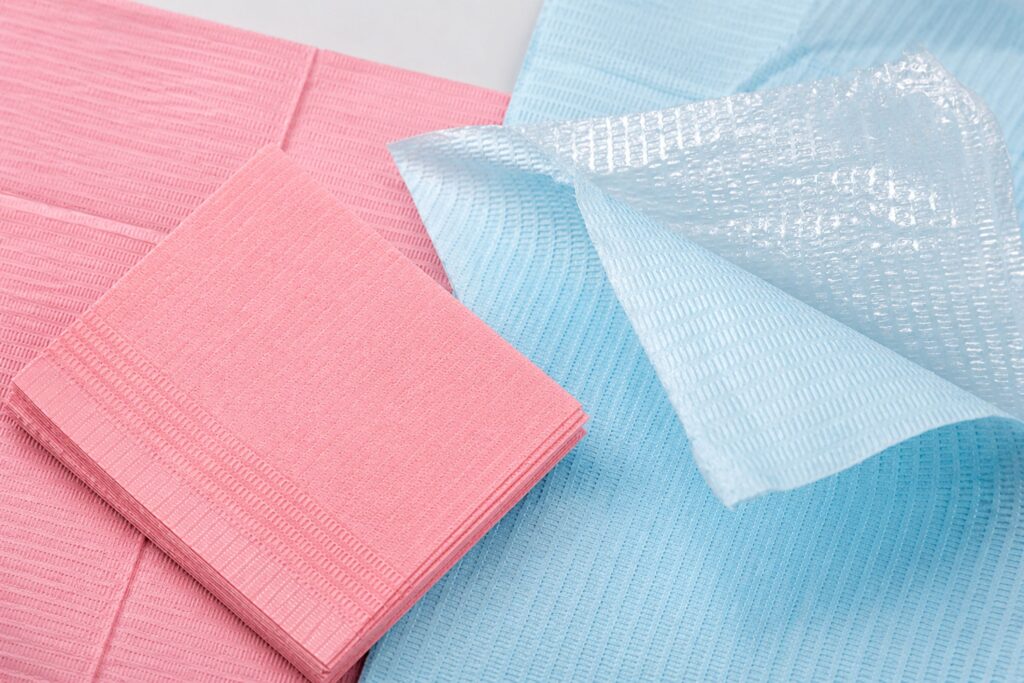
2. Absorbency and a liquid-resistant base. The top layer must absorb polish, acetone, and monomer while a liquid-resistant layer keeps them from soaking through to the table — the NK8401 is an absorbent pulp-fiber mat with a liquid-resistant layer, made to prevent penetration to the surface below.
3. Count per pack and carton. Price by the mat, not the pack — the NK8401 runs 50 pieces per pack, 10 packs per carton (500 mats), so per-service cost is the carton price divided by the mats.
4. Restricted-substance testing. Documentation matters for skin- and product-contact disposables; the NK8401 carries SGS testing for formaldehyde, heavy metals, E. coli, and migrating fluorescent agent.
How Should Salons and Distributors Buy?
For professional buyers the calculation is per-client cost and basket consolidation:
- Price per service, not per carton — divide the carton price by the number of mats to get the true cost per manicure, and weigh it against the labor of cleaning a reusable mat.
- Consolidate the salon basket — nail mats ship alongside the rest of a salon's disposables; our salon & spa disposables guide covers the full list, and the same range serves spa and salon and medical-aesthetic settings.
- Private label — for distributors and salon chains, the mats take your brand on proven specs under the NIKITA professional line, with minimums usually driven by printed packaging. Graminton manufactures them in Taiwan as a finished-products maker.
FAQ
What is a nail mat used for?
It protects the nail table and gives each client a clean surface, absorbing filings, polish, acetone, and monomer during a manicure or pedicure prep. A disposable mat is folded up with the debris and thrown away after each client.
Are disposable nail mats waterproof?
They are liquid-resistant rather than fully waterproof — an absorbent top holds the liquids a service generates while a liquid-resistant base stops them soaking through to the table. For heavy liquid work, change the mat more often.
Paper or silicone — which is better for a salon?
Different jobs. Disposable paper wins on per-client hygiene and quick cleanup, so it suits high-volume client work; reusable silicone wins on long-run cost and waste for practice or lower-volume use. Many salons run both.
How many nail mats does a salon go through?
Roughly one per client service, so volume tracks your bookings — price by the mat and buy by the carton to keep per-service cost low.
Can I get nail mats under my own brand?
Yes — the mats take private label on proven specs, with minimums usually set by printed packaging. Ask for the per-component breakdown for the specific SKU.
Sourcing disposable nail mats for a salon, chain, or your own brand? Tell us your volumes and pack preferences — we’ll send samples, carton pricing, and private-label options.