
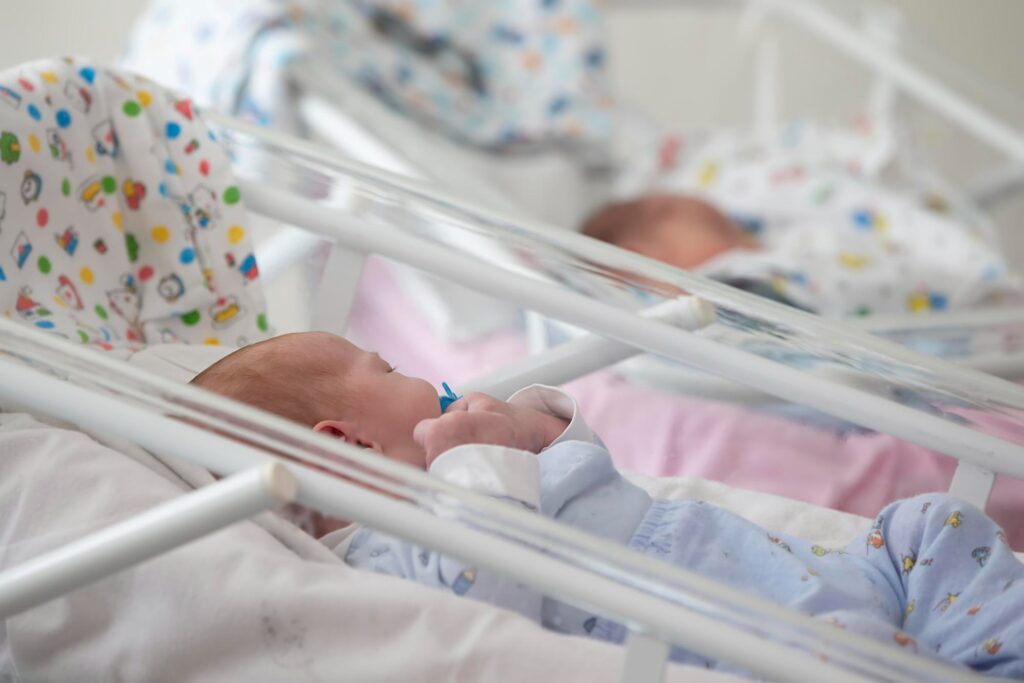
Childcare facility hygiene supplies are the disposable consumables a daycare, childcare center, or nursery (in UK usage, an early years setting) goes through every single day: dry and wet wipes for diaper changes and cleanups, changing-table liners, bibs, placemats, oral wipes, and surface wipes. Unlike furniture or teaching materials, these are recurring purchases — which makes the item mix, per-child usage rates, and supply model the three decisions that define the budget. This guide covers all three, from the perspective of a manufacturer that produces the full mix, for facility buyers and the distributors who serve them.
What Hygiene Supplies Does a Childcare Facility Need?
Most “daycare supplies checklists” published online list everything from cribs to curriculum software, then compress consumables into a single line. In day-to-day operations, the opposite is true: hardware is bought once, while hygiene consumables are re-ordered every month. Organized by the routines they serve, a facility’s disposable hygiene mix looks like this:
| Routine | Items | Typical products |
|---|---|---|
| Diaper changing | Changing-table liners (underpads), dry wipes, wet wipes, gloves, disposal bags | HU9301 disposable underpad; MB9201/MB8206 baby dry wipes (20×20 cm, 80 per pack); MB8210 water based wipes |
| Feeding & mealtimes | Disposable bibs, disposable placemats, dry wipes for spills | MB8404 three-layer waterproof bibs; MB8402/MB8403 placemats |
| Oral care & washing up | Baby oral wipes, cotton dry wipes, baby towels | MB9204 oral wipes; MB8203 100% cotton dry wipes; MB8208 Tencel-blend baby towel set |
| Surfaces & toys | Surface antibacterial wipes | MB8211 antibacterial wipes (20×20 cm) |
| General cleanups | Multi-purpose dry wipes in soft and thick weights | MB8201 Ultra Soft (low-lint) and MB8202 Ultra Thick (tear-resistant), both 30×30 cm |
Two sourcing observations follow from this table. First, the mix crosses several product families — wipes, underpads, bibs, placemats — that facilities usually buy from different catalogs. A manufacturer that produces the full mix lets a facility or distributor consolidate this into one order. Second, these items touch children’s skin or the surfaces children use, so documentation matters more than in general janitorial supply: all Graminton baby-line items are made in Taiwan and tested by SGS for formaldehyde, heavy metals, E. coli, and migrating fluorescent agents. The same products are sold at retail under the G Bear baby care brand, so facility buyers are stocking items already proven in consumer channels — the full range sits under our maternal and baby care solutions.
Facility-Supplied vs Parent-Supplied: Who Buys What?
Ask any daycare director whether the center provides diapers and wipes and you will get one of two answers — and each answer creates a different procurement profile.
Model 1: Parents supply, facility backs up. The most common U.S. arrangement: parents bring labeled diapers and wipes weekly, and the facility keeps a house stock for the inevitable gaps — the child who runs out mid-week, the forgotten Monday bag, sensitive-skin incidents. Even under this model, the facility still purchases every non-diapering item itself: liners, bibs, placemats, surface wipes, gloves, and its backup wipes stock.
Model 2: Facility supplies everything. Centers that include consumables in tuition — a model also found among UK nurseries, where practice varies by setting — buy diapering consumables at full volume. Per-child usage becomes a direct cost line, which pushes these buyers toward bulk carton pricing and consistent specifications rather than retail packs.
For distributors, the takeaway is that both models generate institutional demand — Model 1 for the house-stock and non-diapering categories, Model 2 for the entire mix. The wipes portion of that demand is a category of its own, with material grades and retail-vs-bulk formats covered in our baby dry wipes sourcing guide; this article stays at the level of the facility’s total item mix.
How Do You Stock a Diaper-Changing Station?
The changing station is the most regulated corner of a childcare facility. Caring for Our Children (CFOC), the U.S. national health and safety standards for early care and education programs, describes a diaper-changing procedure built around single-use materials: a disposable liner on the changing surface, disposable gloves where used, single-use wipes, and plastic bags for containment — with the liner and wipes discarded after every change. CFOC is a recommended standard; the binding rules are each state’s licensing regulations, which vary in wording but commonly follow the same single-use logic. (Licensing regulates a facility’s procedures, not any particular product — supplies simply need to make the compliant routine easy to follow.)
Translated into a stock list, a changing station consumes up to four disposables per change:
- A changing-table liner. A wide disposable underpad such as HU9301 (75×150 cm) covers the full pad in one sheet, with a wood pulp absorbent core over a PE film barrier so the surface below stays dry. Construction, sizing, and the other settings underpads serve are covered in our disposable underpads buyer’s guide.
- Wipes. Dry wipes wetted with water, or ready-to-use wet wipes — see the FAQ below for how facilities choose between them.
- Gloves and disposal bags. Commodity items, but they belong on the same reorder cycle so the station never runs short of one link in the chain.
- Surface wipes for the reset. After cleaning, many facilities wipe down the mat and nearby touchpoints. MB8211 surface antibacterial wipes are designed for environmental surfaces such as tables, chairs, and toys; the product page states its tested antibacterial performance and the organisms covered. They are a surface product, not a skin wipe.
How Much Do Children Use Per Day?
Usage planning is what separates institutional buying from retail shopping. Exact rates depend on age mix and enrollment, but the planning logic is consistent:
| Item | Planning driver | Rule of thumb |
|---|---|---|
| Changing-table liners | One per diaper change | Young infants can need diaper changes in the low double digits per day, tapering with age (figures cited by U.S. diaper-need organizations put infant changes at up to 10–14 daily) |
| Wipes | Several sheets per change, plus hands/face cleanups | The highest-volume consumable in the building; usually the first item moved to carton ordering |
| Bibs | One per meal or snack service | Multiply daily meal services by enrolled children |
| Placemats | One per child per meal service | Tracks bibs roughly one-to-one |
| Surface wipes | Per reset of changing station, tables, and toy rotations | Scales with room count more than headcount |
Two budgeting anchors help frame the stakes. Diapering and wiping consumables are a recurring monthly cost per child, and under a facility-supplied model a meaningful share of that lands in the facility’s budget rather than the parents’. That is why institutional buyers care about carton quantities and stable per-piece costs: for example, MB9201/MB8206 baby dry wipes pack 80 sheets per pack, 36 packs per carton, so a carton count maps directly onto changes-per-day arithmetic. A distributor who can talk usage rates with a daycare director is selling planning, not just product.
What About Feeding, Mealtime, and Bath Time?
Diapering dominates the conversation, but mealtimes and washing-up generate their own steady consumption — and these are items parents almost never supply, so they are facility purchases under every model.
Mealtimes. Disposable baby bibs (MB8404) use a three-layer construction with a waterproof backing, so food and liquid stay off clothing; at 10 per pack they portion neatly by classroom. Disposable placemats (MB8402/MB8403), a nonwoven top with a PE film barrier, give each child a clean eating surface without laundering table linens between services.
Oral care. Baby oral wipes (MB9204) are made for wiping gums, tongue, and emerging teeth after feeds — manufactured with a high-temperature process and dust-free packaging, and sized for a finger-wrapped wipe. Available as finished goods in bulk.
Washing up. Cotton dry wipes (MB8203, 100% cotton, 20×20 cm) handle face-and-hands duty, and the MB8208 baby towel set — a plant fiber and Tencel blend across washcloth, hand-towel, and bath-towel sizes — covers after-bath drying in programs that bathe infants. Both ship as finished goods by the carton.
What About Postpartum Retreats?
A newer, smaller institutional segment is emerging alongside daycare: the postpartum retreat (also called a postnatal retreat), a hotel-style stay where new mothers recover with round-the-clock newborn care — a model adapted from Korea’s sanhujoriwon and now appearing in U.S. metropolitan markets. Their consumable mix overlaps heavily with the daycare list above — dry wipes, underpads, oral wipes, towels — plus adult-side recovery items, at boutique volumes rather than enrollment scale. For suppliers, retreats are best treated as a specialty account within the same product mix, not a separate catalog.
Hygiene Consumables Checklist
Recommended practice for hygiene consumables in childcare settings is set out in Caring for Our Children (CFOC), the U.S. national health and safety standards for early care and education programs; binding requirements come from each state’s licensing regulations. CDC guidance for early care and education settings — on diapering, handwashing, and cleaning and disinfecting — describes the routines these consumables support. The checklist below organizes the items covered in this guide by the routine they serve, so it can be printed and used as a reorder sheet. Stock levels are left to each facility: they depend on enrollment, age mix, and whether the program runs a parent-supplied or facility-supplied model.
| Item | Where it is used | Stock level | Product |
|---|---|---|---|
| Changing-table liners (disposable underpads) | Diaper-changing station | Set per facility policy | HU9301 disposable underpad |
| Baby dry wipes | Diaper changing; hands and face; general cleanups | Set per facility policy | MB9201/MB8206 baby dry wipes; MB8201/MB8202 for general cleanups |
| Ready-to-use wet wipes | Diaper changing; outings; quick cleanups | Set per facility policy | MB8210 water based wipes |
| Surface antibacterial wipes | Changing-station reset; tables, chairs, toys | Set per facility policy | MB8211 surface antibacterial wipes |
| Disposable bibs | Meal and snack services | Set per facility policy | MB8404 disposable baby bibs |
| Disposable placemats | Meal and snack services | Set per facility policy | MB8402/MB8403 disposable placemats |
| Baby oral wipes | Oral care after feeds | Set per facility policy | MB9204 baby oral wipes |
| Cotton dry wipes | Face-and-hands washing up | Set per facility policy | MB8203 cotton dry wipes |
| Baby towels | After-bath drying, in programs that bathe infants | Set per facility policy | MB8208 baby towel set |
Gloves and disposal bags are commodity items outside this range; keep them on the same reorder cycle as the changing-station consumables so the station never runs short of one link in the chain.
FAQ
Does “nursery” mean the same thing in the US and the UK?
No, and the difference matters for search and sourcing alike. In the UK, a nursery is a childcare setting for young children — the equivalent of a U.S. daycare or childcare center, and the buyer this guide addresses (“early years supplies” is the common British trade term). In the US, “nursery” usually means a baby’s room at home or a plant nursery. UK nursery buyers can read every section above one-to-one; only the licensing references change, since settings in England follow the EYFS framework — Scotland, Wales, and Northern Ireland have their own — rather than U.S. state licensing.
Should daycares provide diapers and wipes, or ask parents to bring them?
There is no single standard — it is a policy choice with cost and marketing trade-offs. Parent-supplied programs keep tuition lower and avoid brand disputes, but still need house stock for gaps and sensitive-skin backups. Facility-supplied programs simplify daily operations and appeal to convenience-minded parents, at the cost of absorbing usage volatility. Either way, the facility buys in bulk for some or all of the mix — which is why both models are institutional sales opportunities.
What is the difference between changing table paper and underpads (chux)?
Changing table paper is a paper roll that covers the surface but absorbs very little; an underpad (also called a chux pad) is a multi-layer disposable with an absorbent core and a waterproof film backing, so leaks during a change are captured rather than soaked through. Many facilities use underpads as their changing-table liner for exactly this reason. Our disposable underpads guide covers the construction in depth.
Are dry wipes or wet wipes better for a childcare facility?
Facilities typically run both. Dry wipes wetted with warm water suit routine diaper changes and sensitive skin, since nothing touches the child but water and fabric; ready-to-use wet wipes win on speed for outings and quick cleanups. Formats such as baby dry wipes also do double duty as feeding cloths and general cleanup cloths, which simplifies the stock list. For the material grades and pack formats behind that choice, see our baby dry wipes sourcing guide.
What supplies does a postpartum retreat need compared with a daycare?
The newborn-care core is nearly identical — wipes, underpads, oral wipes, towels, bibs come later — but a retreat adds adult recovery consumables and buys at guest-count volumes rather than enrollment volumes. Retreats also tend to weight presentation and skin-feel more heavily, since consumables are part of a premium guest experience.
Sourcing hygiene supplies for a childcare facility, distribution line, or postpartum retreat? Graminton manufactures the full baby hygiene mix in Taiwan — dry and wet wipes, underpads, oral wipes, bibs, placemats, and towels — with SGS batch testing and retail-proven products under the G Bear brand. Private label programs are available on our baby dry wipes lines.