
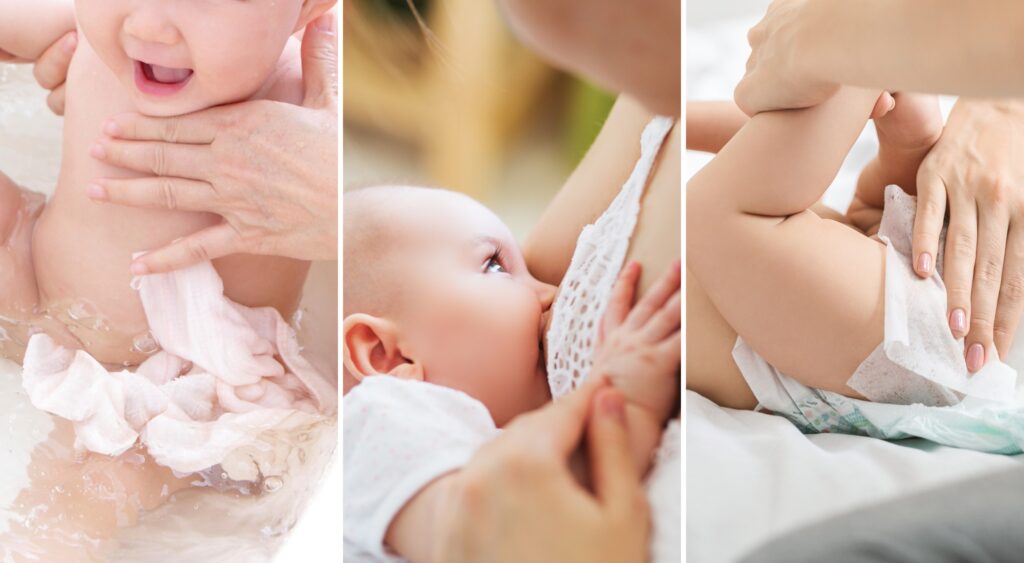
Baby dry wipes — dry, formula-free nonwoven cloths that parents wet with warm water or use dry — are one of the quiet growth categories in baby care retail. In Graminton’s home market, the category (“nursing towels”) outsearches most other baby consumables, driven by parents moving newborn cleansing away from preserved wet wipes. For channel buyers and brands, that shift is the opportunity: a repeat-purchase consumable with a clear premium story and simple logistics. This guide covers the category logic, the SKU range that covers it, the documentation importers need, and the private label options — from a manufacturer that runs its own retail line.
Why Are Baby Dry Wipes a Category Worth Stocking?
Three demand drivers make the case to a range planner:
- The preservative-free trend. A dry wipe is fiber only — no preservative system, fragrance, or cleansing agents — which matches the strongest current in baby care marketing: fewer ingredients, more parental control. The wet wipe isn't disappearing; the dry wipe is taking the newborn months and the sensitive-skin segment alongside it.
- Proven repeat purchase. A newborn household consumes several pieces a day across diaper changes, feeds, and bathing — a consumable with diaper-like repurchase cadence but lighter freight and no expiry pressure (no liquid, no preservative shelf-life clock).
- Cross-sell surface. The same cloth serves nursing mothers and sensitive-skin adults, so the product travels beyond the baby aisle — pharmacy, mother-and-baby stores, and e-commerce bundles all work.
The searched-and-validated demand behind this article comes from Graminton’s home market, where the category is among the most-queried baby consumables — a useful signal for buyers weighing whether the category has legs in theirs.
What SKU Range Covers the Category?
Four slots cover the shelf without cannibalization — this is the architecture of Graminton’s own G Bear retail line:
| Range slot | Product | Spec | Role on shelf |
|---|---|---|---|
| Standard | Baby dry wipes | Cotton nonwoven, 20 × 20 cm, 80 pcs/pack | Volume driver — daily nursing, mealtimes, diaper changes |
| Premium | Baby Wipes | Plant fiber / Tencel fiber blend, 20 × 20 cm, 70 pcs/pack | Tencel fiber, soft for baby’s sensitive skin |
| Sensitive | Ultra-soft dry wipes | Low-lint cotton nonwoven, 30 × 30 cm | Larger format for bathing and delicate skin |
| Heavy-duty | Ultra-thick dry wipes | Fluffy pulp nonwoven, 30 × 30 cm | The “extra-thick” slot — highest absorbency, tear-resistant |
Two range notes. First, the 20 × 20 cm standard size drives volume; the 30 × 30 cm formats carry margin. Second, thickness is a genuine differentiator parents feel immediately — in our home market, the extra-thick variant sustains its own search demand, which is why it deserves a facing rather than a footnote.
What Specs and Documentation Should Buyers Check?
The import checklist for this category is short but strict:
1. Fiber declaration — cotton, cotton nonwoven, or pulp; the fiber line is the label claim your market’s parents will read, so it must match the goods (fabric backgrounds in our nonwoven types guide).
2. Restricted-substance testing — Graminton’s baby dry wipes carry SGS formaldehyde and heavy-metals reports; skin-contact baby products without documentation are a recall risk you don’t need.
3. Lint behavior — a baby wipe must not shed fibers on damp skin; ask for physical samples and run the wet-wipe test yourself before committing.
4. Pack integrity — resealable or dispenser-style packs protect the product in humid retail environments; confirm pack format options up front.
5. Batch traceability — per-batch documentation, standard from an export-oriented manufacturer.
What Are the Private Label and OEM Options?
The category suits brand-building because the product is simple and the shelf story is strong:
- Private label on existing specs — your brand on the proven formats above; fastest route, minimums driven mainly by printed packaging runs.
- Format customization — sheet size, pack count, and pack style (folded vs pop-up) tuned to your channel's price points.
- Fiber positioning — pure cotton vs cotton-blend vs thick pulp lets one brand ladder from entry to premium without new tooling.
Graminton manufactures the full range in Taiwan and sells it under its own G Bear brand — for a buyer, that means the factory has already solved retail packaging, shelf claims, and consistency at consumer scale, and the same lines take OEM orders alongside the maternal and baby care program.
How Does the Carton Math Work?
Price this category per piece, not per pack:
1. Carton structure — e.g., standard wipes at 80 pcs/pack × 36 packs/carton (2,880 pieces); 100% cotton dry wipes at 70 × 40 (2,800); thick formats at 20 × 60 (1,200 larger pieces).
2. Per-piece cost — divide carton price by total pieces; this is the number to compare across suppliers and against your retail price architecture.
3. Freight advantage — dry goods, light and compressible, no liquid weight: container utilization is far better than wet wipes, which matters at distributor volumes.
4. Mixed shipments — combining the four range slots in one order lets a channel test the full architecture without overcommitting to any single SKU.
How Do Facilities Compare Dry Wipes and Wet Wipes?
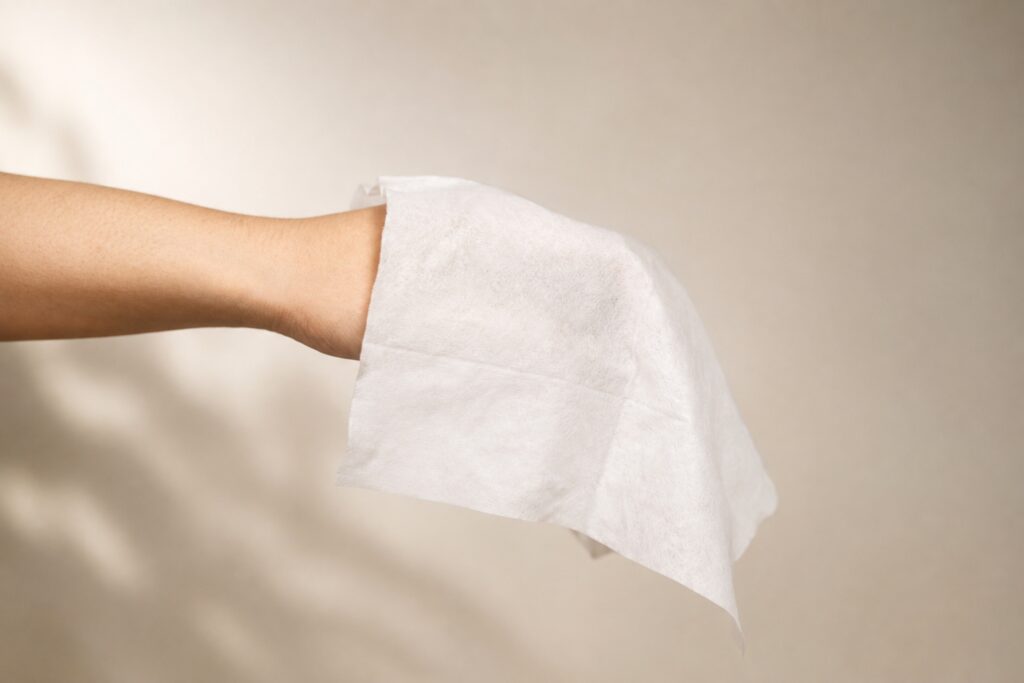
Daycares, nurseries, hospitals, and postpartum care centers weigh the two formats differently from a household. A dry wipe carries no preservative system, so a facility can standardize one cloth for newborn skin, sensitive-skin cases, and staff hand-and-face cleanups without reviewing an ingredient list per child; water is added at the point of use, only as much as the task needs. Wet wipes stay in the mix for speed — outings and quick resets between changes — where opening a pack beats wetting a sheet. On cost, dry wipes are bought by the carton at a stable per-piece price and ship light, with no liquid weight and no preservative shelf-life clock, which matters when one building consumes several sheets per change across every enrolled infant. For the full institutional item mix — liners, bibs, oral wipes, surface wipes — see our guide to childcare facility hygiene supplies.
FAQ
Should a channel stock dry wipes alongside wet wipes, or instead of them?
Alongside. Wet wipes keep the convenience purchase; dry wipes take the newborn and sensitive-skin segments. Ranging both captures the category shift without betting the shelf on it.
What are dry wipes made of?
Dry wipes are made of fiber only — no liquid, preservative, fragrance, or cleansing agent. In Graminton’s range the fabric is cotton nonwoven (the standard 20 × 20 cm wipes and the ultra-soft 30 × 30 cm format), 100% cotton (the cotton dry wipes), or pulp nonwoven (the ultra-thick format); a plant fiber and Tencel blend serves the premium slot. The fiber line on the pack is the product’s only “ingredient list”, so make sure the declaration matches the goods you sample.
Can dry wipes be used wet?
Yes — that is how most parents use them. Wet the sheet with warm water, or apply lotion or oil, for cleansing; use it dry to pat skin or wipe up spills. Either way a dry wipe is a single-use item: discard it after one use and do not flush it. Because the sheet is wetted at the moment of use, there is nothing in the pack to dry out or expire.
What certifications matter for importing baby dry wipes?
There is no single global mandatory certificate for dry fiber wipes, which is why restricted-substance test reports (formaldehyde, heavy metals) and batch documentation carry the weight — they are what retail QA teams and marketplace compliance reviews ask for.
What do MOQs look like for private label?
Product-side minimums are modest because the goods are standard; printed packaging is usually the binding component, as in most private-label consumables. Ask for the breakdown per component — packaging runs, not production, set the floor.
Can the same product serve markets outside baby care?
Yes — the identical cloth retails as a facial dry wipe for adults in some markets. If you serve pharmacy or beauty channels, one manufacturing program can feed both shelves with different packaging.
Evaluating baby dry wipes for your channel or brand? Tell us your market and formats — we’ll send material samples, carton pricing, and private-label options.