

When selecting wipers for cleanroom environments, manufacturers often encounter the following challenges:
- Linting and particle residue after wiping → may cause product defects and reduce yield
- Insufficient absorbency or cleaning efficiency → residual liquids compromise process stability
- Material degradation when exposed to solvents → reduced durability during extended cleaning operations
👉 The solution:
Choose cleanroom-dedicated nonwoven wipers or wiping papers that are manufactured under controlled processes and validated by third-party testing organizations (such as SGS). Select low-linting, high-absorbency, or solvent-resistant materials according to the application, and always confirm performance through on-site validation. In supplier catalogs these products are usually listed as low-linting wipers or low-lint dry wipes. Treat “lint-free” as marketing shorthand — every wiper sheds at some level, so tested particle-release data tells you more than the label. And vet the maker as carefully as the wiper — our cleanroom wipes supplier guide covers how to evaluate manufacturers before you buy.
Differences Between Industrial (Cleanroom) Wipers and General-Purpose Wipers
| Criteria | Cleanroom Wipers / Nonwoven Structure | General Wipers / Cloths |
| Lint Control | Designed for low particle generation; edges finished to suppress fiber shedding | Prone to lint and fiber shedding, increasing contamination risk |
| Absorbency / Wiping Efficiency | Polyester: chemical-resistant, low linting Blends: fast absorption Cellulose-based: high absorbency for disposable tasks |
Inconsistent absorbency and wiping performance |
| Chemical / Solvent Compatibility | Compatible with IPA (isopropyl alcohol) and commonly used solvents; maintains structural stability | Easily discolors, deforms, or degrades when exposed to solvents |
| Manufacturing & Validation | Clean processing with third-party test reports (e.g., SGS) to ensure compliance | Generally not designed or validated for cleanroom applications |
Nonwoven Material Types and Their Applications
Three Mainstream Categories (Covering Most Applications)
| Material | Characteristics | Advantages | Limitations |
| Polyester | High tensile strength, chemical-resistant, low linting; edge sealing reduces fiber release | Stable with IPA and solvents; ideal for precision surface cleaning | Lower absorbency; higher material cost |
| Polyester–Cellulose Blend | Polyester provides structure; cellulose improves absorbency; hydroentangled without adhesives | Fast absorption, cost-effective; commonly used in ISO Class 6–7 cleanrooms | Lower wet strength and solvent resistance than pure polyester |
| Cellulose-Based Nonwoven | Highly absorbent, naturally hydrophilic, economical | Suitable for disposable use, large-area spill cleanup, and laboratory cleaning | Poor abrasion and solvent resistance; prone to tearing |
Materials for Specific Needs
| Material | Characteristics | Advantages | Limitations |
| Polypropylene (PP) | Good chemical compatibility; often combined with cellulose to improve absorbency | Suitable for selected industrial solvent environments | Naturally hydrophobic; typically requires composite structures |
| Microfiber | Ultra-fine fibers (polyester/nylon) with excellent particle capture | Ideal for optical components, medical devices, and high-cleanliness surfaces | Performance varies by manufacturing process; test data shows the difference |
Graminton LICK™ Cleanroom Wiping Solutions
Graminton Enterprise Ltd. has over 30 years of experience in nonwoven material applications. Its proprietary brand LICK™ is dedicated to low-particle and controlled environments, offering the following advantages:
- High cleanliness levels, verified through standardized testing
- Manufactured in compliance with ISO 9001 quality management systems
- Passed four major SGS tests: formaldehyde, heavy metals, E. coli, and fluorescent agents
- Customized solutions tailored to specific cleanroom and laboratory applications
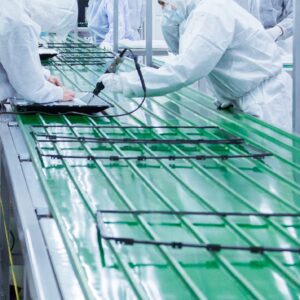
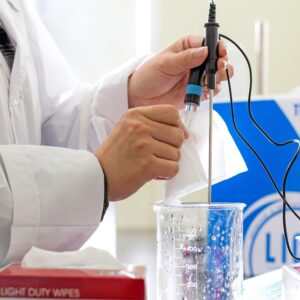
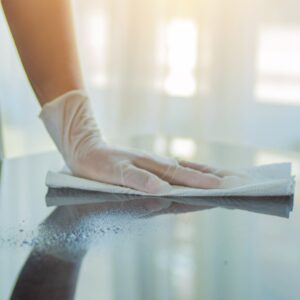
👉 Explore more LICK™ cleanroom and laboratory wiping solutions
Choosing the Right Cleanroom Wiper | FAQ
Q1: What distinguishes cleanroom wipers from general-purpose wipers?
Cleanroom wipers use low-lint constructions — nonwoven or knitted — with controlled materials and clean edge finishing to minimize fiber shedding. General-purpose wipers are not designed for particle-sensitive environments — if a listing does not state low-linting performance, assume it is not cleanroom grade.
Q2: Are cleanroom wipers compatible with IPA (isopropyl alcohol)?
Yes. Polyester wipers offer excellent solvent resistance. Blended or cellulose-based materials should be evaluated according to the specific application.
Q3: Are only three material types available?
Polyester, polyester–cellulose blends, and cellulose-based materials are the most common. Polypropylene and microfiber are also available for specialized needs. Selection should be application-driven.
Q4: Which industries require cleanroom wipers?
They are widely used in semiconductor manufacturing, optoelectronics, medical devices, biotechnology, pharmaceuticals, and precision laboratories where particle control is critical.
Q5: What should GMP facilities look for in cleanroom wipes?
GMP pharmaceutical and medical-device plants often run ISO Class 7–8 (Class 10,000–100,000) production zones, depending on product and process step, so beyond low particle generation, two things matter: lot-level documentation (traceability records an auditor can file) and compatibility with your approved disinfectants. Most facilities standardize one wiper grade per zone class rather than mixing. For how wiper grades map to ISO 14644 classes, see our guide to cleanroom wipes classes.
The Right Wiper Protects Yield and Compliance
In high-tech and medical manufacturing, cleanliness is not merely a basic requirement—it is a critical KPI that directly impacts yield, efficiency, and audit compliance. Inappropriate wiping materials can introduce risks such as lint contamination, insufficient absorbency, or poor solvent resistance, resulting in process instability and increased costs.
Selecting the right cleanroom wiper ensures process reliability, risk reduction, and long-term quality assurance.
Ready to Start? Contact Graminton for a Tailored Evaluation Today.
Contact Us
Welcome to contact us by filling out the form.